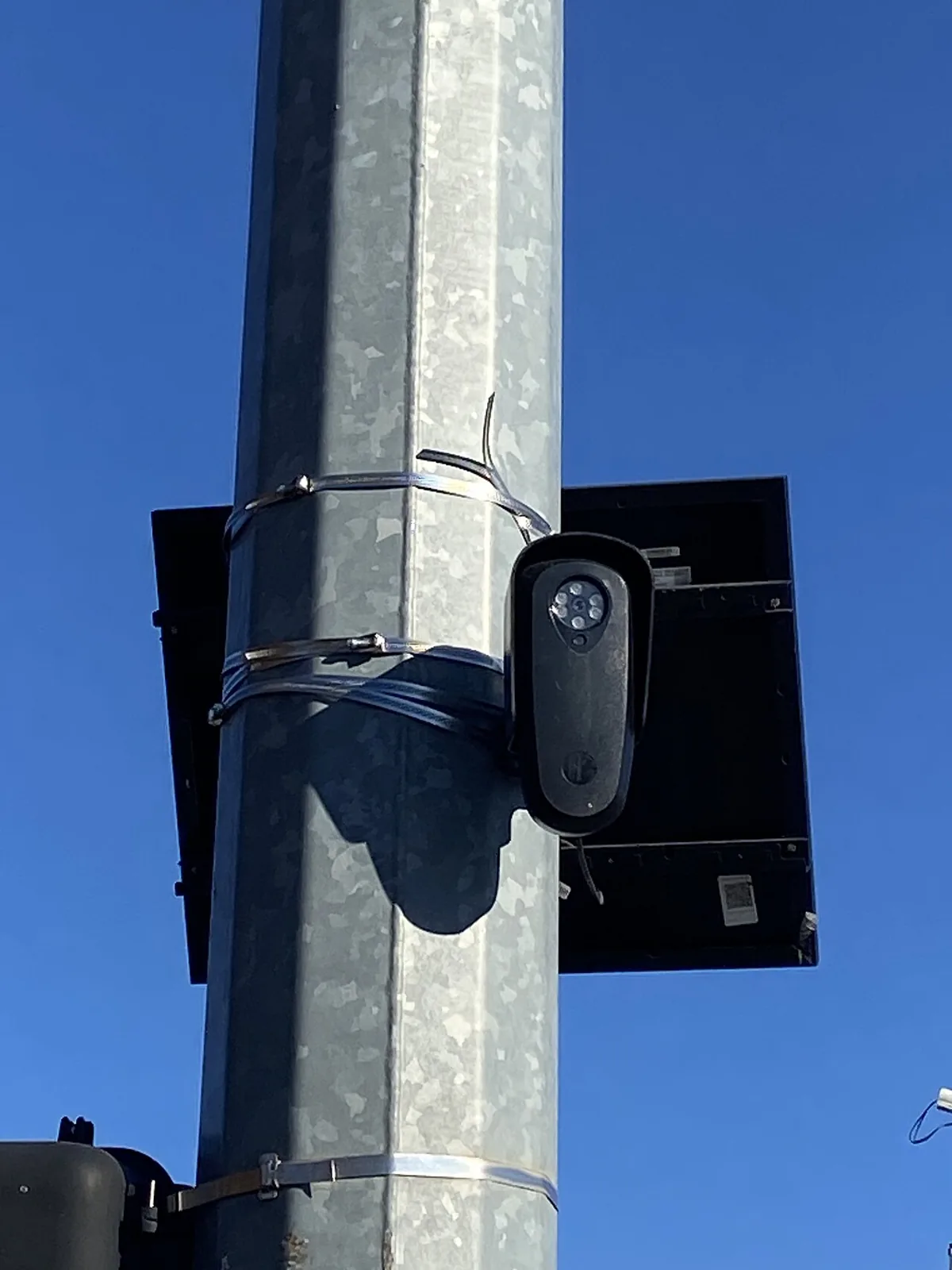
Flock Safety's AI-powered license plate cameras capture billions of plates every month, let police track your movements over time, and have been used by officers to stalk their ex-partners. Now, in a political moment where Republicans and Democrats agree on roughly nothing, they have found the one thing they can unite around: making these things go away.
The Unlikely Coalition Nobody Saw Coming
Florida Republican Ron DeSantis announced plans to revoke permits for Flock cameras on state highways. Pennsylvania Democrat Josh Shapiro held a press conference calling for bipartisan legislation to ban them statewide. Texas Republican Greg Abbott froze state spending on the cameras entirely. Senate Republicans opened an investigation into police misuse.
This is the political equivalent of finding out your cat and your dog have been secretly getting along the whole time. It does not happen. And yet here we are.
According to NPR, polling now shows more Americans disapprove of Flock cameras than approve of them. That's a remarkable shift for a technology that, not long ago, was being quietly rolled out in cities and towns across the country with minimal public debate and even less scrutiny.
What These Cameras Actually Do
Every month, Flock cameras capture billions of license plates, along with additional vehicle data. Police argue the technology helps locate stolen cars and missing people, which is true. It also helps officers build a detailed record of where your car has been, which is a different thing entirely.
As NPR reports, the technology has already been abused. Officers have used it to track and stalk ex-partners. Flock recently updated some features in response to the backlash, but you'll forgive people for not feeling totally reassured when the company's fix for "our cameras enable stalking" is a software patch.
The ACLU's Jay Stanley put it plainly to NPR: Americans now live under what sociologists call "the third eye," a persistent, always-on watcher. "I think a lot of Americans don't want to live that way," Stanley said. He is not wrong.
The Left's Problem and the Right's Problem Are Both Valid
Here is something genuinely interesting about this backlash: the left and the right hate Flock cameras for completely different reasons, and both sets of reasons are completely legitimate.
Progressives, as NPR notes, have documented cases of the cameras being used to track undocumented immigrants and people traveling across state lines to seek abortions. If you believe that government surveillance gets pointed at the most vulnerable people first, history suggests you are correct.
Conservatives, on the other hand, have raised concerns about the cameras being used to build a de facto national gun registry by logging vehicles near gun ranges, shows, or dealers. Glenn Beck, not exactly a figure you'd expect to share a talking point with the ACLU, invoked the panopticon on air. "You cannot allow this to happen. We are creating a panopticon," he said, referring to the 18th-century prison design where a single guard can observe every inmate at once. When Glenn Beck is quoting Bentham to describe surveillance capitalism, something has gone genuinely sideways.
The Midterms Are About to Make This Loud
NPR reports that opposition to Flock cameras is increasingly bleeding into midterm election politics, with candidates in Florida, Ohio, and Wisconsin all staking out positions on the technology. That is a remarkable development for what was, until very recently, a fairly obscure law enforcement procurement question.
Flock, for its part, is watching the walls close in from every direction. The company has already changed some of its features to address concerns about misuse, but as NPR noted in separate reporting, other police surveillance companies are eyeing Flock's political troubles as a business opportunity. The surveillance industry is not going to pack up and go home. It is going to adapt, rebrand, and show back up with a friendlier logo.
That is the trap in all of this. Banning Flock specifically is a start. But without broader legislation covering what law enforcement can and cannot do with mass vehicle tracking data, this is a game of whack-a-mole where the moles have venture capital backing.
The Dingo Take
Ron DeSantis and Josh Shapiro will never agree on healthcare, climate, guns, immigration, or what to put on a cheesesteak. They have found their one island of common ground, and it is an AI camera that logs where your car goes and hands that data to police with minimal oversight. That should tell you something about how bad this technology is.
The bipartisan freakout is welcome and overdue. But watch what happens next. "Banning Flock" is the easy part, the part that looks good in a press release and plays well in a campaign ad. The harder part is passing actual, durable privacy law that prevents the next Flock, and the one after that, from filling the gap. States and the federal government have been spectacularly bad at that for twenty years running. Abbott froze spending. DeSantis revoked permits. Neither of those is a law. Neither of those lasts past the next governor.
Billions of license plates, captured every month, feeding a system that officers have already used to stalk people they used to date. That is not a glitch. That is the product working exactly as designed, just aimed in a direction that makes the sales pitch harder. The cameras are coming down in some places. The data that was already collected is not going anywhere. That part of the story is still waiting for its press conference.



Comments