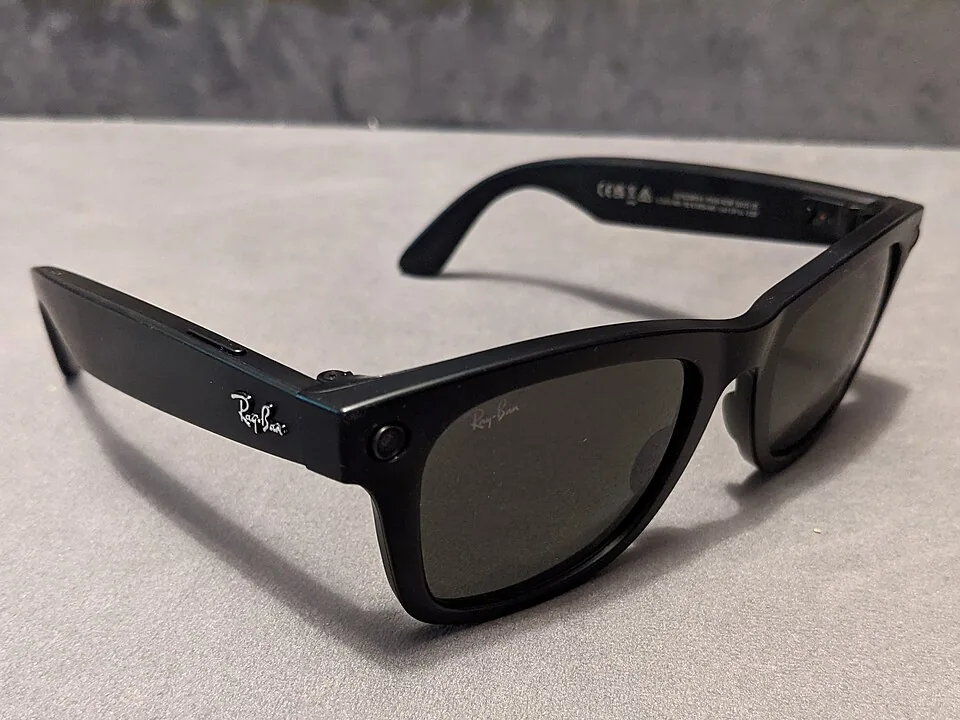
The NYPD's counterterrorism unit sent a memo in January warning officers that Ray-Ban Meta glasses are a "security and counterintelligence" threat. The threat in question: people recording cops the same way cops record people. Apparently that's only fine when one side is doing it.
The Memo That Launched a Thousand Ironic Reactions
According to the Guardian, which obtained a dozen previously unreported internal law enforcement documents, the NYPD's intelligence and counterterrorism bureau circulated a memo early this year directing officers to conduct "thorough inspections of all eyewear permitted within inmate cells." The target: Meta's Ray-Ban smart glasses, which come equipped with a small camera, a microphone, and the ability to pass as a completely ordinary pair of sunglasses.
The memo warned that detainees could use the glasses to record cell layouts, camera placements, and officer patrol routines. The NYPD's concern isn't entirely invented out of nothing. The Guardian reports that the memo cited two real videos, including one posted to TikTok in July 2025 by someone inside a South Carolina detention center that had been under federal investigation for unsafe conditions. In it, the wearer filmed showers, holding cells, an overcrowded cafeteria, and sleeping detainees. "People don't know about Meta glasses," the user remarked, which is doing a lot of work as a sentence.
The glasses are discreet enough that detention facility staff apparently missed them during intake. Their only required disclosure feature is a small LED light that blinks when recording. Meta insists the light "can't be turned off" and that if someone covers it, the camera disables. Law enforcement, meanwhile, is learning this the hard way.
From Maine to California, Everyone's Suddenly Very Concerned About Being Watched
The NYPD memo wasn't a one-off panic. The Guardian's documents show fusion centers and counterterrorism units from San Diego to Tennessee to Virginia have all issued similar warnings. A June 2026 memo from Maine's fusion center warned that smart glasses introduce "additional risks and concerns" in corrections and law enforcement facilities and flagged the possibility that AI-assisted facial recognition software built into some glasses could lead to the "doxing" of law enforcement officers.
The DHS's own joint counterterrorism assessment team weighed in too. And in August, ICE issued a memo obtained by the New York Times classifying Meta smart glasses as body-worn cameras, meaning employees are barred from wearing them in federal workspaces. ICE's acting director David Venturella wrote that the glasses "could unintentionally capture, record or transmit sensitive information." ICE, the agency that has spent years running warrantless surveillance operations on immigrant communities, is now worried about accidental recordings in the break room.
These agencies aren't operating in some kind of legal or moral vacuum here. They have spent decades expanding their own surveillance infrastructure, with cameras on every corner, license plate readers on every highway, and facial recognition systems in more police departments than most people realize. The technology for watching the public without the public's knowledge or consent has been normalized for so long that the idea of it being reversed apparently registers as a genuine crisis.
The Terrorism Angle, Because of Course
Law enforcement didn't stop at "we don't want to be filmed." Several memos escalated to terrorism, citing the possibility that smart glasses could be used for "hostile pre-operational surveillance" before an attack. The NYPD specifically invoked the New Year's Day 2025 attack in New Orleans, where a man drove a truck into a crowd on Bourbon Street, killing 14 people and injuring 35, as reported by the Guardian.
The logic being floated is that someone planning an attack could use smart glasses to scout a location covertly. Which is, technically, a thing a person could theoretically do. It is also a thing a person could do with their phone camera, their eyes, or a tourist map. The leap from "this technology exists" to "this technology is a terrorism vector" is a leap law enforcement makes very readily when the technology is pointing at them.
What the Privacy Advocates Are Actually Saying
The documents were obtained by Property of the People, a nonprofit focused on government transparency, and their executive director Ryan Shapiro was not about to let the irony pass without comment. "These agencies surveil the public incessantly, but the moment we can watch them back, it's deemed a security threat," Shapiro told the Guardian. "When only the government is allowed to hold the camera, that's not security. It's impunity."
That framing is worth sitting with. The same fusion centers now warning about smart glasses are the same institutions that hoover up data from private companies, coordinate with the FBI on domestic monitoring programs, and maintain databases on people who have never been charged with anything. The concern is not surveillance as a concept. The concern is surveillance aimed in the wrong direction.
Meta, for its part, is sticking to its talking points. Spokesperson Dina El-Kassaby told the Guardian that the glasses "are designed to be noticed" and that the blinking LED is a non-negotiable feature. The company's position is that the glasses are transparent by design. Law enforcement's position, at least in practice, is that this is a problem precisely because they are working fine.
The Dingo Take
You are supposed to believe that the issue here is security. That detention facilities and counterterrorism units are worried, in good faith, about the operational risks of a consumer electronics product. And sure, fine, there are legitimate edge cases in that argument somewhere. But that is not what these memos are actually about, and everyone involved knows it.
What these memos are about is the oldest institutional reflex in the book: the people with power finding new technology threatening the moment ordinary people can use it too. Body cameras on cops were fought tooth and nail for years, and departments still find creative ways to lose the footage when it would be inconvenient. Red light cameras on civilians are a revenue stream. Red light cameras on police cars are an imposition. The pattern is so consistent it barely qualifies as hypocrisy anymore. It's just policy.
The South Carolina detainee who filmed that video of a facility under federal investigation for unsafe conditions? He documented something the public arguably had every right to see. The NYPD's response was to classify the glasses as a counterintelligence threat and tell officers to check inmates' eyewear. One of those responses advances accountability. The other one just keeps the lights off. The agencies writing these memos know exactly which one they prefer.





Comments