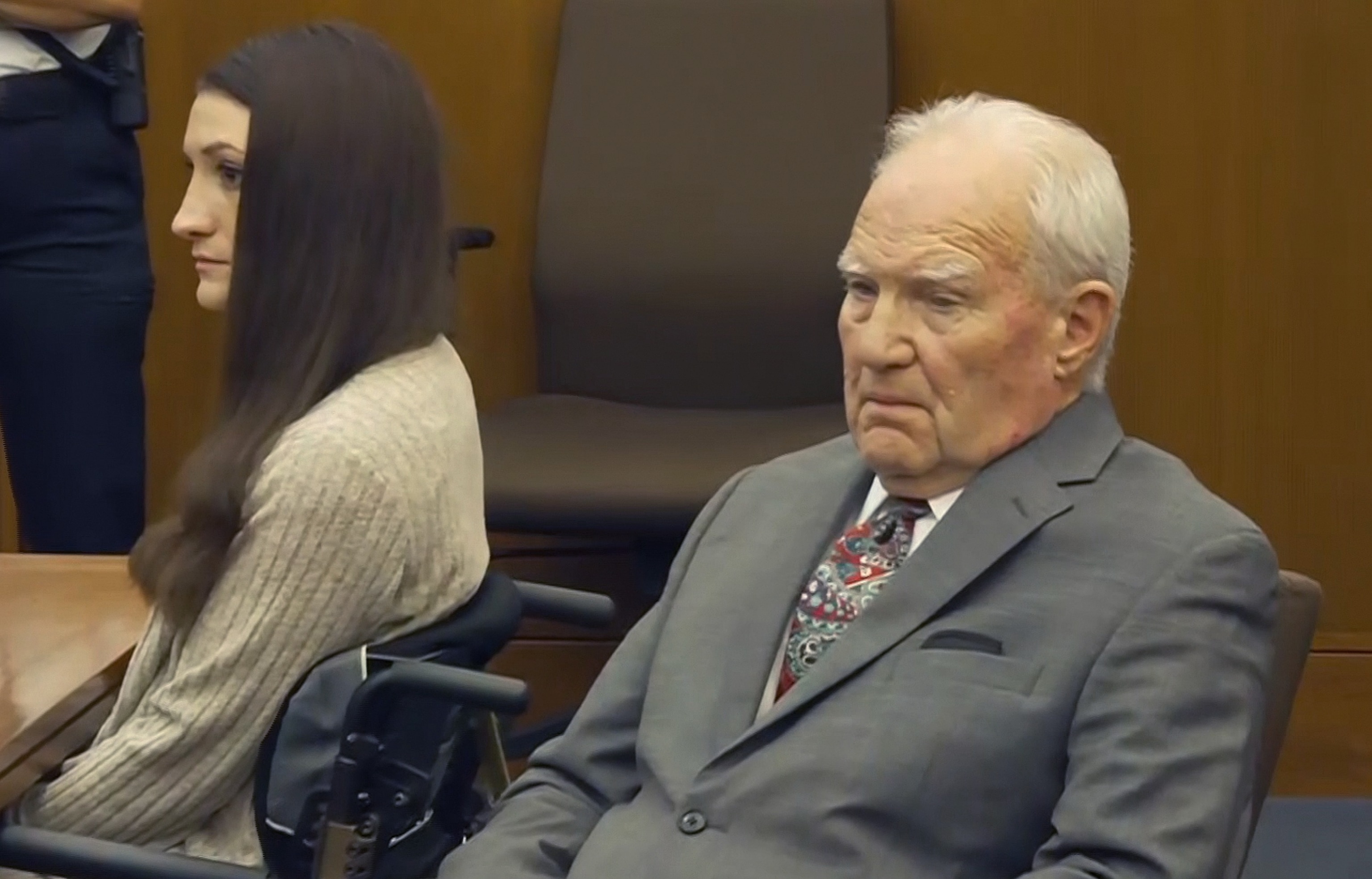
Lindsay Clancy's defense attorney went on Good Morning America this week to beg the President of the United States for a pardon on behalf of a woman who has not been convicted of anything. It is a genuinely strange legal maneuver, made stranger by the fact that it probably cannot work, and stranger still by the fact that Trump has already weighed in on the case with his characteristic blend of empathy and blunt-force certainty.
The Ask Nobody Saw Coming
Kevin Reddington, Clancy's attorney, sat down on Good Morning America Tuesday morning and did something almost no defense lawyer has ever done on breakfast television. He directly addressed the president of the United States and asked him to pardon his client. "Mr. President, I ask that you would consider this lady and consider a pardon," Reddington said, according to The Mirror US.
This is, technically, legal. A preemptive presidential pardon before any conviction is constitutionally permitted. Gerald Ford used one for Richard Nixon before Nixon faced a single charge. So the mechanism exists. The problem, and it is a significant one, is that presidential pardons only apply to federal crimes. Lindsay Clancy is facing state-level murder charges in Massachusetts. The President of the United States has exactly zero jurisdiction over what happens to her in a Massachusetts courtroom. That is not a technicality. That is the entire structure of American federalism.
Reddington likely knows this. He has been a criminal defense attorney long enough to understand the limits of executive clemency. Which raises the question of what Tuesday morning's performance was actually for.
What Trump Already Said
Trump, for his part, had already gone on record about the Clancy case during a press gaggle in the Oval Office shortly after the mistrial was declared. A reporter asked if he had been following the trial. He had.
"It's a horrible tragedy," Trump said. "She did a horrible, horrible thing. Can't be worse. But you'll find out what the price to pay is. There'll be a price. It's going to be a mental institution or jail or something." So, not exactly a pardon preview. The president who Reddington is now publicly begging for mercy had already declared that Clancy must pay a price, he just was not sure which kind of institution would be collecting it.
To be fair to Trump, "mental institution or jail or something" is probably the most medically honest thing he has said about a criminal case in years. It also does not sound like a man preparing to issue clemency.
How a Six-Week Trial Collapsed in One Week
The trial itself was a slow-motion cultural earthquake. Clancy did not deny killing her children, Cora, 5, Dawson, 3, and Callan, eight months old. Her defense was that she was suffering from severe postpartum depression and psychosis at the time, and that the medical system had catastrophically failed her. She had been prescribed 13 psychiatric medications in the months leading up to the deaths.
After six weeks of testimony, the jury deliberated for a week and deadlocked at 11 to 1. Eleven jurors voted to acquit. One holdout refused. Judge William Sullivan declared a mistrial when it became clear nothing was going to break the deadlock. The Mirror US reports that Reddington tried to have the lone holdout removed on the grounds that they were not properly applying the reasonable doubt standard. Sullivan said no.
Clancy now faces the real possibility of a second trial, which means this entire six-week ordeal, every piece of testimony about postpartum psychosis and medication failures and a family in freefall, could happen again. Meanwhile, her ex-husband Patrick Clancy has filed a wrongful death and malpractice lawsuit against her medical providers, and Clancy herself has filed a separate negligence lawsuit. The litigation is nowhere close to over.
The Internet Made Everything Worse, Obviously
The case did not stay inside a courtroom. It never had a chance. Within weeks it became a full-blown online culture war, with one faction arguing that the case exposed a genuine catastrophe in how American medicine treats postpartum mental illness, and another faction spreading conspiracy theories that Patrick Clancy was somehow responsible for the children's deaths. He was not charged. He was not a suspect. It did not matter.
The Mirror US reports that the conspiracy theories circulated widely enough that they became part of the cultural backdrop to the trial itself. Devoted mother versus monster, system failure versus personal responsibility, grief versus rage. Three children are dead and the internet turned their deaths into content. That part, at least, is not surprising anymore. It is just true.
What Happens Next
Plymouth County prosecutors have not yet announced whether they will retry Clancy. Given that 11 of 12 jurors voted to acquit, that is a decision with real political weight attached to it. A retrial that ends in another acquittal, or another hung jury, would be a significant prosecutorial loss. A decision not to retry her would face its own public backlash.
Reddington's very public pardon play, whatever its legal limitations, is almost certainly designed to generate pressure and public sympathy ahead of that prosecutorial decision. It is a media strategy dressed up as a legal one. Whether Trump pays any attention to it, or whether Massachusetts prosecutors care what Trump thinks about a state murder case, remains to be seen.
The Dingo Take
You are supposed to believe that a lawyer going on morning television to beg the president for a pardon he cannot legally issue is a serious legal strategy. Maybe it is. Or maybe Kevin Reddington looked at the scoreboard, saw 11 jurors vote to acquit his client after hearing everything the prosecution had, and decided his best next move was to turn this into a political story rather than let it stay a legal one. If Trump says the magic word, the pressure on Massachusetts prosecutors shifts. It is not crazy. It is just not actually a pardon request.
What the Clancy case has exposed, underneath all the noise, is genuinely horrifying. A woman was prescribed 13 psychiatric medications in the months before she killed her children. Thirteen. Her former mother-in-law testified that everyone around her could see she was struggling. The medical system saw a woman in crisis and responded by adding another prescription. Patrick Clancy's malpractice lawsuit against her providers is not a sideshow. It might be the most important legal proceeding in this entire saga.
Three children are dead. Their mother says she was not in her right mind. Eleven jurors believed her. One did not. And now the whole thing might happen again, in the same courtroom, with the same evidence, while a defense lawyer asks a president who already said there will be a price to please, actually, never mind about the price. This is what American justice looks like when it has no clean answers and everyone, the courts, the internet, the Oval Office, is just making it up as they go.




Comments