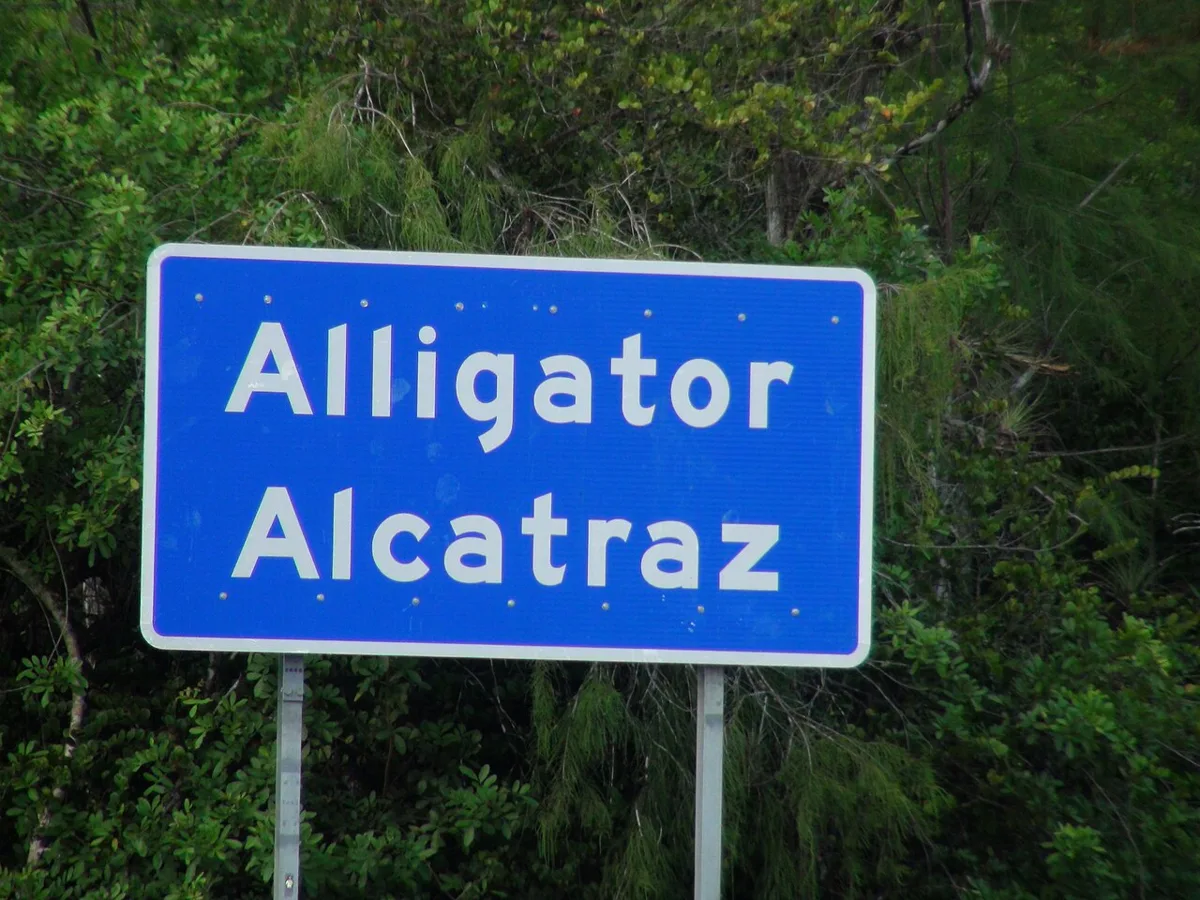
The Department of Homeland Security's own watchdog has now confirmed that immigrants held at Florida's 'Alligator Alcatraz' detention facility were locked in outdoor metal cages roughly the size of a bathroom rug, smaller than a solitary confinement cell by a factor of five, and that staff referred to these enclosures as 'calming areas.' This is a real sentence from a real government report, published in the year of our lord 2026. The cages were 16 square feet. A standard parking space is 144.
What the Government Actually Found
The DHS inspector general visited the South Florida Detention Facility in January and released findings this week that confirm what detainees and human rights groups had been saying for over a year. According to NBC News, which reviewed the report, the metal enclosures measured roughly 4-by-4 feet and were used to hold detainees for periods averaging just under an hour, with the longest single stay clocking in at just under two hours.
The IG report found that 79 detainees were placed in the cages over a six-month window between July 2025 and January 2026. ICE's own guidelines say a room designed for single occupancy should be a minimum of 37 square feet. Federal solitary confinement cells run about 84 square feet. These cages were 16. The inspector general's report concluded that 'the use of such restrictive spaces is highly unconventional and does not align with standards for humane treatment.'
A sign posted outside the cages explained their purpose in language that would make a corporate wellness consultant weep with pride. According to NBC News, it read that the space was meant to 'provide a safe and secure place for detainees to reflect on their behavior choices, manage their emotions, reduce stress and practice self-directed behavior.' Reflect on your behavior choices. In a 4-by-4 metal box. In the Florida sun. Outstanding.
What Amnesty International Found First
The government watchdog report is notable partly because it confirms findings that Amnesty International published back in December, after the group toured the facility in September 2025 and interviewed detainees. Amnesty's report was considerably less clinical about what the cages were.
According to the Amnesty International report, detainees described the enclosure as 'the box,' and said individuals placed inside had their hands shackled and feet attached to restraints on the ground. They could not sit. They could not change position. They stood, shackled, in an outdoor metal cage in the Everglades heat, with minimal water and no protection from the sun or insects. Amnesty called the use of the box 'torture.' The DHS inspector general called it 'highly unconventional.' One of those characterizations is doing more work than the other.
ICE pushed back on the shackling claim, telling the inspector general that detainees were shackled when escorted to the enclosures but not while inside them. This is the kind of distinction that only matters if you think the problem was the restraints and not the cage.
The Facility DeSantis and Trump Toured Together
Alligator Alcatraz opened in July 2025 in the Everglades, built by Governor Ron DeSantis's administration as part of a 287(g) agreement that deputized Florida law enforcement to carry out federal immigration enforcement duties. DeSantis and Trump toured the facility together and called it a model for the administration's mass deportation push, NBC News reports.
The facility drew immediate legal challenges over tented housing units that left detainees exposed to extreme weather, insects, and the general conditions of the Florida Everglades, which is not an environment designed for human habitation. Amnesty's tour found overflowing toilets with, in their words, 'fecal matter seeping into where people are sleeping.' Lights stayed on 24 hours a day. The lawsuits are ongoing.
The facility shut down in June. DeSantis said it was always meant to be temporary. The detainees were either deported or transferred to other federal facilities. Neither DeSantis's office nor DHS responded to NBC News's requests for comment on the inspector general's report.
Nobody Wants to Own This
Here is where it gets especially interesting. The 287(g) agreements between Florida agencies and ICE, filed in court documents, state that ICE will provide oversight 'to ensure compliance with federal immigration law and ICE policies,' and that immigration enforcement activities will be 'supervised and directed by ICE.' That sounds like federal responsibility.
DHS disagrees. In a signed response to the inspector general's report, the DHS undersecretary of management and the acting ICE director wrote that ICE had no contract with Florida to run Alligator Alcatraz, and that the 287(g) agreement does not give the federal government authority over the physical operations of the facility. So not our problem.
The inspector general's report quietly noted that ICE personnel were physically present at the facility and that every detainee received an ICE handbook describing Alligator Alcatraz as 'a facility of the United States Immigration and Customs Enforcement.' Which is either a massive administrative oversight or the most brazen game of hot potato in recent memory. Either way, 79 people sat in 16-square-foot metal boxes while two branches of government argued about whose boxes they were.
The Rare Watchdog That Survived
One more thing worth sitting with: this report exists at all because DHS Inspector General Joseph Cuffari is one of the only Cabinet-level IGs who kept his job. NBC News reports that since returning to office in 2025, Trump has fired at least 18 inspectors general, the officials specifically tasked with conducting objective oversight of federal agencies.
The inspector generals were fired precisely because they do things like this: find uncomfortable facts and publish them. The ones who remain are the exception. The fact that this report is being treated as noteworthy for criticizing the administration tells you everything about what the gutting of federal oversight has actually cost. We are now in a situation where a government watchdog confirming that cages violated basic humane standards counts as a brave act of institutional independence.
The Dingo Take
You are supposed to believe the sign. That is what they want. The sign said the cage was for 'self-directed behavior' and 'managing emotions.' The cage was four feet by four feet, outdoors, in the Florida Everglades, in the summer. The detainees inside had in some cases been escorted there in shackles. And somewhere in the DeSantis administration, a person sat down and typed out that sign, and another person approved it, and they bolted it to the outside of a metal box that violated their own agency's minimum space requirements by more than half. Everyone involved got to go home after their shift.
The accountability structure here has completely collapsed. ICE says it's Florida's facility. Florida built it for ICE. DHS signed agreements that say ICE supervises everything that happens there, then told the inspector general that same agreement doesn't actually give them authority over anything physical. Trump and DeSantis flew in for a photo op and called it a triumph. The facility is closed now, which the administration would like you to treat as the end of the story. It is not.
Seventy-nine people went into those cages. The government kept records. The records exist. The inspector general read them and concluded that what happened 'does not align with standards for humane treatment,' which is a very careful way of saying something that Amnesty International was considerably less careful about. Both descriptions are in writing. Both are now part of the public record. What happens next depends entirely on whether anyone in a position of authority decides that 'does not align with standards for humane treatment' is a problem that requires more than a closed facility and a shrug.





Comments