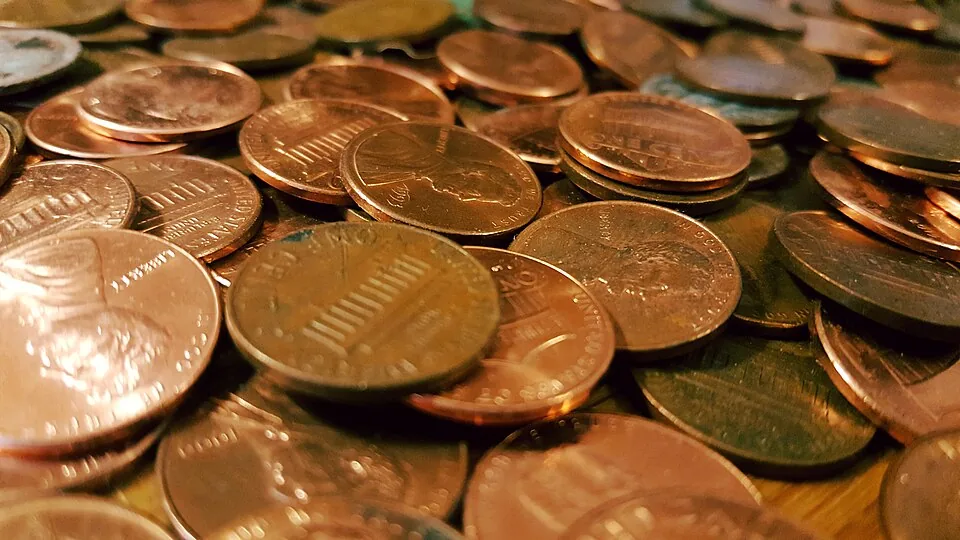
In what may be the single most uncontroversial vote in the history of a body that once spent three weeks arguing about a post office name, the House of Representatives unanimously agreed to kill the penny. Every single member. Not one holdout. Not one 'the penny represents American grit' speech that derailed the whole thing. The Common Cents Act passed Monday without a dissenting vote, and the one-cent coin is now, barring a presidential veto, officially done.
What the Bill Actually Does
The Common Cents Act does a few things at once. According to the New York Post, it permanently blocks the Treasury from minting new pennies, with a narrow carve-out for collector coins. It also creates a rounding framework for cash transactions, moving totals up or down to the nearest five cents so that the penny's absence doesn't break the register at your local diner.
There is one exception worth knowing about. Cash wages, per the Post's reporting, must be rounded upward if the total doesn't land on a multiple of five cents. So if your employer owes you $14.97, they owe you $15.00. That's a small but meaningful protection for workers who still get paid in cash.
Existing pennies stay legal tender. Your grandmother's penny jar doesn't need to go to the bank. But no new ones are coming, and if Trump signs this, no future administration can quietly restart the presses without another act of Congress.
The Penny Was Already Dead — This Just Makes It Official
Here's the thing: this fight was mostly already won. The US Mint stopped producing pennies back in November 2025, after 232 years of uninterrupted production, following a Trump administration order to halt penny minting. Fox News reports that a memorial "funeral for the penny" was held at the Lincoln Memorial in December 2025, which is either deeply silly or kind of poetic depending on your tolerance for public grief over small coins.
So why bother with legislation if production already stopped? Because executive orders can be undone by the next executive. The Common Cents Act locks the decision into statute. Future presidents who want to bring back the penny would need Congress to go along with them, which, given that this vote was unanimous, seems unlikely.
The bill also goes further than previous legislation. McClain had already shepherded a bill through both chambers directing the government to stop minting pennies, but as the New York Post notes, that earlier version didn't touch the rounding question. This one does.
It Costs Three Cents to Make a Penny. Seriously.
If you are wondering how this became bipartisan in a Congress where people cannot agree on what month it is, the answer is math. The New York Post reports that by 2025, minting a single penny cost more than three times its face value. You are spending three cents to produce one cent. That is not monetary policy, that is performance art.
The Treasury estimates the immediate annual savings from stopping penny production at $56 million. That's not transformative money in a multi-trillion-dollar federal budget, but it is $56 million that was previously being converted directly into small, useless, copper-colored discs that people throw in fountains and ignore at the bottom of their bags.
The bill also quietly addresses the nickel problem, directing the US Mint to explore cheaper materials for five-cent coins. Because apparently the nickel, the penny's slightly less embarrassing cousin, also costs more to make than it's worth. Fiscal responsibility, American-style.
The Unlikely Team Behind the Bill
The Common Cents Act was led by House GOP Conference Chair Lisa McClain of Michigan and Rep. Robert Garcia of California, the top Democrat on the House Oversight Committee. That pairing, a Republican conference chair and a prominent progressive Democrat, tells you everything about how genuinely uncontroversial penny elimination is when you strip the symbolism away.
McClain has been pushing this for years, according to both the Post and Fox News. Garcia's involvement gave it the bipartisan cover needed to get it across the finish line without the usual kabuki theater of partisan positioning. When the left flank and the right flank of the House agree on something this completely, it is either obviously correct or a sign of some elaborate shared hallucination. This one appears to be the former.
The bill now heads to Trump's desk. He has not publicly opposed it, and given that his own administration was the one that stopped penny production in the first place, a veto would be a remarkable reversal.
What About People Who Rely on Cash?
Congress did bother to think about this one, which is more than you can say for some of what they pass. The bill directs the Treasury to study the impact of the rounding rules on low-income people, older consumers, and debanked individuals — people who rely on cash transactions because they don't have bank accounts or prefer not to use them, per the New York Post's reporting.
That's the right instinct. Rounding sounds trivially small, but if you're making dozens of small cash purchases a day, the cumulative effect of being rounded up or down matters. Canada killed its penny in 2013 and handled the transition reasonably well, but the Canadian government also tracked the rounding impact carefully in the early years. The fact that Congress is at least building in a monitoring mechanism suggests someone read a case study.
The concern is real enough to include in the bill. Whether the Treasury actually conducts the study with any rigor, or treats it as a check-box exercise, is a different question entirely.
The Dingo Take
A unanimous vote in the United States House of Representatives in the year 2026. Let that sink in. Not a single member voted to save the penny. Not one. In a chamber where people have voted against motherhood-and-apple-pie legislation out of spite, procedural tantrum, or the need to own the libs, the penny got nothing. Zero defenders. It died the way it lived: largely ignored, worth less than advertised, and costing everyone more than it should.
The real story here isn't the penny. It's what the penny represents about how broken the incentive structure of American governance has become. Congress has spent years unable to pass budgets, fund agencies, or agree on basic infrastructure maintenance, but it kept minting three-cent coins by the billion because changing things requires effort and the status quo has its own lobby. The penny survived this long not because anyone loved it but because no one wanted to be the person who killed it. Once someone finally moved, the whole chamber folded immediately.
Trump will almost certainly sign this. His administration killed penny production to begin with, the savings are real, and there is no political cost to finishing the job. The penny will officially be gone. Your change will round to the nearest nickel. And Congress will return to being completely unable to agree on anything else. But for one brief, shining, unanimous moment, they killed a coin. Put it on the résumé.




Comments