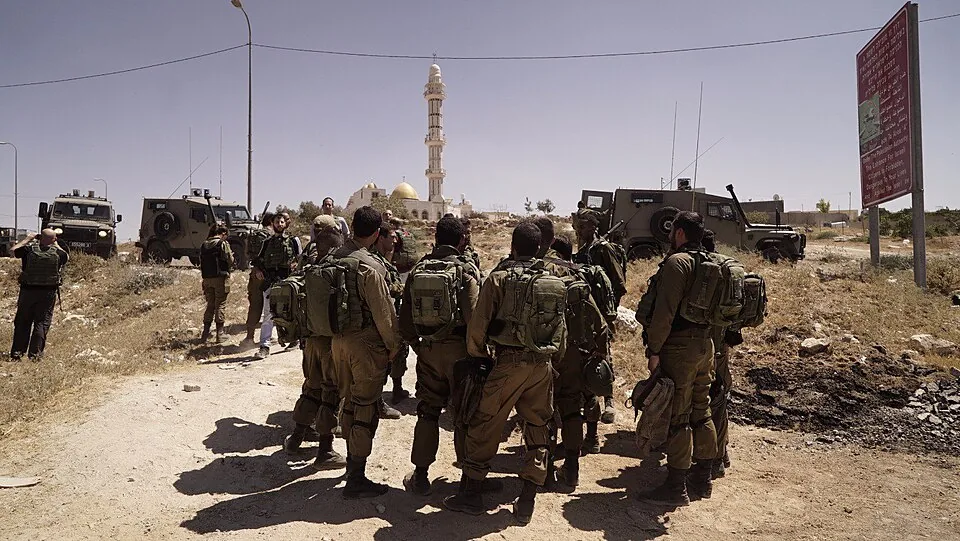
Israeli security forces arrested a man this weekend who was actively planning to shoot Israeli civilians during Rosh Hashanah, timing the attack to coincide with one of the holiest days in the Jewish calendar. The suspect, identified as Abd al-Rahman, was picked up in the Hebron area of Judea before he could act. According to the IDF, the attack was planned for "the immediate time frame."
The Plot, the Arrest, and What 'Immediate' Means
The New York Post reports that IDF soldiers apprehended Abd al-Rahman over the weekend, with the operation guided by the Israeli Security Agency, known as Shin Bet. The military's statement did not leave much room for ambiguity: this was not a guy in the early planning stages who maybe had a bad idea he was still thinking through. The attack was coming. Soon.
Rosh Hashanah began this year on Friday evening, September 12, kicking off a stretch of Jewish High Holidays that runs through Simchat Torah on October 3. That is a three-week window of large public gatherings at synagogues, parks, and family celebrations across Israel. If you are looking for a moment when crowds of Jewish civilians are predictable, concentrated, and emotionally vulnerable, someone apparently did the math and circled that window on the calendar.
The IDF statement following the arrest was characteristically terse: "IDF soldiers continue to operate to thwart terrorism throughout Judea and Samaria." Short sentences. No editorializing. Just a quiet reminder that this is, for Israeli security forces, a Tuesday.
Israel Had Already Braced for Exactly This
It is not like Israeli authorities were caught off guard by the possibility of holiday-timed violence. The New York Post reports that Israel Police announced on September 9 it would deploy thousands of officers, Border Police personnel, and volunteers across the country for the duration of the High Holidays. That deployment covers holy sites, houses of worship, major roads, parks, and entertainment venues.
The police said operations would run "from the air, sea and ground" to ensure rapid response to any unusual incident. That is not a metaphor. That is a literal three-dimensional security net thrown over a country the size of New Jersey every time its citizens try to observe a religious holiday.
And that was before the weekend arrest. On September 6, the IDF ran a surprise nationwide exercise specifically designed to test readiness for a sudden, large-scale multi-front attack scenario ahead of the holidays. Israel Police ran their own nationwide drill back in July. These are not paranoid overreactions. They are the predictable consequence of decades of experience with exactly what Abd al-Rahman was allegedly planning.
The Geography Matters Here
The arrest happened in the Hebron area of Judea, which sits in the southern West Bank. Hebron is one of the most contested and volatile cities in the region, home to both a large Palestinian population and a small, heavily guarded Jewish settler community living around the Tomb of the Patriarchs. It is a place where Israeli security forces maintain a constant, grinding presence precisely because the threat of violence is a permanent background condition.
Shin Bet, the internal security agency that guided this operation, specializes in exactly this kind of pre-attack intelligence work. They have built a reputation over decades for intercepting plots before they become body counts. The fact that they were tracking Abd al-Rahman closely enough to pull him before the holiday even started suggests this was not a tip that fell in their lap at the last minute.
Who Was Abd al-Rahman?
The reporting from the New York Post does not include further biographical details on Abd al-Rahman beyond his name and the nature of the planned attack. No age, no organizational affiliation, no information about whether he was acting alone or as part of a broader network. The IDF has not released that information publicly, at least not yet.
That information gap matters. A lone actor carrying out a shooting attack is one level of threat. An operative with organizational backing, weapons supply chains, and handlers coordinating timing is a categorically different problem. Whether this arrest dismantled something larger or just removed one individual from the equation is a question the available reporting cannot yet answer.
The Dingo Take
You are supposed to read a story like this and feel relieved. The system worked. Guy had a plan. Shin Bet found out. IDF showed up. No one died. That is the best possible outcome, and it is worth acknowledging before moving on.
But sit with the background reality for a second. Israel deployed thousands of security personnel by air, sea, and ground. They ran two separate nationwide emergency drills in the months before their holidays. And they still had to pull an active shooter plot out of the Hebron area the weekend Rosh Hashanah began. This is not an exceptional moment of danger that the system heroically resolved. This is the baseline. This is what Israeli civilians live inside every single year when they try to go to synagogue or take their kids to a park during the holidays.
The arrest of Abd al-Rahman is genuinely good news. A family somewhere is not going to spend Rosh Hashanah grieving because of it. But a country that has to build a three-dimensional security apparatus just to let its citizens observe religious holidays without getting shot is a country still living inside a problem that a single arrest does not solve.


Comments