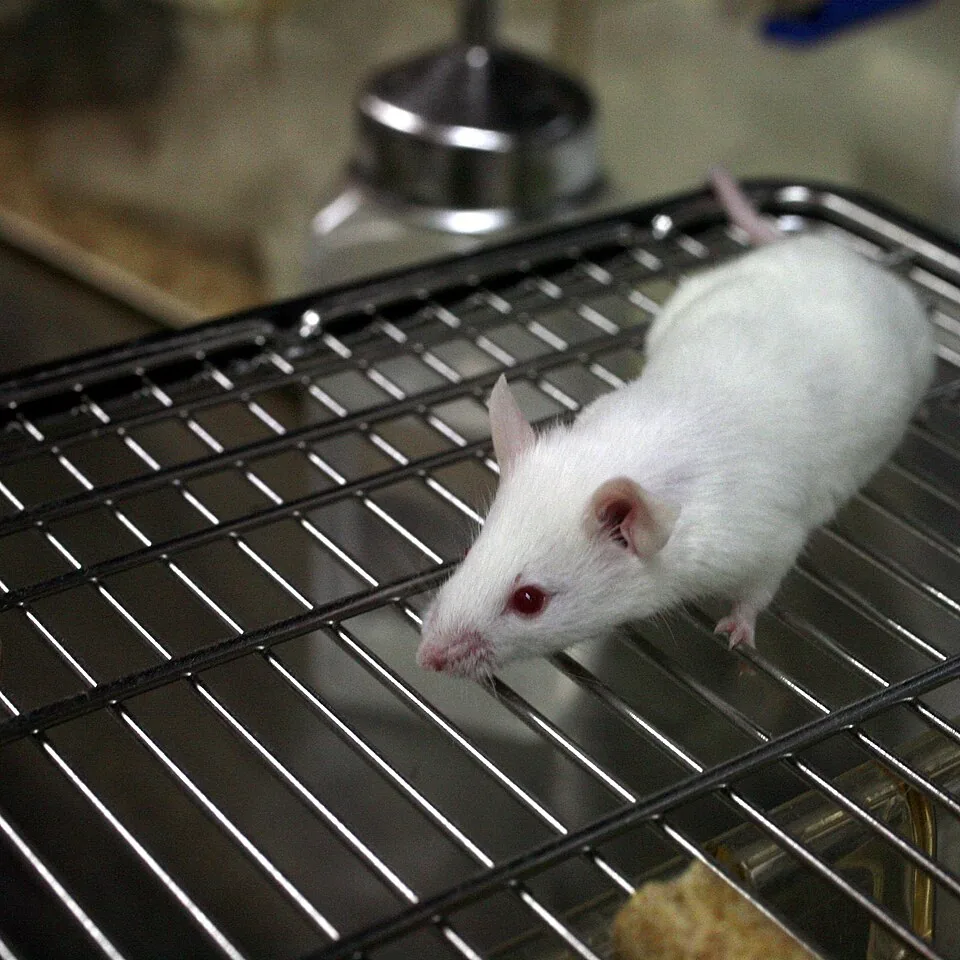
Scientists at Stanford University have grown human brain tissue in a lab, dropped it into mice with parts of their cerebral cortex missing, and watched it take root, wire itself into the animals' nervous systems, and thrive. The mice now have functional human cortical tissue running connections all the way down to their spinal cords. We are going to need a moment.
What They Actually Did Here
The study, published in Nature and reported on by Stanford Medicine, involves something called cortical organoids. These are three-dimensional clusters of brain tissue grown in a lab from human skin cells that were first converted into stem cells, which then differentiated into the kinds of cells that make up the cerebral cortex. Tiny, lab-grown chunks of human brain, essentially. Functional ones.
The mice used in the experiment were specially bioengineered to be born with most of their cerebral cortex missing, which gave the transplanted human tissue room to move in and get comfortable. And comfortable it got. According to Stanford Medicine, the human grafts didn't just survive. They grew, developed blood supplies, and formed working connections throughout the mouse nervous system.
The lead researcher on the study, Professor Sergiu Pasca, described the resulting animals as "xenocortical" mice. His words, not ours. "These animals retain a mouse nervous system, but they contain a larger volume of human cortical tissue that develops, integrates and forms connections within it," Pasca said in the Stanford report. Before you spiral: Pasca was also very clear that these are not miniature human brains running around in mouse skulls. They are not tiny people. They are research tools, and very powerful ones.
Why This Is Actually a Big Deal
Here is the problem neuroscientists have always had. The human brain is staggeringly complex, and studying it at the cellular and molecular level in living tissue is, for obvious ethical reasons, almost entirely off the table. You cannot just crack open someone's skull to poke around because you are curious about how a gene mutation affects cortical development. So researchers have been working with incomplete pictures for decades.
This changes that picture significantly. According to the Stanford report, researchers can now study how disease-associated genetic changes alter neural development and circuit formation in actual living human tissue, inside a controlled biological environment. The target conditions include profound autism, schizophrenia, cerebral palsy, and epilepsy. These are disorders where the exact developmental mechanisms in human brain cells have been maddeningly difficult to observe.
"We can begin to ask how disease-associated human genetic changes alter neural development and circuitry and whether potential treatments can prevent or correct those changes," Pasca said. That is not hype. That is a direct and specific scientific capability that did not exist before this study.
The Precision Medicine Angle
Alison Singer, president of the Autism Science Foundation, zeroed in on what might be the most significant long-term implication of this research. Speaking to Stanford, she called the work a critical step toward precision medicine, the idea that treatments can eventually be tailored to individual patients based on their specific genetic profiles.
"The idea that you can make an organoid model with an individual's unique genetic character and use that to learn what's gone awry in that individual's brain is a critical step toward precision medicine," Singer said. Think about what that means in practice. Skin cells from a patient with treatment-resistant epilepsy, converted into brain organoids, implanted into a mouse model, observed as they develop and malfunction, then used to test potential interventions before anything goes near an actual human brain. The New York Post covered this story, and even their write-up couldn't bury the lead: this is genuinely significant science.
Yes, the Ethical Questions Are Already Coming
Look, no one gets to grow human brain tissue inside a living animal without the philosophy departments waking up. The researchers are clearly aware of this. Pasca took care to specify that the xenocortical mice "are not miniature brains and do not reproduce the full complexity of the human brain." That framing matters, because the ethical concern hovering over all organoid research is the question of moral status. At what point, if any, does a system containing functional human brain tissue warrant the same protections as a human subject?
The current scientific consensus is that organoids at this stage of development are nowhere near capable of the kind of consciousness or experience that would raise serious moral alarms. But the research is advancing fast. These mice now have more integrated human cortical tissue than any previous experiment of this kind has produced. The scientists doing this work are asking the right questions now, while the answers are still relatively straightforward. That is how this is supposed to go. Whether it stays that way is the part worth watching.
The Dingo Take
You are supposed to read a headline like "Stanford grows human brain tissue in mice" and immediately think it is either a horror movie plot or disinformation. It is neither. It is a peer-reviewed study in Nature, from one of the most respected neuroscience labs in the world, describing a genuine breakthrough in how we study the human brain. The discomfort you feel about it is natural. It is also beside the point.
Because here is what is actually at stake. Millions of people live with neurological and neurodevelopmental conditions that medicine has made embarrassingly slow progress on, partly because we have never had good tools to study how human brain cells actually develop and malfunction in a living biological system. This research is one of those tools. If it leads to better treatments for epilepsy, or schizophrenia, or profound autism, the fact that the path ran through a mouse with human cortical tissue is going to feel very beside the point to the people whose lives change.
The science is moving faster than our frameworks for thinking about it. That is genuinely challenging and worth serious public conversation. But let's not let squeamishness about the optics get in the way of acknowledging what this is: careful, rigorous work aimed at solving problems that have stumped medicine for generations. Stanford's lab did something remarkable. The least we can do is pay attention.





Comments