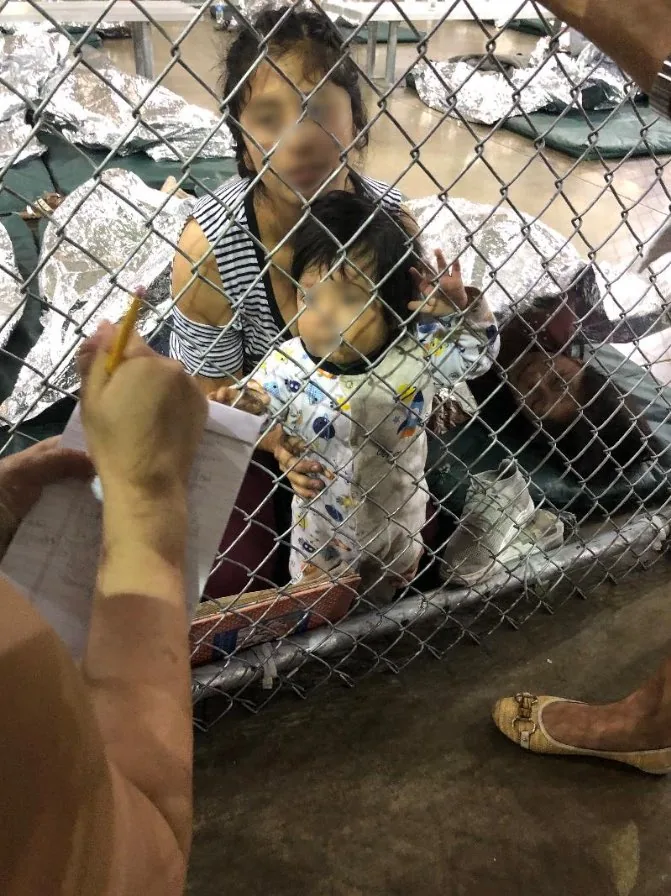
The Trump administration has quietly funneled over 90% of unaccompanied migrant children with new immigration court cases into Texas, a state where their facilities are unlicensed, their odds of getting a lawyer are catastrophically low, and the border is close enough to load them onto deportation flights. The Guardian broke the story, and the numbers are as bad as they sound. In San Antonio, just 8.7% of these kids have any legal representation on file.
What Is Actually Happening Here
In July, nearly 80% of unaccompanied children placed into immigration court proceedings were sent to Texas. In August, that number jumped to over 90%. The Guardian obtained this analysis from researchers at bklg.org, an immigration data insights platform, and the shift is as sudden as it is dramatic.
We are talking about 925 children currently in Health and Human Services custody with open court cases in Texas. Six hundred and fifty-one of them arrived there in just July and August. These are kids, from toddlers to teenagers, who came to the US alone, often fleeing abuse, trafficking, neglect, or outright danger at home. The federal government's Office of Refugee Resettlement, known as ORR, is legally responsible for their welfare. Right now, ORR is not responding to press requests for comment.
Texas Is Not an Accident
The administration has offered no public explanation for the shift. None. No policy announcement, no press briefing, no memo explaining why the vast majority of these children are now being concentrated in one Republican-controlled state. Advocates are doing the math themselves, and what they see is a geography that makes operational sense if your goal is mass deportation.
Texas is close to the border, where repatriation flights depart. Texas Governor Greg Abbott has refused to license ORR care facilities in the state, which sounds like opposition but functions as something closer to a gift: less oversight, fewer child welfare protections, fewer legal checks on what happens inside. Democratic Congresswoman Veronica Escobar, who represents west Texas, told the Guardian bluntly that Abbott is a "willing accomplice" in what she sees as a deliberate strategy. She is not wrong to say it.
Roxana Avila-Cimpeanu, deputy director at the Florence Immigrant and Refugee Rights Project, put it more directly: these facilities could become "a deportation churn out factory that has attorneys in name but not real representation." That phrase deserves to be read twice.
The Lawyer Problem Is Staggering
Nationally, only 31.7% of children in ORR custody with active immigration court cases have had a notice of legal representation filed. That number is already a scandal. In Texas, it falls off a cliff.
In Houston, 17.2% of kids have a lawyer on record. In El Paso, 18.6%. In San Antonio, 8.7%. These are children trying to argue their right to stay in the United States before immigration judges in what the Guardian describes as one of the harshest immigration jurisdictions in the country, and nine out of ten of them are doing it without anyone in their corner. The US immigration system is not designed to be navigated solo by adults. It is genuinely not designed for children at all.
The 3,000-Bed Question Nobody Can Answer
Here is where it gets harder to wave away as coincidence. ORR officials have been soliciting contracts for what they call "emergency influx facilities" capable of holding up to 3,000 children. Emergency influx facilities are only supposed to be activated when the agency's shelter network is operating at 85% capacity or higher for several days in a row.
ORR's current capacity utilization, by their own count, is about 27%. So they are planning for 3,000 emergency beds in a near-empty system. The Guardian obtained a transcript of a recent ORR roundtable with roughly 120 stakeholders, where officials pushed for a 90-day timeline to get facilities fully operational after a contract is awarded. A branch chief named Tony Canales said the administration wants "whatever you got" in terms of physical space, whether permanent facilities, temporary buildings, or blank sites ready to build on. "That is the intent of where we need to be," he said. For what, exactly? Nobody in the administration is saying.
Who Are They Planning to Fill Those Beds With
Encounters with unaccompanied children at the southwest border have been exceptionally low for the past year and a half, according to the Guardian's reporting. There is no surge. There is no looming wave of children at the border that would explain preparing 3,000 emergency beds on a 90-day clock.
What advocates fear is interior enforcement. A mass roundup of children already living inside the United States, moved from their communities into Texas facilities, processed through a system stacked against them, and deported. Avila-Cimpeanu asked the question out loud at the stakeholder meeting: "Who are they planning to fill those facilities with?" Nobody answered her. That silence is doing a lot of work right now.
The Dingo Take
You are supposed to believe this is normal case management. A routine reshuffling of where federal facilities happen to be located. Nothing to see here, just bureaucratic logistics. It is not that. Concentrating vulnerable children, many of whom fled violence and trafficking, in unlicensed facilities in a state whose governor openly collaborates with the administration, stripping them of legal representation, stationing them near the border, and simultaneously building out 3,000 empty beds on a 90-day emergency timeline is not a coincidence. It is a pipeline.
The children in these facilities have legal rights under US law. ORR exists specifically because Congress decided, at some point when this country had a longer attention span, that unaccompanied migrant children deserved protection from DHS enforcement, not delivery into it. What the Trump administration appears to be engineering is a system that satisfies the letter of those laws just barely enough to avoid a court injunction while gutting every practical protection those laws were meant to provide. Eight-point-seven percent legal representation is not due process. It is theater.
The fact that ORR went silent when the Guardian asked for comment tells you everything. When you have a good explanation for what you are doing, you give it. When you are running a deportation assembly line for children and you know it, you hope nobody notices until the flights have already left.



Comments