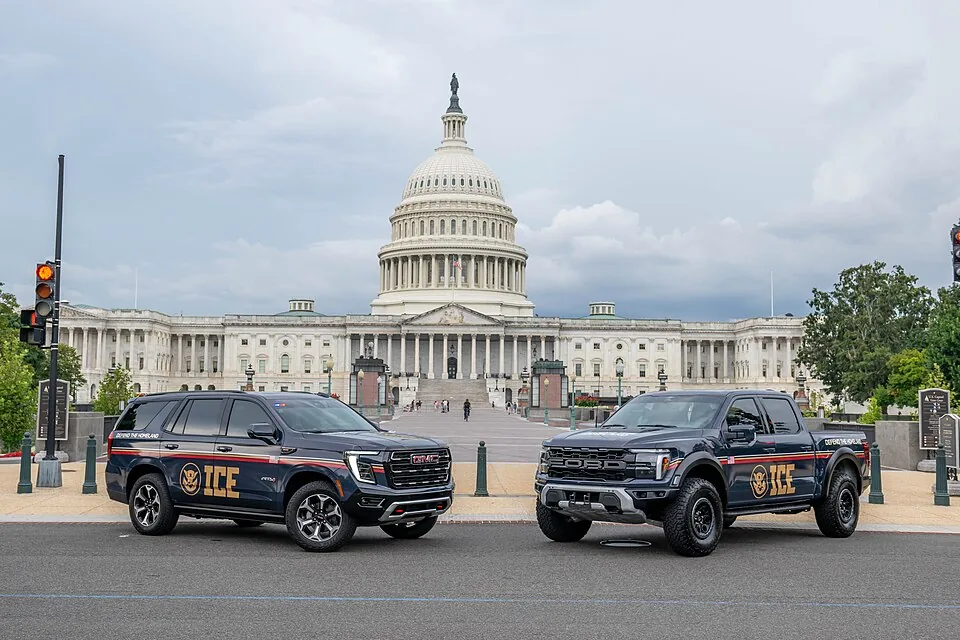
An ICE officer rammed a man's car on a North Austin street Sunday, got out, and fired at least five times, leaving the man shot once in the torso and fighting for his life. It is the latest in a string of shootings by federal immigration agents that has now stretched from Texas to Minnesota to Maine. Austin's mayor said he was angry about it. He also said he was not surprised at all.
What Happened on Sunday
The shooting occurred around 1 p.m. in North Austin, according to NBC News. Austin-Travis County EMS Chief Robert Luckritz confirmed at a press conference that the victim was shot once in the torso and transported to a local hospital, where he remains in serious but stable condition.
Austin City Councilmember Mike Siegel, who represents the district where the shooting happened and lives just blocks away, gave NPR a firsthand account. He alleged that an ICE officer rammed the man's vehicle before getting out and opening fire at least five times. Photos from the scene, shared by Siegel himself, show a dark blue Toyota Corolla parked under an overpass with at least two visible bullet holes in the passenger-side door.
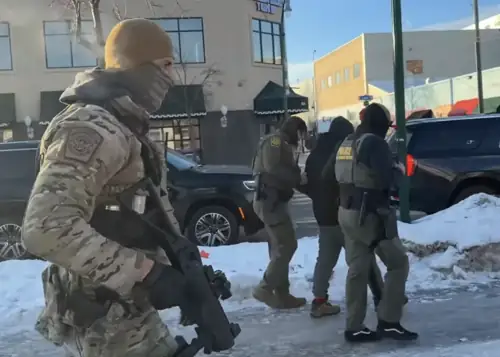
At least one other person at the scene, wearing civilian clothes, was put in handcuffs, according to video obtained by NPR. Austin Police Chief Lisa Davis said a small foot pursuit may have occurred before the shooting, but cautioned that the information was still preliminary. She was clear about one thing: Austin police were not involved.
Nobody Knows Who This Man Is, Or Why He Was Shot
Here is a foundational question that remains unanswered: was the man who got shot even the target of an ICE operation? As of Sunday evening, nobody had confirmed that. Austin Police Chief Davis told reporters those questions "still need to be answered." Mayor Watson said he did not know the man's nationality.
The Department of Homeland Security, which oversees ICE, did not respond to requests for comment from NPR, CBS News, or NBC News. The White House also did not respond. So we have a man with a bullet in his torso, a car with at least two holes in it, and the federal agency responsible for putting him there has nothing to say.
This is not a minor logistical detail. In Houston just this past July, ICE agents shot and killed Lorenzo Salgado Araujo, a 52-year-old Mexican national and father of three, during an attempted traffic stop. He was not the target of the warrant agents were trying to execute. He was just in the wrong place when agents decided to act.
A Pattern That Is No Longer Deniable
Austin Mayor Kirk Watson put it plainly at his press conference: "While I'm unhappy and I'm angry about it, I'm not surprised at all." That sentence should stop you cold. The mayor of a major American city is no longer surprised when federal agents shoot someone in his streets.
The record backs him up. According to NPR, the first person killed by immigration agents since Trump's second term began was Ruben Ray Martinez, shot in South Padre Island, Texas, on March 15, 2025. Then came the killings of Alex Pretti and Renee Good in Minnesota, which CBS News notes were "widely condemned" after video footage directly contradicted DHS's claims that Good was trying to run agents over with her vehicle. Then Lorenzo Salgado Araujo in Houston in July. Then Johan Sebastian, a 25-year-old Colombian man, shot by an ICE officer in Maine in July — an officer that CBS News reports several close relatives described as someone who "never should have been given a badge and gun" due to serious mental health issues. Now Austin.
Congressman Greg Casar, a Democrat who represents parts of Austin, did not mince words. "Over and over, ICE has shot people and then lied about what happened," he said, per NPR. "We can see the lies with our own eyes." He is demanding an independent investigation, the immediate release of body camera footage, and accountability for any officer who broke the law.
Austin Officials Want In on the Investigation
Mayor Watson made clear he does not trust ICE to investigate itself. He told reporters he has requested that the city of Austin be formally involved in any forthcoming investigation so that local police can offer, in his words, "clear third-party eyes and expertise." Given DHS's track record of issuing statements later proven false by its own footage, that request seems not just reasonable but essential.
Councilmember Siegel was more direct. "My hope today is that we can investigate what happened, and if an ICE officer committed a crime, that they will be fully prosecuted," he told NPR from the scene. He described the shooting as "a terrible incident that we were hoping to avoid in our community."
Dozens of community members gathered at the scene to protest. One woman told NBC News she has lived in Austin for 33 years and has never seen anything like this. "It broke my heart," she said. That's where we are now. Federal immigration enforcement has become so routinely violent that a lifetime Austin resident is standing on a street corner trying to process it like a natural disaster.
Texas Has Been Playing Along
It is worth remembering, when thinking about how this state ended up here, that Texas has not exactly been a reluctant participant. NPR reports that the Texas Department of Public Safety has been working closely with ICE since Trump took office. The state has been an enthusiastic partner in federal immigration enforcement at every level.
So when ICE agents are rolling through Austin streets ramming cars and firing five rounds into them, and the state apparatus has been actively facilitating that operation, local officials demanding accountability are pushing against a machine that was built with significant in-state cooperation. Austin is a blue city in a red state that has spent two years handing federal immigration agents every tool they asked for. The bill is now coming due on Austin's north side.
The Dingo Take
An ICE officer shot a man in Austin, and the agency responsible hasn't said a single word about it. No statement. No justification. No body camera footage. Nothing. That is not the behavior of an institution that believes it did something lawful. That is the behavior of an institution that has learned it does not have to explain itself to anyone.
Congress demanded answers after Renee Good was killed in Minneapolis and DHS's story fell apart on video. They demanded answers after Lorenzo Salgado Araujo was killed in Houston, a man who wasn't even the target. They are demanding answers again today about Austin. At some point, demanding answers from an agency that has systematically ignored every demand is just performance. What's actually being built, enforcement action by enforcement action, is a federal force that shoots people in the street and dares anyone to do something about it.
The Austin mayor said he is angry but not surprised. That is the most chilling political statement of 2026, and it barely made a ripple. A city's top elected official has adjusted his baseline expectations of American governance to include federal agents shooting people outside his window on a Sunday afternoon. If you are not furious about that sentence, read it again.



Comments