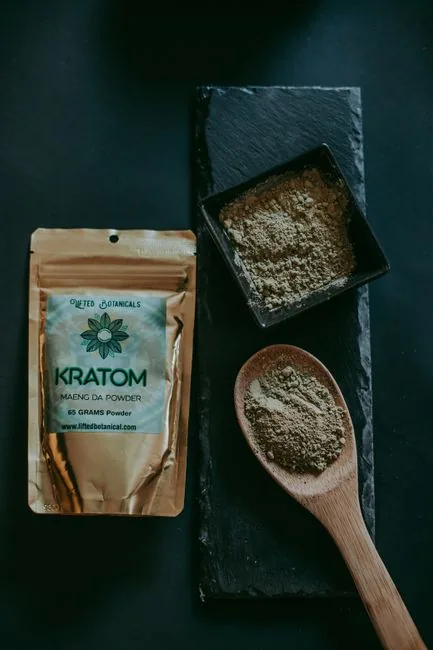
Two University of Mississippi students were found dead on Monday, and authorities have now confirmed that packaged kratom purchased from retail stores was discovered at both of their residences. Law enforcement hasn't officially linked the deaths to the substance yet, but they're not exactly telling people to relax either. On a campus now dotted with black ribbons hanging from Greek houses, nobody is waiting around for the toxicology report to come back before getting scared.
What We Know Right Now
According to NBC News, one student was found dead on the Ole Miss campus itself, and the other in the city of Oxford. Both were discovered Monday. Local authorities have not publicly identified either student, and Lafayette County Metro Narcotics said Tuesday it has no information confirming the two deaths are connected to each other.
The Metro Narcotics unit did release a statement saying that "packaged Kratom sold from a retail store was found during both investigations." Out of what they called an abundance of caution, they urged everyone to avoid kratom and any substance not prescribed by a doctor. That's the kind of statement you release when you're trying very hard to be responsible while also clearly being alarmed.
The investigations are being handled separately by local, state, and federal authorities. That's a lot of agencies to pull in for two deaths you're publicly calling unrelated.
What Kratom Actually Is
Kratom comes from a tree native to Southeast Asia, and it has exploded in popularity in the U.S. as a supposedly natural remedy for pain, anxiety, and opioid withdrawal. It shows up at gas stations, smoke shops, and online storefronts, packaged like a wellness product and priced like one too. It is not a wellness product.
The Drug Enforcement Administration lists kratom as a "drug and chemical of concern" and notes it can produce stimulating or sedating effects depending on dosage, and in some cases psychotic symptoms. The Mayo Clinic, as NBC News reports, calls it "unsafe and ineffective" and has linked it to a small number of deaths, though it notes that nearly all of those deaths also involved other substances.
Kratom is not federally banned. That's not because anyone has decided it's safe. It's because federal drug scheduling is slow, political, and perpetually behind the curve on whatever new thing is putting people in the ground.
Oxford Has Already Banned It. Doesn't Matter.
Here's a detail that makes this worse. NBC News reports that kratom is actually banned by local ordinance in Oxford, Mississippi. Which means these students, or whoever supplied them, went to a surrounding county to buy it. Captain Alex Fauver, commander of the Metro Narcotics unit, confirmed that kratom was found at each student's residence and said plainly, "We have a lot of problems with the kratom and people on it, it has no medical use."
This is the part where the patchwork of American drug law does exactly what it always does: creates a neat little legal line that substances and the people who want them cross without breaking a sweat. Oxford bans it. The county next door sells it in a strip mall. Students drive fifteen minutes and come back with a bag of something their local police captain considers a serious problem.
Campus Is Shaken
Raegan Settle, the student editor-in-chief of The Daily Mississippian, told NBC News that the mood on campus was "really frantic" as details emerged Tuesday. Greek organizations have been sending reminders to members to avoid any substance not personally prescribed to them by a physician. Students have been hanging black ribbons from fraternity and sorority houses.
The university issued a statement saying it was "heartbroken" and extended condolences to the families. Authorities asked the public not to speculate, acknowledging that a "significant amount of concern, speculation, and misinformation" was already circulating online. That last part is completely inevitable and also completely useless to say, but points for trying.
As of Tuesday, no other students or community members were reported to be impacted.
The Dingo Take
Two college students are dead. The substance found at both scenes is legal to buy thirty minutes from a city that banned it. There is no federal prohibition. There is no meaningful regulatory framework. There is a gas station in the next county that will bag it up and wish you a nice day.
This is the story of American drug policy in miniature. We do not get ahead of things. We do not act until the bodies accumulate in a pattern that becomes politically impossible to ignore, and sometimes not even then. The DEA flagged kratom as a concern years ago. The FDA has issued warnings. The Mayo Clinic says it's unsafe. And still it sits on shelves next to energy drinks because scheduling it would require political will that nobody in Washington has been willing to spend.
Two families are identifying their kids this week. The Metro Narcotics captain is on the phone telling reporters he has "a lot of problems" with a substance anyone with a car and twenty dollars can still go buy right now. At some point the gap between what we know and what we do about it stops being a policy failure and starts being a choice. We keep choosing this.



Comments