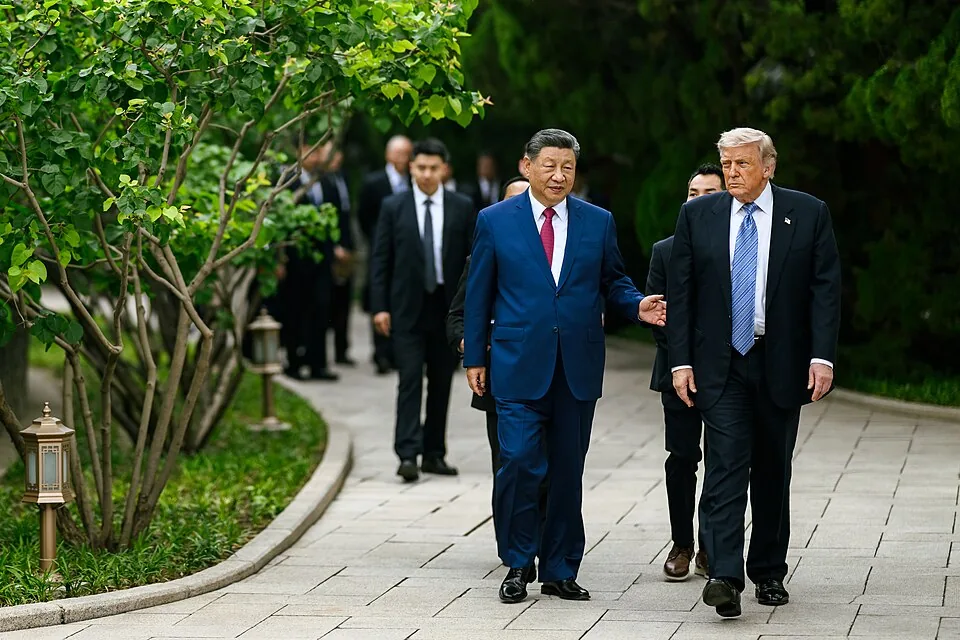
Two of the most powerful men on the planet are about to sit across a table from each other, and the issues between them include artificial intelligence, cyberwarfare, and the question of whether Taiwan stays a country. No pressure. According to NPR, which spoke with Rush Doshi of the Council on Foreign Relations, the summit between President Trump and Chinese President Xi Jinping arrives at what Doshi calls a genuinely precarious moment in the U.S.-China relationship.
The Stakes, Briefly Stated, Are Enormous
Let's just run through the list of things that could go catastrophically wrong here. Cybersecurity. Artificial intelligence. Taiwan. Each one of those is, on its own, the kind of issue that could define a presidency, reshape the global order, or start something no one is prepared to finish.
As NPR reports, Doshi laid out how the current moment in U.S.-China relations is not just another round of the usual diplomatic tension. The two countries are increasingly competing across every domain simultaneously, and a single summit is being asked to carry an enormous amount of weight. That is, historically speaking, not a recipe for calm and productive diplomacy.
Cybersecurity: The Fight Already Happening
One thing worth understanding before we get to the diplomatic niceties: the cyber conflict between the U.S. and China is not theoretical. It is ongoing. American government systems, critical infrastructure, and telecommunications networks have all been targets of Chinese state-linked hackers in recent years, with attacks growing in sophistication and ambition.
According to NPR's reporting on the Doshi interview, cybersecurity is one of the central issues on the table at this summit. That means the two presidents will be sitting across from each other discussing a form of warfare that is already being actively waged. The fact that we call these things "talks" makes it sound gentler than it is.
The AI Race Is Not a Metaphor Anymore
For a long time, American anxiety about Chinese AI development could be waved away as long-term strategic worry, the kind of thing think tanks fret about while the rest of us get on with our lives. That window has closed. The competition for dominance in artificial intelligence between the U.S. and China is now a defining feature of the relationship, with massive implications for military capability, economic productivity, and global technological influence.
NPR reports that AI is among the key issues expected to come up in the Trump-Xi summit. This puts the Trump administration in the interesting position of needing a coherent, sophisticated AI policy position at the exact moment when the administration's approach to, well, most things tends toward the instinctive and the improvisational. Whether Trump's team has done the homework on this one is a question that deserves a serious answer.
Taiwan: The One That Keeps Everyone Up at Night
Then there is Taiwan. The democratic, self-governing island that China considers a renegade province and has never officially renounced using force to reclaim. The place that sits at the intersection of U.S. defense commitments, global semiconductor supply chains, and Chinese nationalist politics.
As Doshi explained to NPR, Taiwan remains one of the most volatile elements of the U.S.-China relationship. American policy has historically operated on a principle of "strategic ambiguity," which is a polished way of saying the U.S. never commits fully to defending Taiwan in order to deter both Chinese aggression and Taiwanese moves toward formal independence. That careful balance requires disciplined, consistent messaging from the American president. Trump has not always been that president. He has, at various points, suggested things about Taiwan that sent diplomatic cables flying in every direction. Heading into this summit, no one is quite sure what version of the Taiwan position walks through the door.
What Doshi Says to Actually Watch For
Rush Doshi, who served on the National Security Council under the Biden administration and now sits at the Council on Foreign Relations, is one of the sharper analysts working on China policy. His read, as conveyed through the NPR interview, is that this is a moment requiring real strategic seriousness from both sides.
The problem is that summits between these two countries have a tendency to produce atmospherics rather than outcomes. Leaders shake hands. Aides read prepared statements about mutual respect and shared interests. The underlying tensions do not move. Whether this meeting produces anything durable, any actual agreement on any of these titanic issues, is genuinely uncertain. The track record is not encouraging.
The Dingo Take
You are supposed to look at a Trump-Xi summit and feel reassured that serious people are working on serious problems in a serious way. That is a hard sell right now. The Trump administration has spent years treating alliances like debts to be collected and diplomacy like a real estate negotiation, and now it is sitting down to discuss the future of AI governance, cyberwarfare norms, and the sovereignty of Taiwan with the one country that could plausibly challenge American global power. The preparation required for that meeting is staggering. The confidence that this administration did that preparation is limited.
Chinese diplomacy, it should be noted, runs on patience and long-term positioning in a way that American politics, with its four-year cycles and perpetual news churn, structurally cannot match. Xi Jinping does not have to worry about what Tucker Carlson says tomorrow morning. He does not have to manage a base. He can play a long game. Trump, historically, wants a deal he can announce before the news cycle moves on.
None of this means the summit will be a disaster. Doshi's analysis, as NPR presents it, suggests there are real opportunities to stabilize a relationship that badly needs stabilizing. But stabilization requires honesty about where things actually stand, discipline in the room, and follow-through after the cameras leave. Three things. Watch for all three. Hope to see at least one.




Comments