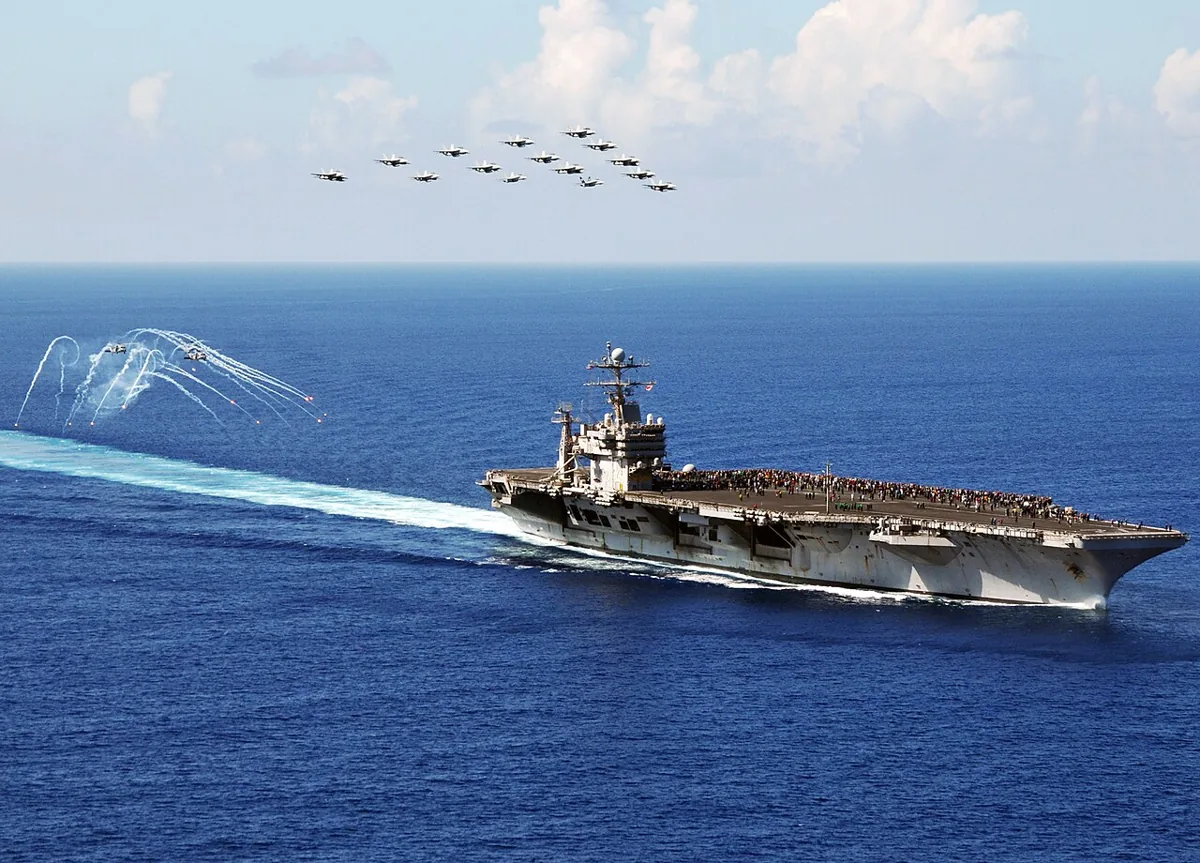
Eight sailors assigned to the USS Abraham Lincoln carrier strike group attempted suicide during a nine-month deployment that Pete Hegseth spent publicly insisting the media had "completely misrepresented" conditions aboard the ship. The Pentagon has now confirmed those attempts in writing. In a letter. To a senator.
What the Navy Actually Admitted
Acting Navy Secretary Hung Cao confirmed the eight attempts in a Tuesday letter to Sen. Kirsten Gillibrand, first reported by CNN. The letter states that the eight sailors included crew from the Lincoln itself as well as personnel from the carrier air wing, escorting destroyers, and all embarked aviation squadrons.
According to the Guardian, one sailor attempted to go overboard in March and was physically stopped by shipmates. A second sailor did go overboard in early August and had to be rescued by helicopter before being transferred off the ship for follow-up care. Cao noted, as though this were a selling point, that none of the eight attempts succeeded.
The ship, which had approximately 5,000 crew aboard, was at sea for 286 days total. The BBC reports the deployment began in November 2025 with a scheduled end date of May 2026, then got extended. Then extended again. The crew didn't disembark until September 1, in a Thai resort city, in what the Navy apparently considered an adequate consolation prize for nine months of floating hell.
The Conditions They Were Living In
Before the Pentagon confirmed the suicide attempts, military newspapers were already reporting on what sailors described as a deteriorating situation. The Guardian reported in August on allegations of mold in showers, dwindling food supplies, and shortages of basic necessities like soap.
Cao's letter acknowledged "localized piping failures" and problems with the ship's reverse osmosis desalination units. On food, he confirmed that the number of entree options was temporarily reduced from two to one, which he framed as a measure "implemented to optimize endurance and ensure sustained time on station." That is a sentence a human being wrote about giving sailors one dinner option on a nine-month deployment. He insisted that four nutritionally balanced meals were still served daily.
A January 2025 study of 956 sailors, cited by the BBC, found that troops aboard US Navy ships suffer the highest rates of serious psychological distress of any branch of the military. The study pointed specifically to poor habitability, noise, and schedules that don't leave enough time to sleep. That study existed before the Lincoln ever left California. The administration deployed these sailors anyway, then extended their mission by four months, then called the resulting coverage fake news.
How Hegseth and Trump Handled It
In August, as family members were raising alarms publicly and military newspapers were reporting on the mental health situation aboard the Lincoln, Pete Hegseth went in front of cameras and said news outlets had "completely misrepresented" the situation. "We make sure every ship, every crew, every captain has everything we can provide them at every single moment," he told reporters, according to the Guardian.
Trump also weighed in to dismiss the concerns, which Gillibrand described as doing so "with open disrespect." The administration's position, held confidently through August, was that this was a media fabrication. The administration's position, as of this week, is confirmed in a letter from the acting Navy secretary: eight suicide attempts, one sailor rescued from the water by helicopter.
This is the same Pete Hegseth who has spent his tenure at the Pentagon lecturing the military about warrior ethos and wokeness and the need for toughness. Apparently the toughness required of sailors is enduring nine months at sea with broken plumbing, one dinner option, and deteriorating mental health while their boss tells the press everything is fine.
Gillibrand Isn't Letting This Go
Gillibrand, who sits on the Senate Armed Services Committee, had been pushing for answers on conditions aboard the Lincoln since August. The Tuesday letter from Cao was the Pentagon's formal response to her inquiry.
In statements to CNN, the Guardian, and the BBC, she did not soften her language. "What Trump and Secretary Hegseth dismissed as 'fake news' turned out to be serious and deteriorating conditions for our service members," she said. "Our troops and their families make immense sacrifices every single day, yet the president dismissed them with open disrespect. That this administration can find endless taxpayer dollars for bombs, ballrooms, and billionaires, but cannot take care of our service members, is completely unacceptable."
The Navy, for its part, responded to the Guardian with the kind of statement that makes you want to put your head through a wall: "The Navy and the Navy secretary are very committed to sailor health, wellbeing and morale." Yes. Eight suicide attempts committed. Very committed.
The Bigger Picture Nobody Should Miss
Suicide remains a leading cause of death in the US Navy and Marine Corps, according to an analysis of military data by USNI News. Veterans broadly have higher suicide rates than non-veterans, according to the Veterans Administration. These are not new numbers. This is a known, documented, persistent crisis in the American military.
The Lincoln's deployment was connected to Operation Epic Fury, the US military campaign against Iran that began in February. The ship was originally headed to the South China Sea when it was redirected to the Arabian Sea in January, then kept there well past its scheduled return. The crew finally got a few days in Pattaya, Thailand, before continuing home. The BBC covered their arrival there: sailors shopping, hitting bars, seeing sunlight. After 250-plus days at sea during a war, in the conditions described above. That was their decompression.
The Dingo Take
You are supposed to believe that an administration this loud about supporting the troops, this relentless about criticizing anyone who questions military readiness, this eager to use these sailors as justification for bombing Iran, simply did not know what was happening on the Lincoln. That is the charitable version. The less charitable version is that they knew, called it fake news anyway, and are now confirming it in writing only because a senator kept asking.
Eight people tried to die. One of them went into the ocean. The response from the Secretary of Defense was to go on camera and accuse journalists of lying. The response from the President was dismissal. Cao's letter, now confirmed, reads like a document designed to technically answer the question while minimizing every single thing it admits. One entree option was "optimizing endurance." Pipe failures were "localized." Eight suicide attempts across a strike group in nine months is presented as a data point, not a catastrophe.
Suicide is the leading cause of death in the Navy. That fact was available before the Lincoln shipped out. The mental health research was published before the deployment began. None of it changed the calculus. What changed the calculus was a senator refusing to accept non-answers, and even then, what we got was a letter that confirmed the worst while defending every decision that led there. These sailors deserved better than a four-month extension, a single dinner option, and a secretary of defense telling the world their suffering was a media invention.




Comments