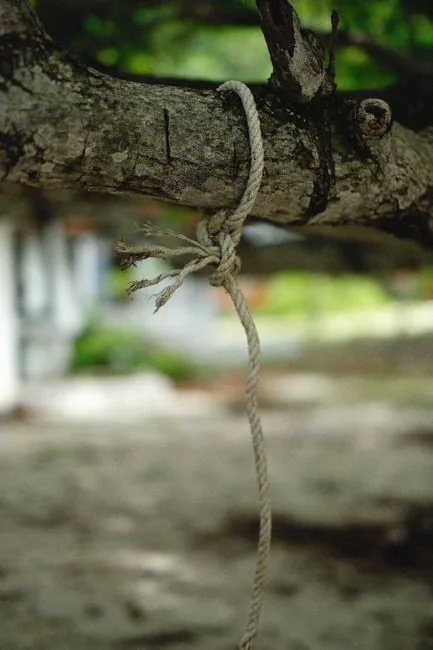
A 29-year-old Black woman found hanging from a tree behind an abandoned home in Jackson, Mississippi last month was not killed there. That's what detectives told a court Friday, revealing that police believe Tasia Fortune's hanging was staged and that she was likely murdered somewhere else entirely before her body was moved and displayed. Someone, in other words, went to considerable effort to make this look like something it wasn't.
What the Court Heard Friday
New details about Fortune's death came out during a bond hearing for Jarques Ratliff, 51, one of two men already arrested and charged with murder in the case. According to NBC News, a detective testified that the hanging was staged and that Fortune may have been dead for two or three days before anyone found her on August 3rd. She was hanging from a tree behind a vacant Jackson home. Nobody called it in for days.
The detective also mentioned that a dispute over missing illegal narcotics may factor into the motive, though they stopped short of elaborating because, as they put it, the grand jury hasn't yet received all the evidence. So the full picture is still being assembled, piece by incriminating piece.
Ratliff pleaded not guilty at an earlier hearing this month and was denied bond. His attorney, Toney Baldwin, told the court his client claims no involvement and that he believes him. Ratliff himself told the judge that Fortune was his friend. Whether that holds up is another question entirely.
The Second Suspect and What He's Accused Of
The other man charged with Fortune's murder is Earnest Lloyd Jr., 25. NBC affiliate WLBT of Jackson reported that Lloyd allegedly had a physical altercation with Fortune either days or minutes before she died. He is accused of being the one who hung her body using a black cable cord.
Both Lloyd and Ratliff are Black, a detail that matters in the broader context of how this case has been received. When Fortune's body was first discovered hanging from a tree, the image carried an unmistakable historical weight. The possibility of a racially motivated hate crime was one that many people, understandably, raised immediately.
Police have also obtained a warrant for a third suspect, whose identity has not been publicly released. This investigation is not close to finished.
A Family Waiting for Answers
Fortune's mother, Christy Spivey, appeared at Friday's hearing. According to NBC News, she said she wants to know exactly what evidence police are holding. That's not an unreasonable thing to ask. Her daughter was found dead, hanging from a tree, and weeks later the family still doesn't know what killed her or why.
A cause of death has not been released publicly. A motive, beyond the vague reference to missing narcotics, hasn't been confirmed either. What the family knows is that two men are charged, a third is wanted, and the scene where their daughter was found was, according to the detective on the stand Friday, deliberately constructed to deceive.
Why the Staged Scene Makes This So Much Darker
Staging a hanging takes planning. It is not an impulse decision. Someone who stages a death scene has thought about what investigators will find and made a calculation about how to control that narrative. In Fortune's case, police believe she was killed somewhere else first and then transported to an abandoned property and strung up. That is a significant logistical undertaking, and it points to at least some degree of premeditation and coordination.
The narcotics angle, if it bears out, would place this in the territory of a targeted killing. But that determination is still pending. What isn't pending is the murder charge. Two men are already locked up, a third is being sought, and a grand jury is working through the evidence. The machinery of the case is in motion, even if the full truth isn't public yet.
The Dingo Take
You are supposed to look at a woman found hanging from a tree and accept the image at face value. That's what someone, allegedly, was counting on. The entire point of staging a scene is to short-circuit the investigation before it starts, to give the story a shape that closes off questions rather than opens them. Whoever did this apparently thought a Black woman hanging behind an abandoned Mississippi home would just be processed and filed. It wasn't.
Tasia Fortune was 29 years old. She may have been dead for two to three days before anyone found her. That's the detail that should sit with you. Not hung there for hours, but for days, behind a vacant building, while her family presumably had no idea where she was. Whatever happened to her in the hours before her body ended up in that tree, it was bad enough that someone went to the trouble of building a cover story out of her corpse.
The investigation is still moving. The cause of death hasn't been released. A third suspect is still out there. Christy Spivey is still waiting for answers about what happened to her daughter, and she deserves them. The court will eventually produce a fuller account of what was done to Tasia Fortune and by whom. Until then, the only thing that's clear is that someone thought they could get away with it. Detectives are working to make sure they don't.



Comments