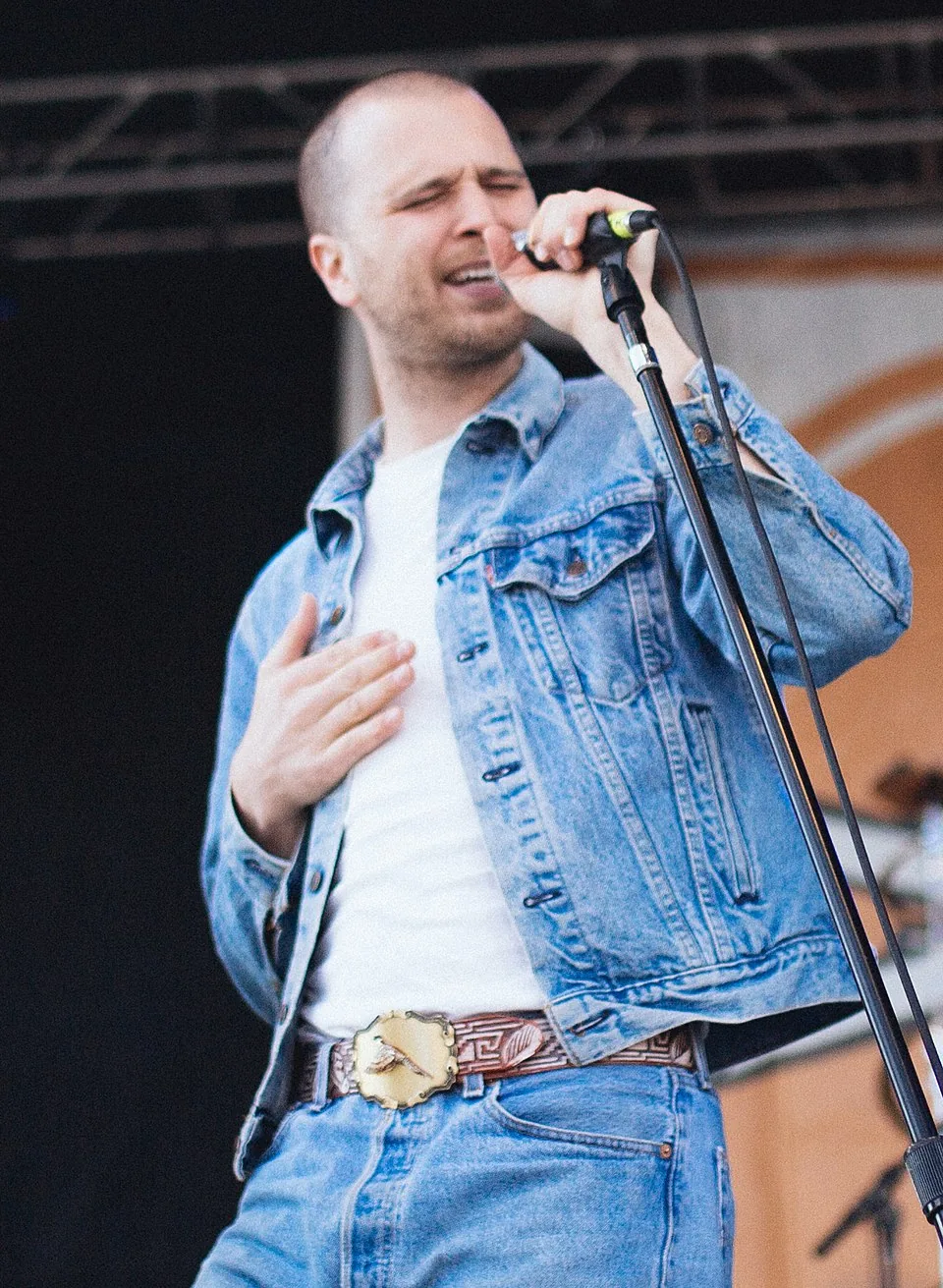
The Trump administration used a song called 'Love Me' in a government ad that critics say was illegally funded by taxpayers. The artist who made that song would like everyone to know he does not, in fact, love them. On Monday, R&B musician JMSN sent a cease and desist letter to White House chief of staff Susie Wiles demanding the administration stop using his music immediately.
The Letter Was Not Subtle
According to Axios, attorneys representing JMSN sent the letter Monday, and they did not mince words. 'To be absolutely clear, JMSN does not want to be viewed as directly or indirectly affiliated with the President or his Administration,' the letter read. That is about as unambiguous as legal correspondence gets.
The attorneys include lawyers from Democracy Defenders Action, which tells you something about how seriously JMSN is treating this. You don't bring in a civil rights-adjacent legal outfit because you're mildly annoyed. You bring them in because you want the White House to understand that this is not a negotiation.
The Ad Itself Is the Real Problem
The song didn't just appear in any random campaign video. It was the soundtrack to a government ad, which means it was funded by taxpayers. Not by the Republican National Committee. Not by some dark-money PAC. Taxpayers. Yours and mine.
Critics have argued the ad crosses a legal line, and it's not hard to see why. Using public money to produce what amounts to promotional content for a sitting president is the kind of thing that tends to make lawyers reach for their briefcases. The fact that the administration apparently didn't bother to license the music before airing the whole thing is almost a side issue at that point, though it does add a certain comedic layer to the situation.
The administration has not publicly responded to the cease and desist as of Monday.
Trump Has a Long History of Stealing Artists' Songs
If this story feels familiar, that's because it happens with the consistency of a season changing. The Trump administration and the broader MAGA movement have spent the better part of a decade treating the entire music catalog of America as a free buffet.
Phil Collins, Celine Dion, Neil Young, Adele, Rihanna, Beyonce, the estate of Isaac Hayes, the Rolling Stones. The list of artists who have demanded Trump stop using their music reads like an extremely eclectic Spotify playlist. As Axios notes, the administration has repeatedly come under fire for using celebrities' music and images without permission. At a certain point, you have to ask whether this is carelessness or whether the administration simply doesn't believe the rules apply to them. Based on available evidence, the answer is probably both.
Who Is JMSN, and Why Does It Matter?
JMSN is a Michigan-born R&B artist and producer who has been making music since the early 2010s, known for a moody, atmospheric sound that sits somewhere between soul and indie pop. He is not a household name in the way that, say, Neil Young is, which might be exactly why the administration thought they could get away with this one.
But that calculation, if it was a calculation, appears to have backfired. Small artists tend to fight harder, not softer, when their work is appropriated without consent. And 'Love Me,' a song about longing and vulnerability, being used as the emotional backdrop for a government ad promoting a president who was not legally supposed to be promoting himself with public funds is the kind of irony that writes its own punchline.
JMSN has not released a public statement beyond the letter, but given the specificity of the language his attorneys used, the message seems clear enough.
The Taxpayer Money Question Is the One That Should Stick
Look, artists sending cease and desist letters to politicians is practically a genre at this point. It's news, but it has the comfortable familiarity of a recurring bit. The part of this story that deserves more sustained attention is the underlying ad itself.
If the government used taxpayer money to produce an ad that functions as political promotion for a sitting president, that is a potential violation of federal law. The Hatch Act and related statutes exist precisely to prevent the executive branch from blurring the line between governing and campaigning on the public dime. Critics say that line was not just blurred here but bulldozed.
Congress could ask questions about this. Oversight committees could subpoena records about how the ad was produced and who authorized the budget. Whether any of that happens in the current political environment is a different question entirely.
The Dingo Take
You are supposed to believe that an administration that has been caught doing this dozens of times, with dozens of artists, across two terms and counting, just keeps accidentally forgetting to clear the rights to music. Forgetting once is a mistake. Forgetting at a rate that has produced a Wikipedia-length list of cease and desist letters is a policy.
The music theft is annoying. The taxpayer funding is the actual scandal. A government ad is not a campaign ad, and producing one that functions as a campaign ad, set to someone else's copyrighted music, and billing it to the American public is three separate problems stacked in a trench coat pretending to be one.
JMSN will probably get what he wants here. The administration will quietly pull the song, issue no apology, and use someone else's music in the next ad without asking. The taxpayer money question will get three paragraphs in the news cycle and then disappear. That's been the pattern for years. At some point the pattern is the story.

Comments