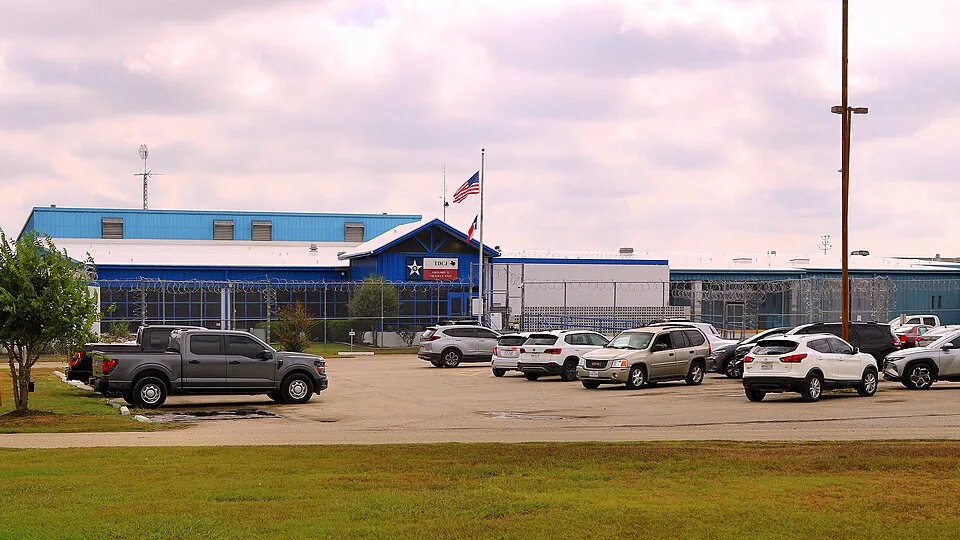
A nonprofit run by five formerly incarcerated women just beat the largest prison system in the United States in federal court. A judge ruled this week that Texas must air-condition all of its prisons by 2029, covering nearly 89,000 people currently baking in facilities with no climate control. The state where outdoor heat indexes exceed 130 degrees has been letting people die in concrete boxes every summer, and it took a group of women who lived through it to finally make someone do something about it.
What the Judge Actually Found
U.S. District Court Judge Robert Pitman did not mince words. In a 150-page order, he found that heading into summer 2026, roughly 88,697 incarcerated people in Texas were housed in units with no air conditioning. The Texas Department of Criminal Justice provides cool beds for only about 37 percent of its population. Everyone else sweats it out.
According to The 19th, which broke this story, Pitman invoked the Eighth Amendment, which prohibits cruel and unusual punishment, and concluded that the state is violating it. "In a state where outdoor heat indexes exceed 130 degrees, inmates in Texas prisons are suffering — and in some cases dying — in extreme heat every summer," he wrote. That is not a gray area. That is a federal judge saying the state of Texas has been torturing people.
The ruling requires TDCJ to bring all facilities into compliance by the end of 2029, aligning prisons with rules that already require Texas county jails to maintain temperatures between 65 and 85 degrees. So Texas county jails have had to meet that standard for years. State prisons, which house far more people and are far more dangerous, did not. Think about that for a second.
Who Actually Won This Fight
The organization that pushed this across the finish line is called Lioness Justice Impacted Women's Alliance. Founded in 2022, it runs on one full-time executive director and four part-time employees. Every single one of them has been incarcerated. Their total membership is about 500 people, including 400 who are currently inside Texas prisons.
This is the group that took on the largest prison system in the country. And won.
Lioness joined an existing federal lawsuit in 2024, originally filed on behalf of Bernie Tiede, a 65-year-old man with diabetes and high blood pressure who argued the heat had damaged his health. The 19th reports that Lioness expanded the case significantly, bringing in their own documentation, their own members' testimony, and years of meticulous record-keeping about what was happening inside.
Diane Thompson, Lioness' director of member relations, kept a spreadsheet. She logged every heat-related letter that came in from incarcerated members: names, units, dates, specific health complaints, anything notable. She saved the physical letters too. Judge Pitman cited those letters directly in his order. A spreadsheet and a file folder helped win a landmark federal civil rights case. Sometimes the most unglamorous work is the most important work.
Letters From People Nobody Was Listening To
For years, letters poured into Lioness' mailbox from people inside Texas prisons describing what the heat was doing to them. According to The 19th, Thompson said some people "just wrote because they were hot, frustrated, sad and exhausted, and they felt forgotten." They needed someone on the outside to hear them.
Marci Marie Simmons, Lioness' director of communications, spent a decade incarcerated in a Texas prison. She knows exactly what those summers feel like. "I remember laying in my bunk — we weren't allowed to lay on the floor in that prison — and I remember thinking, 'I don't know if I will survive this,'" she told The 19th. That is not hyperbole. People have died.
Carlee Purdum, an associate professor of sociology at the University of Houston who has researched how natural disasters affect incarcerated people, told The 19th that incarcerated people in her surveys described heat illness, passing out, seizures, and rashes. She said the deepest harm is psychological. "The most significant impact is just the helplessness and the dehumanization that a person feels. It's not being able to protect yourself and not being able to protect the people around you that you care about, and feeling like nobody else cares." Until now, for tens of thousands of people, nobody in power did.
Texas Has Been Sitting on This Problem for Years
This is not a new issue and Texas has known about it for a long time. The state's prison population is larger than the population of many individual countries. The heat crisis has been documented, litigated, and argued over for years. And the state's response, until a federal judge forced the issue, was essentially: this is fine.
The Lioness lawsuit was filed jointly with Texas Prisons Community Advocates and Texas Citizens United for Rehabilitation of Errants. The 19th reports that Simmons described the organization's approach as fundamentally member-driven. Incarcerated people led the advocacy work. Their letters, their experiences, their testimony formed the backbone of the legal case. "Because of the structure of our organization, that is what got us to the finish line in this case," Simmons said.
The state now has until the end of 2029 to comply. That is not a short runway. There will almost certainly be legal challenges, budget fights, and foot-dragging from a state government that has had decades to address this voluntarily and chose not to. The celebration is warranted. The vigilance has to continue.
The Dingo Take
You are supposed to believe that the Texas state government, which has jurisdiction over nearly 89,000 people living in unairconditioned concrete facilities in a state where it gets hot enough to kill you, simply hadn't gotten around to fixing it. That it was a resource problem, or a logistics problem, or some complicated bureaucratic challenge that required more study. It was not. Texas county jails have been legally required to maintain temperatures between 65 and 85 degrees for years. The people running the state prison system knew that standard existed. They chose not to apply it to state prisons. That is a choice. It always was.
What Lioness did here is almost impossible to overstate. Five women, working part-time, with a spreadsheet and a file folder and 400 members writing letters from inside prison walls, beat the largest incarceral system in the country in federal court. They didn't have the resources of a major law firm or the backing of a powerful political coalition. They had documentation, persistence, and the lived experience of knowing exactly what they were fighting about. That combination turned out to be enough.
The ruling still has to be implemented. Texas will find ways to slow-walk it, and someone will sue to delay it, and 2029 is three years away. But a federal judge has now said, in 150 pages, that what Texas has been doing to incarcerated people every summer constitutes cruel and unusual punishment under the Constitution. The lionesses were right. They were right the whole time.




Comments