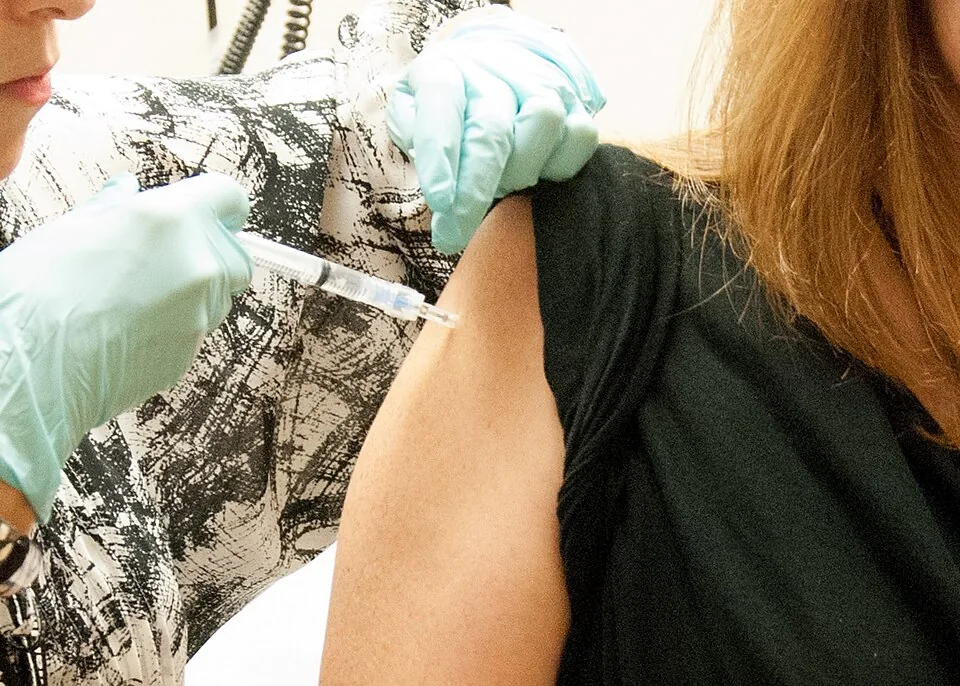
A leading infectious disease doctor is now warning people traveling into the United States to make sure their vaccines are up to date before they arrive, because it has become genuinely dangerous to be in this country without full measles immunity. The U.S. has logged over 3,600 confirmed measles cases as of late September, with exposures turning up on public transit, in sports stadiums, and in bars across multiple states. This is not a developing country health crisis being reported on from a safe distance. This is happening here.
The Numbers, and Why the Real Numbers Are Worse
The CDC has confirmed more than 3,600 measles cases in the United States as of September 24, 2026, according to NPR. Two deaths have been confirmed federally as of September 28, though Pennsylvania's own Department of Health has counted four measles-associated deaths in that state alone. The CDC has disputed whether measles directly caused those additional deaths, which is the kind of bureaucratic hairsplitting that tends to age very poorly.
Dr. Paul Offit, director of the Vaccine Education Center at Children's Hospital of Philadelphia, told NPR he believes the official case count is almost certainly an undercount. 'I think if anything, we're underestimating how many people are actually being exposed, and how many people are being infected, and how many people are being hospitalized and dying,' he said. His reasoning is straightforward: plenty of people who get sick never see a doctor, which means they never get counted.
The Johns Hopkins Bloomberg School of Public Health measles tracker shows Pennsylvania, Ohio, and New York carrying the heaviest caseloads over the last two weeks. That's a corridor running from the mid-Atlantic through the Rust Belt, which is not exactly a remote, quarantine-ready geography. These are dense, heavily traveled states with airports, train stations, and stadiums full of people.
You Don't Even Have to Meet the Sick Person
Here is the part of the measles story that people consistently fail to internalize. You do not need to shake hands with, stand next to, or even see the infected person to catch it. Measles travels through the air, and an infected person's viral particles can linger in a space for up to two hours after they've left the room. You could walk into a bar two hours after a contagious person walked out and still get infected.
Offit told NPR that one person with measles can infect somewhere between 15 and 18 other susceptible people. Susceptible means unvaccinated or never previously infected. And if you fall into that category and get exposed, the CDC estimates up to 9 out of every 10 people in your situation will contract the disease. Those are not odds. That is a near-guarantee.
The City of St. Louis Department of Health issued a public notice after a person who visited local bars and a sports stadium tested positive, according to NPR. California health officials separately warned residents after an unvaccinated traveler rode trains and buses across multiple California counties while contagious. This is how it spreads. Public spaces. Ordinary life.
It Is Not Just a Rash
There is a stubborn cultural mythology in the United States that measles is a minor childhood nuisance, a week of spots and fever before everything goes back to normal. Dr. Kalyani McCullough, who leads the Vaccine Preventable Disease Epidemiology and Control Section at the California Department of Public Health, told NPR that framing is wrong and potentially fatal.
'It can affect a lot of different parts of the body, and it can have long-lasting effects as well,' McCullough said. One of those long-lasting effects is immune amnesia, a documented condition where measles infection strips the body of its existing immunity to other diseases, leaving survivors more vulnerable to infections they had previously been protected against. You catch measles, survive, and then find your immune system has been partially reset to factory defaults. That is a real thing that happens.
'So I think it's just important for people to realize that getting measles can have some pretty serious consequences,' McCullough told NPR. That sentence is doing a lot of heavy lifting given what she's describing.
A Doctor Just Called the U.S. Dangerous for Unvaccinated Visitors
Every expert interviewed by NPR agreed that the most important protective step for anyone traveling, whether within the U.S. or into it, is to confirm full vaccination status. Two doses of the MMR vaccine is the standard. If you don't know your records, you talk to your doctor.
Offit went further. He told NPR that international travelers need to treat the United States the way Americans used to treat certain foreign destinations: as a place with a live disease risk that requires preparation. 'I think anybody who is traveling from another country into the United States should make sure they're up to date on their vaccines, because it's dangerous to be in the United States now if you are not fully immune to measles,' he said.
Sit with that for a second. An American doctor, a prominent one, is now issuing the kind of travel health warning about his own country that the State Department usually issues about places experiencing active civil unrest. America has become a measles risk destination. We did this. Entirely preventable, entirely predicted, and here we are.
Tracking It Is a Nightmare, and There Are Not Enough People Doing It
Even when health officials identify a confirmed case, the process of tracing exposures is brutally slow. Measles symptoms typically appear seven to fourteen days after exposure, sometimes as late as twenty-one days. That means by the time a case is confirmed, the contagious person has potentially spent three weeks moving through public spaces.
McCullough told NPR that once a case is confirmed, epidemiologists have to interview the patient about everywhere they went during the four days before their rash appeared, which is when they were actively contagious but had no visible symptoms. 'So it's a really labor-intensive process,' she said. That labor-intensive process is happening right now across a country that has spent years systematically defunding and hollowing out its public health infrastructure.
The Dingo Take
An American doctor just told foreign visitors to get vaccinated before coming to the United States. That sentence would have been treated as a dark joke five years ago. It is now routine public health guidance.
Almost every single one of the 3,600-plus confirmed cases has been among unvaccinated individuals, according to NPR. This is not a mystery illness, not an unknown pathogen, not something science is still working to understand. It is a disease we defeated decades ago with a cheap, safe, well-understood vaccine. The resurgence exists for one reason: a coordinated, well-funded, politically-amplified campaign to convince American parents that vaccines are dangerous has successfully convinced enough of them that measles is back. Robert Kennedy Jr. spent years doing this work. He is now running a federal health agency. The outcomes are not a coincidence.
The CDC is currently disputing whether measles killed the people measles killed. State health departments are issuing stadium exposure notices. A doctor is warning international travelers about coming to America. If you are still on the fence about what the last several years of anti-vaccine politics have actually cost this country, Pennsylvania has four families who could tell you.


Comments