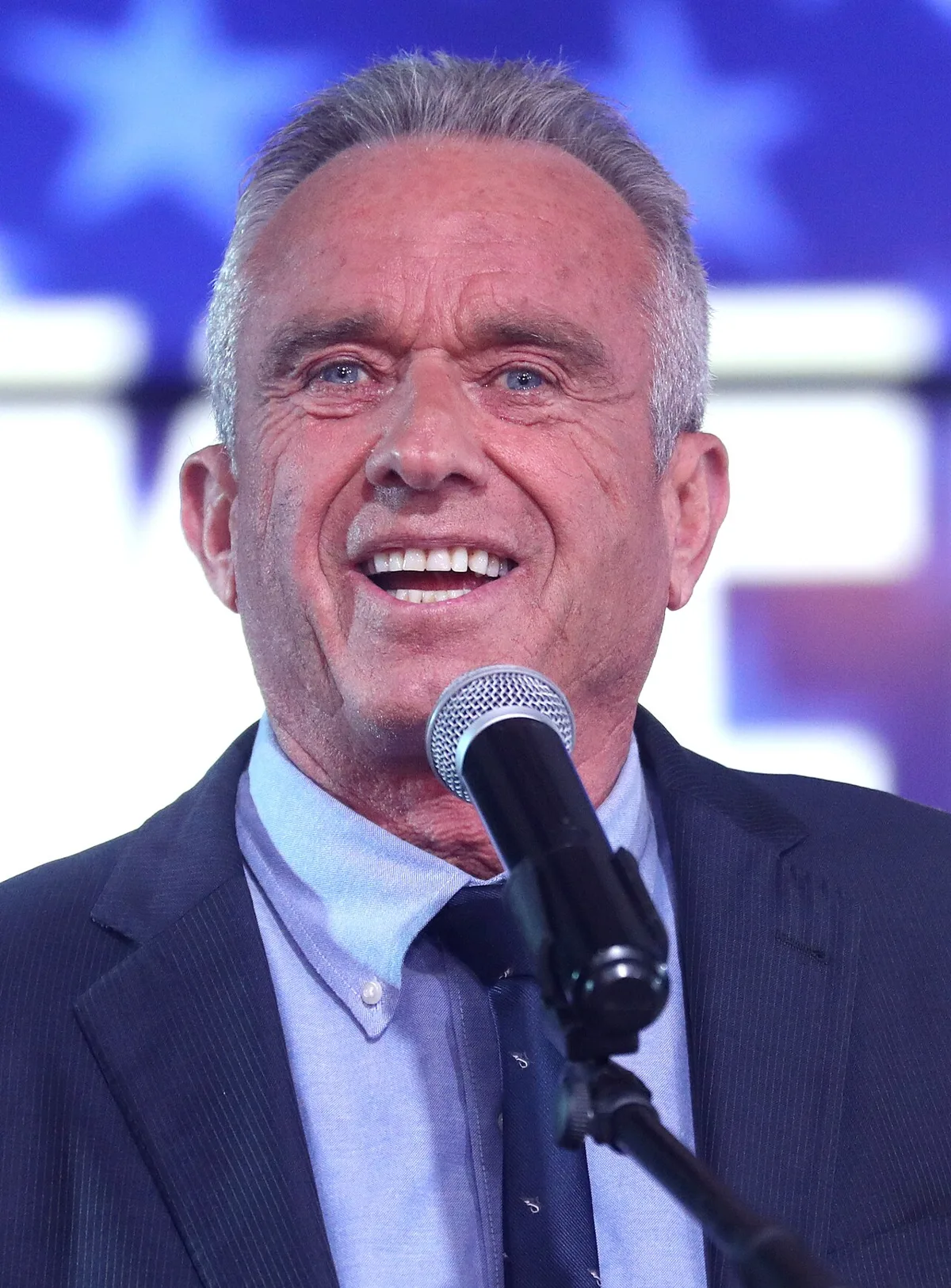
The Trump administration has decided that the people best positioned to reimagine America's drug development pipeline are Robert F. Kennedy Jr. and Mehmet Oz. This is not a bit. According to Axios, HHS is formally launching a new program Wednesday to overhaul how clinical trials are designed, with Kennedy and TV's favorite supplement enthusiast among the faces of the rollout.
What They're Actually Announcing
Axios, which got the exclusive, reports that Health Secretary RFK Jr. and ARPA-H Director Alicia Jacksonare unveiling the new program in Austin, Texas on Wednesday. CMS Administrator Mehmet Oz and FDA leadership are also involved. The stated goal is to dramatically cut the time and cost required to bring new drugs to market.
The administration is pitching this as a way to boost U.S. competitiveness in what it calls the global biotech race. The idea, as Axios describes it, is to use this effort as a template for reconfiguring the entire drug development process. That is a significant ambition. A genuinely significant ambition, dressed up in the credentials of two men whose scientific reputations could charitably be described as checkered.
The People Running This Are the Story
Let's just sit with the roster for a second. Robert F. Kennedy Jr. spent years as one of the most prominent vaccine skeptics in the country, promoting the thoroughly debunked link between vaccines and autism. He has a documented history of treating fringe scientific claims as serious evidence and serious scientific consensus as a conspiracy. He is now the Secretary of Health and Human Services.
Mehmet Oz is a television personality who built a media empire on miracle cures, unproven supplements, and health advice that major medical organizations repeatedly called out as misleading or outright false. A 2014 study published in the BMJ found that roughly half of his show's recommendations had no scientific backing. He is now the Administrator of the Centers for Medicare and Medicaid Services, one of the most powerful healthcare positions in the federal government.
These are the men who will be setting the parameters for how America tests whether new medicines are safe and effective. Take a moment.
Is There Anything Legitimate Here?
To be fair, which is something we try to do even when it hurts: the current clinical trial system in the United States is genuinely slow, genuinely expensive, and genuinely in need of reform. Drug development timelines stretch for years, costs run into the billions, and the burden falls hardest on rare disease communities and patients who run out of time waiting for treatments to clear the process. Serious researchers across the political spectrum have been pushing for smarter trial design for years.
ARPA-H, the health research agency modeled after DARPA, was actually created under Biden and has real scientists on staff. Director Alicia Jackson is a legitimate researcher. If this program produces actual policy built on actual evidence, and if the FDA career staff doing the technical work are allowed to do it properly, there is a world in which something useful comes out of this. That world requires the two most prominent faces of the effort to not actively undermine the scientific standards they are supposedly there to protect.
What Could Go Wrong
The entire premise of rigorous clinical trial design is that you trust the data over the instinct, the double-blind over the anecdote, the peer-reviewed result over the charismatic hunch. Kennedy's long public record is one of doing the exact opposite. His worldview treats regulatory capture as the explanation for any scientific finding he dislikes, and personal testimony as meaningful evidence when it confirms what he already believes.
The risk here is not that this administration wants faster drug approvals. The risk is what gets sacrificed to get there. Speed is easy to achieve if you lower the bar for what counts as proof. Costs come down fast when you cut corners on safety monitoring. The clinical trial process is slow and expensive in large part because the consequences of getting it wrong, as Americans learned from thalidomide, from Vioxx, from a long history of approved drugs later pulled from the market, can be catastrophic. Handing the reform of that process to people with a demonstrated allergy to inconvenient scientific conclusions is not a reassuring setup.
The Dingo Take
Whatever the opposite of a confidence-inspiring lineup is, this is it. Kennedy and Oz fronting a clinical trial reform effort is like hiring a guy who thinks stop signs are a government overreach to redesign traffic safety standards. The intentions may be real. The press release language will certainly be real. But the gap between "we want to speed up drug development" and "we have the judgment to do it without breaking the thing that makes drug development trustworthy" is a gap these two men have spent their entire public careers demonstrating they cannot cross.
The ARPA-H piece gives this some structural cover, and the underlying policy goal is legitimate enough that serious people will engage with it seriously. That's fine. Engage with it seriously. Demand to see the specifics. Ask which safety thresholds are being preserved and which are being quietly reclassified as bureaucratic obstacles. Because the tell with this administration is never the announcement. The tell is always what happens after the cameras leave Austin.
America's clinical trial system does need work. It needed work before Donald Trump was president, it'll need work after, and the people who've been pushing for smarter trial design for decades deserve better than to have their cause handed over to a former daytime television host and an anti-vax conspiracy evangelist as its public champions. This could produce real reform. It could also produce a faster pipeline for drugs that haven't actually been proven to work. Right now, given who's holding the blueprint, there is no reason whatsoever to assume the former.





Comments