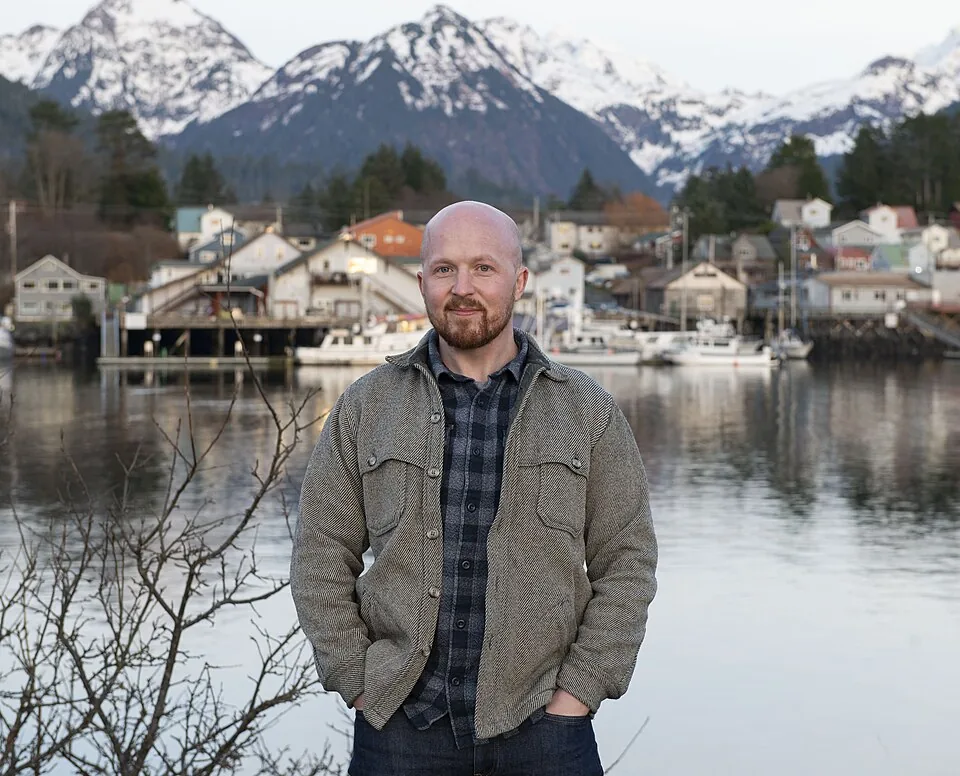
Alaska, a state Donald Trump won by 13 points just two years ago, may be about to elect a 37-year-old Democrat as governor. A bipartisan AARP poll puts Jonathan Kreiss-Tomkins at 40% of first-choice preferences, ahead of three Republican opponents who are splitting the rest between them. The last frontier is starting to feel a lot like a swing state.
The Number That Should Terrify Republicans
Trump's net approval rating in Alaska has swung 21 to 22 points against him since he carried the state in 2024. That is, according to The Guardian, among the steepest drops in any reliably Republican state he won. In a state he took by 13 points, that kind of collapse doesn't leave much cushion.
And the outgoing Republican governor, Mike Dunleavy, an early Trump supporter, is leaving office deeply unpopular on his own terms. He promised Alaskans more oil-dividend money. He did not deliver. This year, the annual Permanent Fund Dividend check came in at $1,000, plus a $200 energy relief payment. Alaskans noticed the gap between the promise and the paycheck. They tend to do that.
Who Is Jonathan Kreiss-Tomkins
Kreiss-Tomkins grew up in Sitka, a fishing town of 8,500 people accessible only by water or air, wedged between the Tongass National Forest and the North Pacific. He won his first statehouse seat at 22, in 2012, defeating a Republican incumbent by 32 votes. He is, as The Guardian notes, a Yale dropout who left one credit short of graduating in 2011. His Republican opponent Bernadette Wilson has already tried to make that a liability.
This July, Kreiss-Tomkins spent four days traveling 450 miles down the Yukon River in a flat-bottomed aluminum skiff, passing through 11 Indigenous villages, many with fewer than 300 residents, most of whom could not remember the last time a gubernatorial candidate had bothered to show up. He has also been traveling by snowmachine, floatplane, and whatever else it takes to reach voters in a state larger than Texas, California, and Montana combined.
"Alaskans are hungry for change," he told The Guardian. "We've been running the same campaign since we launched in February, and I don't take anyone's vote for granted." That is a very disciplined thing to say when you are leading the race. It is also, in the current environment, probably just good strategy.
Alaska's Weird and Wonderful Electoral System
Here is where this gets interesting. Alaska uses ranked-choice voting, adopted by voters in 2020, which means the top four candidates from an open nonpartisan primary advance to the general election. Voters rank their preferences, and votes transfer as lower-finishing candidates are eliminated. Kreiss-Tomkins finished first in August's primary. His three Republican opponents, Wilson, former Anchorage mayor Dave Bronson, and former state attorney general Treg Taylor, will all appear on the November ballot.
Three Republicans on one ballot splitting the same base is a beautiful thing if you are the Democrat. The bipartisan AARP poll The Guardian cites has Kreiss-Tomkins at 40% of first-choice preferences against a combined 41% spread across Wilson, Bronson, and Taylor. Do the math on how vote transfers work in that scenario, and you start to understand why Alaska political observers are taking this seriously.
Taylor's path to the ballot has been genuinely chaotic. The former state attorney general only got on after a candidate named Tom Begich withdrew and endorsed Kreiss-Tomkins, then was disqualified days later. Alaska politics: always a production.
The Republican Field Is, Frankly, a Mess
Wilson, who finished third in August's primary, is an Anchorage garbage-hauling entrepreneur, former competitive figure skater, and great-niece of the late Republican Governor Wally Hickel. She has collected endorsements from Sarah Huckabee Sanders and Florida Congressman Byron Donalds, which tells you roughly what lane she is driving in. Her pitch is that Kreiss-Tomkins is too much of a career politician, which is a reasonable argument undermined somewhat by the fact that she chaired Dave Bronson's 2020 mayoral campaign.
Bronson, for his part, won that 2020 Anchorage mayor's race as a political newcomer and spent his single term in a running fight with the city assembly over homelessness, at one point proposing one-way plane tickets to the lower 48 for people living on the street. He then lost re-election in 2024 to an independent. He is now asking Alaskans to promote him to governor. Voters have a long memory about the plane ticket thing.
Larry Persily, who has watched Alaska politics since the 1970s, told The Guardian that Kreiss-Tomkins is leading "not because of anything Trump did, but because he's running a good campaign." He also called Wilson, Bronson, and Taylor "a sorry lot" and "a bunch of political losers." Persily is a former newspaper owner and editorial page editor. He is not mincing words.
What November Actually Looks Like
The central question The Guardian raises is a fair one: how much of this is Kreiss-Tomkins specifically, and how much is a national anti-Trump wave that would carry almost any Democrat with a pulse? The honest answer is probably both, and in an election, both is enough.
Alaska has always had an independent streak even while voting Republican at the presidential level. The ranked-choice system was itself adopted by voters over the objection of the state Republican Party. A Democrat won a U.S. Senate seat there as recently as 2008. The state is not as locked up as the presidential margins suggest, and right now the presidential margins are moving anyway.
The November ballot will have Kreiss-Tomkins against three Republicans who cannot agree on a single candidate, in a state where the incumbent Republican governor is unpopular, the president is 22 points less popular than he was two years ago, and the Democrat has been showing up in villages no candidate has visited in years. That is not a guaranteed win. But it is a real race.
The Dingo Take
Republicans keep insisting this is a strong political environment for their party, that Trump's coalition is durable, that 2024 was a realignment and not a fluke. Then you look at Alaska, where a 37-year-old Democrat who traveled 450 miles down the Yukon River in an aluminum fishing boat is leading the governor's race in a state Trump carried by 13 points 24 months ago. The math does not cooperate with the talking points.
The Permanent Fund Dividend is the thing that will haunt this. Alaskans receive an annual check from the state's oil wealth, and Dunleavy promised to make it bigger, and then it came in at $1,000. That is not nothing. But a broken promise about money, in an economy where costs have punished working people for years, is the kind of thing that sticks. Kreiss-Tomkins did not even have to attack Dunleavy very hard. Dunleavy did most of the work himself.
The Republican Party in Alaska put up three candidates who will spend November competing against each other while one Democrat quietly collects ranked-choice transfers and visits fishing villages that have not seen a gubernatorial campaign in decades. If Kreiss-Tomkins wins, the post-mortems are going to be brutal. How do you lose Alaska? Ask the three people who ran against each other instead of against him.




Comments