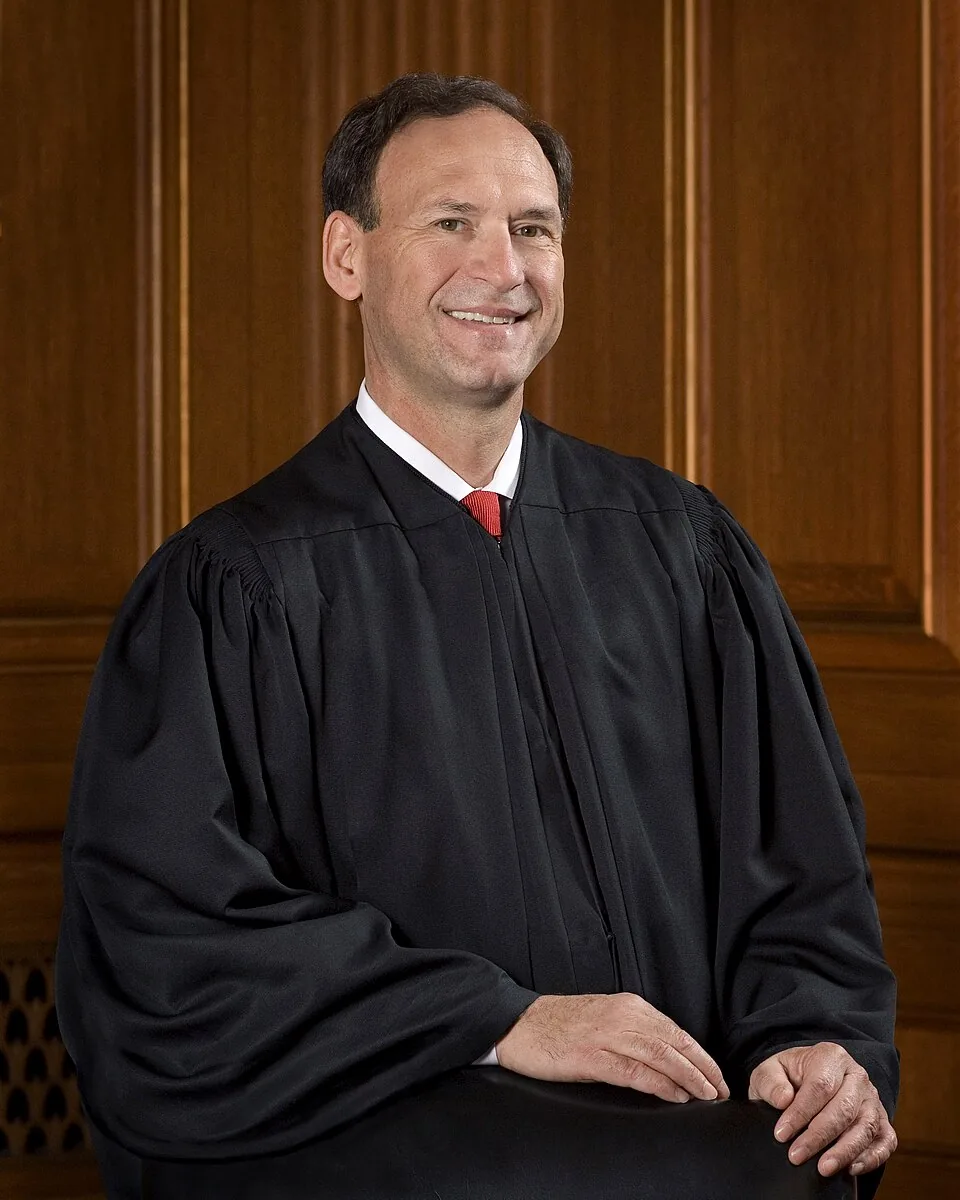
The Supreme Court heard nearly two hours of arguments Monday on whether Big Oil can be sued for cooking the planet, and Justice Samuel Alito wasn't in the room. No reason was given for his recusal, but his 2025 financial disclosure shows individual holdings in ConocoPhillips and Phillips 66, two energy companies. The recusal leaves open a 4-4 deadlock, which would let Boulder's case go forward.
The Empty Chair Does Some Talking
Let's start with what we know, because the Court didn't offer much. CBS News reports that the justices announced Alito's recusal last week without explaining it. No statement, no footnote, just a name removed from the lineup.
The disclosure fills in a few blanks. According to CBS News, Alito's 2025 filing lists individual holdings in ConocoPhillips and Phillips 66. It does not list individual stock in Exxon Mobil or Suncor Energy, the two companies Boulder actually sued.
So to be precise, the Court has not said the stock is why he stepped aside. But when a justice sits out an oil case and his paperwork shows oil stock, you don't need a forensic accountant.
What Boulder Actually Wants
Here's the thing. This case is still in its early stages. Boulder, the city and the county together, sued Exxon and Suncor back in 2018, alleging the companies' production and allegedly deceptive marketing of fossil fuels contributed to climate change. CBS News reports the suit points to extreme heat, bigger and more frequent wildfires, and damage to the ecosystem.
It's one of dozens of similar suits filed by states and local governments in state courts, all seeking money damages for past and future harms tied to greenhouse gases.
Exxon and Suncor tried to drag the case into federal court and lost. They asked the Boulder County District Court to toss it on the grounds that federal law forecloses the claims, and lost again. The Colorado Supreme Court sided with Boulder. Now the companies have taken it to Washington, asking the highest court in the land to kill the thing before anyone has to prove anything.
Kavanaugh Says The Quiet Part Is Precedent
The most pointed questioning came from Justice Brett Kavanaugh, who repeatedly told both sides that four Supreme Court decisions dating back to 1972 establish that interstate air and water pollution are matters of federal law. "We don't have to reinvent the wheel," he said, according to CBS News, adding that Congress presumably relied on those precedents when it wrote the Clean Air Act and its amendments.
The Trump administration is siding with Exxon and Suncor. Principal Deputy Solicitor General Sarah Harris told the justices that Boulder's lawsuit "egregiously exceeds" the constitutional limits of state authority. "Interstate air pollution is an inherently federal area," she said, "and Congress hasn't authorized this suit in the Clean Air Act."
Yes, the same administration that has spent years dismantling federal environmental rules is now insisting that only the federal government may address this. Congratulations to everyone who spotted the loophole in that argument. The federal government is the only one allowed to regulate this, and the federal government would prefer not to.
Roberts And Kagan Aren't Buying The Easy Story
It would be a mistake to read this as a done deal. Chief Justice John Roberts raised the industry's nightmare scenario, noting that a Boulder win could prompt local governments in every state to file their own suits. Kannon Shanmugam, arguing for Exxon and Suncor, put a number on it: 90,000 municipalities, each asking juries to impose "catastrophic damages" on selected fossil-fuel producers.
But Roberts also pushed the other way. CBS News reports he pointed out that the Court has let state-court suits over wide-impact conduct proceed before, citing mass torts and complaints about the operations of the internet. "I guess I'm not quite sure what makes this situation different," he said.
Justice Ketanji Brown Jackson told Harris the Court's review is "premature," saying it doesn't know enough yet to be confident the industry's theories even apply. And the Court also asked both sides to address whether it has jurisdiction to review the Colorado ruling at all. That is not a question you ask when you're ready to rubber-stamp anything.
The Math Of Eight
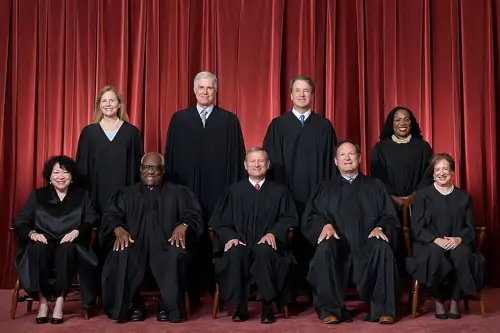
With Alito out, the Court is down to eight, and eight can tie. CBS News reports that a 4-4 split would leave the Colorado Supreme Court's decision standing and let Boulder's case proceed.
Think about what that means. The industry's best shot at a clean, national shutdown of these lawsuits now has a built-in escape hatch for the plaintiffs. One justice's absence turns a likely industry-friendly outcome into a coin flip, or at least a much narrower path.
Kevin Russell, arguing for Boulder, stressed that even if the case moves ahead, plenty of litigation over the specifics will follow. In other words, nobody is writing a check anytime soon. A win for Boulder here only means the case gets to keep existing.
The Dingo Take
In 1974, Richard Nixon's lawyers argued that the president could keep his own tapes, and the Supreme Court said no, because nobody gets to be the judge of his own case. The whole premise of recusal is that same old rule: if you've got money riding on the outcome, you step out of the room. Alito stepping out is the system working, which is exactly why it feels like a small miracle.
Because let's be honest about how rare that is. This is the same Court that has spent years fending off demands for a binding ethics code and treating disclosure forms like optional reading. A justice with oil stock in his portfolio quietly sitting out an oil case is the bare minimum, and we are supposed to be grateful it happened. The Court didn't even explain why. Transparency remains a vibe, not a policy.
As for the merits, this fight is about whether companies that allegedly knew what their product was doing to the planet can be made to answer for it in front of a jury. The industry's pitch is that it's too big, too global, and too expensive to ever be held to account. That is a hell of an argument for the people being burned out of their homes by wildfires. Maybe the eight remaining justices will see through it. Maybe they'll tie, and Boulder gets its day in court by accident. Either way, it took an empty chair to make this fair, and that tells you everything.


Comments