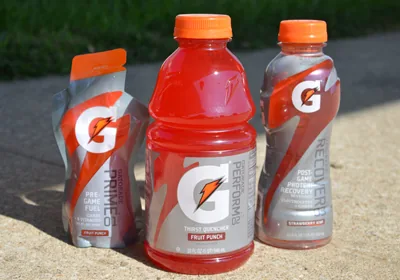
PepsiCo has recalled about 122,000 cases of Gatorade across 37 states because the bottles contained dyes the label forgot to mention. The company that makes a drink whose entire personality is its color apparently lost track of which colors were in it.
The Dye Was Not On The Label
According to The Guardian, citing an official federal notice posted on the FDA's website, the recall covers 28oz bottles of Gatorade Lemon Lime, Lime Zero, Orange and Orange Zero. The listed reason is "Undeclared Yellow No 6 and/or Yellow No 5" dyes.
Read that again. Yellow 5 and Yellow 6 are not exotic contraband. They are some of the most common food dyes in the American supply chain. The problem here is not that they were in the drink. The problem is that nobody told you they were in the drink.
That distinction matters because food labels exist for a reason. Some people are sensitive to these dyes, and the label is how they know to put the bottle back on the shelf. When the label says nothing, the bottle becomes a surprise, and nobody wants surprises from a sports drink.
122,000 Cases Across 37 States
The scale here is not small. The Guardian reports PepsiCo initiated the recall on 25 September, and the affected product shipped to 37 states, ranging from Alaska and Hawaii to New York and Texas. That is most of the country, minus a handful of holdouts.
Here is a rough sense of the footprint. Alabama, Arkansas, Arizona, California, Colorado, Florida, Georgia, and on down the alphabet through Wisconsin all made the list. If you bought a big orange or lime Gatorade at a gas station this year, you may have participated in this experiment without signing a consent form.
The notice calls it a voluntary recall, which is corporate for "we did this before someone made us." Voluntary or not, 122,000 cases is a lot of mislabeled bottles to have slipped through a company with PepsiCo's resources.
Class II And What It Actually Means
The recall carries a class II designation. As The Guardian notes, quoting the FDA's own definition, that implies a situation where exposure "may cause temporary or medically reversible adverse health consequences or where the probability of serious adverse health consequences is remote."
So let's be fair here. Nobody is reporting hospitalizations, and the FDA's language points to a low risk for most people. This is not a poisoned-batch situation. It is a labeling failure with a risk that mostly lands on people who are sensitive to those dyes.
But "remote" is doing a lot of work in that sentence, and the people it is remote for are not the people it is remote from. If you have a reaction to Yellow 5, your odds are not remote. They are 100 percent, and they are happening in your body, in a gym parking lot, after a basketball game.
Where Do You Get Your Money Back
Here is the part that should make you want to throw a bottle at a wall. CBS News reported it was not known whether refunds are available for people who bought the recalled drinks.
Think about that. A company recalls the product, admits the label was wrong, and cannot immediately tell you whether you can get your money back for the thing it just told you not to drink. PepsiCo did not respond to The Guardian's request for comment, so the answer remains somewhere in the void.
A recall without a refund is just a company saying "please stop buying our mistake" and keeping your four dollars.
The Agency Watching The Shelves Got Gutted
The Guardian also points out that the FDA has come under fire during Donald Trump's second presidency, including after the agency implemented layoffs that slashed its staff by almost 20%.
The article does not claim the layoffs caused this recall, and neither do we. A company's own quality control is the first line of defense, and the recall was initiated by PepsiCo itself. But the timing is a fair thing to chew on. When you cut the people who inspect, test, and enforce, you are betting that corporations will always catch their own errors.
That is a bold wager to make with the food supply of 330 million people.
The Dingo Take
Who is supposed to be checking the label on the bottle of electrolyte water you hand your kid after soccer practice? Not you, you have a life. Not the cashier, they have a line. In theory, it is a federal agency staffed with people whose job is to care about this, and that agency just lost nearly a fifth of its workforce.
No, this recall does not prove the layoffs failed anyone. PepsiCo flagged its own problem, and the health risk here looks limited. But the pattern is the point. The administration keeps treating the machinery of public safety as a bloated line item to trim, right up until the moment a mislabeled bottle ends up in a kid's hands in Alabama. Then everyone acts surprised that a country with less oversight has more things going wrong.
PepsiCo owes people a straight answer on refunds and a clear explanation of how 122,000 cases of a product built on a single brand identity went out the door without its dyes disclosed. Until then, here is a free tip. Read the label. And if the label is wrong, well, enjoy your surprise.


Comments