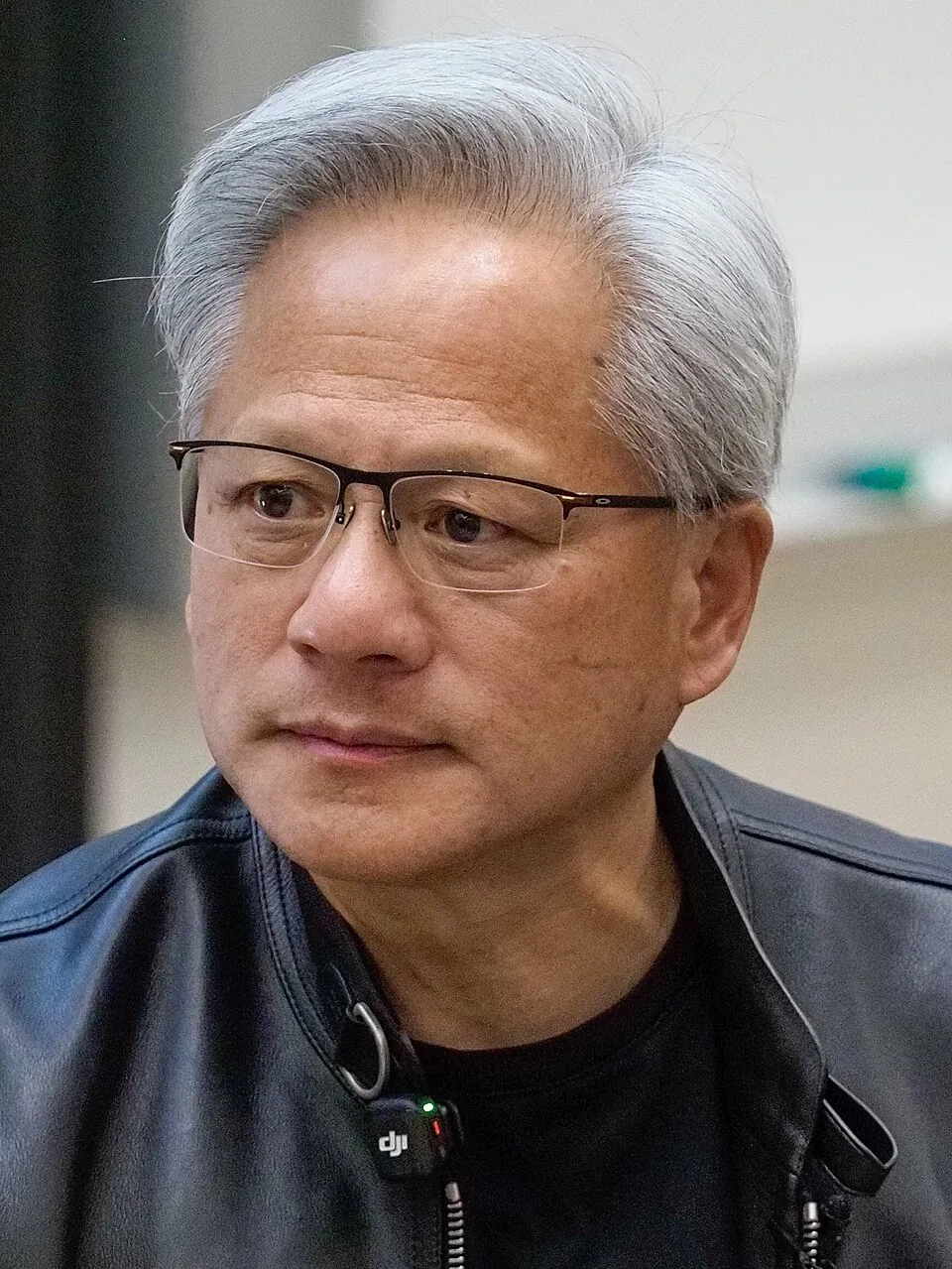
The man who built the chips that power the entire artificial intelligence economy just resigned as CEO of Nvidia after reports that he had two extramarital affairs, one with a woman US intelligence officials allegedly believed was a Chinese spy, and one with an executive who reported directly to him. The stock has shed more than $1 trillion in value this month. The board's farewell statement thanked him for his "immeasurable contributions" and did not mention any of it.
Four Days From Weekend Scoop to Resignation
The timeline here is brutal. On Saturday, the Financial Times reported that Jensen Huang had an affair with a woman a source told NBC News was a Chinese spy. On Sunday, Huang admitted he had been "unfaithful" to his wife and apologized for hurting her and their children. The New York Times also reported over the weekend that Huang had a close relationship with a Chinese businesswoman named Alice Huang.
Nvidia's board launched an independent external investigation on Sunday and hired a major New York law firm to run it. Before that, the board had said Huang's interactions with the woman were "not unusual or unexpected." That statement did not age well. Roughly as well as a gas station sushi platter.
Then on Wednesday, the Times reported a second affair, this one with Kimberly Powell, an Nvidia executive who reported directly to Huang. The board met that evening. By the time the vote would have happened, it didn't need to. Huang resigned as president, CEO, and board member, effective immediately.
Who Is Alice Huang and Why Does Washington Care
According to the Times reporting, US officials believed Alice Huang, who is also known as Huang Le, had been recruited to spy by China's top intelligence agency. She was a top executive at Megaspeed, a Singapore-based data center firm, between March and November 2023. Megaspeed has been suspected of helping divert Nvidia chips to China. The company says those claims were investigated and debunked, though the Singaporean government is still investigating allegations that Megaspeed circumvented US export sanctions on high-end chips.
What she allegedly gathered and passed to Beijing remains unclear. China has called the spying allegations "entirely groundless." Nvidia told the BBC it was not aware of any intelligence concerns about her.
Here is why this matters beyond the tabloid factor. Nvidia sits at the center of the US-China AI race, and the US has used export controls since 2022 to keep the most advanced chips out of Chinese hands. The CEO of that company was reportedly sleeping with a person American intelligence suspected of working for the other side. Trump says the FBI is investigating.
A Trillion Dollars Gone and a Market Holding Its Breath
Nvidia shares dropped as much as 14 percent at Thursday's open, per the New York Times, extending a slide that has erased more than $1 trillion in market value this month. NBC News put the opening drop at 12 percent, with the stock recovering to trade down more than 6 percent by 10 a.m. Nvidia's total market value has fallen below $4 trillion for the first time since 2025.
The S&P 500 and the Nasdaq both wobbled. Nvidia is not just a company, it is the load-bearing wall of the AI trade. Its finances are deeply intertwined with those of everyone from frontier AI labs to the neoclouds that rent out computing power. Huang himself told Bloomberg in October that Nvidia is "probably the only AI company in the world that works with every AI company in the world."
Axios reported that Wall Street sources think his departure could be the catalyst that endangers a ballooning AI bubble. JPMorgan analysts noted that "history has shown that one execution misstep often leads to more." Anthropic is gearing up for a potentially trillion-dollar-plus IPO next week. Great timing, everybody.
Enter Colette Kress, Holder of the Hot Potato
The board named longtime CFO Colette Kress interim CEO and launched a search for a permanent replacement. Kress joined Nvidia in 2013, when annual sales were $4.28 billion. In the most recent fiscal year, they hit $215.9 billion. She came from Cisco and Microsoft, and she will keep her CFO job while running the whole company.
Huang once interviewed 22 candidates before hiring her. During her first week, she asked him how long he wanted her in the role. His answer, as he told a podcast this year: "For as long as we shall live and death do us part." Reader, that is a lot of vow-making for one man.
Kress also owns roughly 4.44 million Nvidia shares, worth about $772 million at the time of the company's most recent annual report. So she has a personal interest in this going well. Among the possible permanent successors are co-founder Chris Malachowsky and Ian Buck, who runs high-performance computing. Huang's children and son-in-law also hold senior roles at Nvidia, but the BBC notes they are relatively young and inexperienced.
Congress Is Going to Want a Word
Huang has agreed to brief Congress on his relationship with the alleged spy, according to a lawmaker cited by NBC News. Axios says his resignation is unlikely to ease congressional scrutiny of the company or of Huang himself. That tracks.
JPMorgan analysts said the national security concerns raise the risk of "more restrictive guidelines on shipments directly or indirectly into China." Kress has said publicly that US restrictions on China sales hurt Nvidia, and in 2023 she said China accounted for 20 to 25 percent of the company's data center revenue. A tighter regulatory squeeze lands right on a company that just lost its founder.
Then there is the political dimension. Huang is known for his famously close relationship with Trump, and stood beside him and Elon Musk at the recent White House AI summit. The president who says "whoever wins AI wins" now has to explain why the face of American AI hardware was allegedly entangled with someone the intelligence community suspected of working for Beijing.
The Man Behind the Machine
Huang was born in Taiwan in 1963, moved to the US at nine, studied electrical engineering at Oregon State and Stanford, and worked at AMD before co-founding Nvidia. He is known as "Daddy Huang" in Taiwan and was once called the "Taylor Swift of tech." Bloomberg estimates his fortune at $155 billion.
Stephen Witt, author of a biography of Huang, told the BBC that Huang is a tech visionary on the order of Steve Jobs and is responsible for creating AI hardware as we know it today. That is probably accurate. It is also the problem. A company this central to the economy, to the stock market, and to national security was apparently run like a monarchy, with no formal succession plan, as NBC News noted.
The Dingo Take
Start with the people who had nothing to do with any of this. The retirees whose 401(k)s are stuffed with index funds that are secretly just Nvidia with extra steps. The employees who now wonder whether the company that made them rich is about to become a congressional hearing with a logo. And Huang's wife and children, who got a public apology after the Financial Times did the notification work for him. Those are the people on the receiving end, and none of them got a vote.
Here is the part that should bother you. The entire AI boom, the data centers, the trillion-dollar valuations, the circular financing where everyone's balance sheet is propped up by everyone else's, apparently hinged on the personal judgment of one man with no formal succession plan. And that judgment allegedly included a relationship with a suspected foreign intelligence asset and an affair with a direct report. The board called the first one "not unusual or unexpected" a few days ago. Somebody should check what they consider unusual.
No one should be gleeful about a market wobble that hits regular people hardest. But this is what happens when an economy bets everything on a handful of companies and the humans running them. Washington spent years telling us AI was a national security priority. Maybe someone should have checked who was getting dinner with whom. Colette Kress now has the job, the shares, and a Congress that wants a briefing. Good luck to her.



Comments