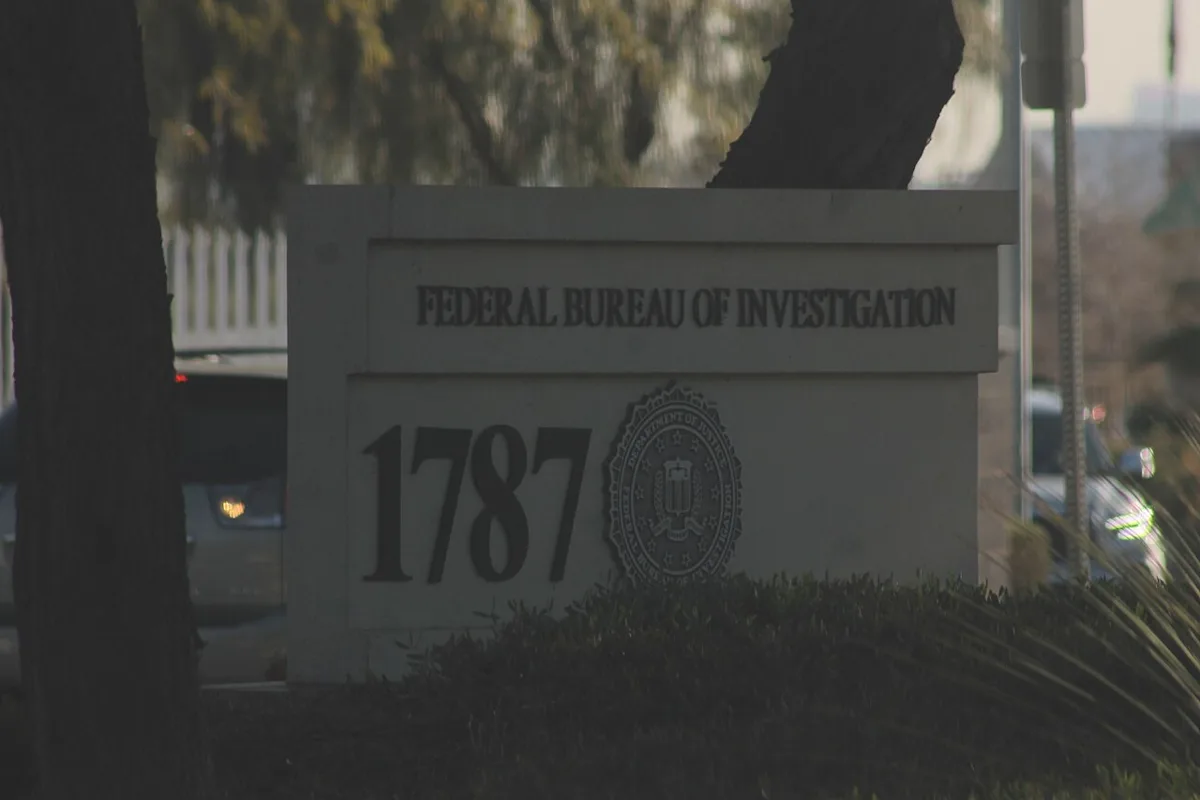
According to a new whistleblower complaint, the FBI's Los Angeles office yanked agents off active cartel cases so the bureau could put on what a supervisor called a show for the president. The target of the show: nonviolent protesters with megaphones telling their neighbors to ask for a judicial warrant before opening the door to immigration agents.
The Crime Was Reading People Their Rights Out Loud
NBC News reports that Jill Fields, a former supervisory intelligence analyst in the FBI's Los Angeles Field Office, filed a formal whistleblower complaint with Senate Judiciary Committee leaders. She alleges the Trump administration pushed the bureau to investigate Los Angeles protesters in violation of their constitutional rights and the FBI's own policies.
The activity at the center of it is not exactly a cartel summit. According to the complaint, Trump watched a video of people using megaphones to tell residents about immigration operations, explain their legal rights, and encourage them not to open their doors unless agents had signed judicial warrants.
That is it. That is the threat. Someone with a bullhorn said the words "warrant" and "rights" in a residential neighborhood, and the machinery of the federal government started to whir.
Agents Looked, Found Nothing, and Were Overruled
Here's the part that should make every civics teacher in America lie down on the floor. Per Fields' complaint, FBI agents had already conducted a check into the megaphone group's conduct and declined to open an investigation. They looked. They saw protected speech. They said no.
Then, according to the complaint, the White House gave a directive to FBI Director Kash Patel to investigate anyway. A person whose name is redacted told Fields an investigation would be opened because, in the words of her complaint, "the President wants this investigation."
Not because of a tip. Not because of probable cause. Because the president wants it. That is not a legal standard. That is a mood.
Emil Bove and the Federal Building
Fields also alleges that Emil Bove, then the acting deputy attorney general, told the head of the Los Angeles field office to open an investigation into activities outside the federal building, even though she says those activities were protected free speech.
The complaint says the underlying conduct implicated the First Amendment right to free speech and to peaceably assemble. Fields asked Congress and the Justice Department's inspector general to look into it, her attorneys said in a letter to lawmakers.
The Justice Department's response, delivered through a spokesperson, was that the complaint is politically motivated and that violence is not protected by the First Amendment. Sure. Except NBC News notes the complaint focused on nonviolent protests. Rebutting an allegation about peaceful bullhorn users by pointing out that violence is illegal is like answering a parking ticket by noting that murder is bad.
Optics Over Cartels
According to Fields, the Los Angeles office pulled agents off active cartel cases to satisfy what a supervisor described as "optics" designed to "make a show for the president."
Sit with that for a second. The same administration that spends its days screaming about cartels as an existential menace allegedly took investigators off real cartel work to produce a performance for an audience of one. Whatever else you think about the priorities of federal law enforcement, the cartels were presumably delighted.
And the directives, per the complaint, were not put in writing. Fields says supervisors were told not to document things, so many orders came in face-to-face meetings. When an agency's instructions are delivered only in rooms with no paper trail, the people giving them usually know exactly how they would read on paper.
Refuse and You Get Frozen Out
Fields says she refused to participate and was then excluded, so she doesn't know whether a formal investigation was ever opened. She consulted a senior FBI official in charge of privacy and civil liberties, who, according to the complaint, expressed dismay and later said she planned to resign.
Fields resigned too, after being told she would be removed from heading three programs. She believes that was retaliation for protected internal disclosures. The FBI's conduct, the letter says, "created a chilling effect within the workforce" and signaled that raising constitutional or legal concerns could carry professional consequences.
The FBI didn't immediately respond to NBC News' request for comment. NBC also notes that hundreds of FBI agents and Justice Department attorneys have resigned or been fired since Trump returned to office, and that former DOJ employees have voiced concern that the nation's top law enforcement agency is doing the president's bidding.
Padilla Asks the Question Everyone Should Be Asking
Sen. Alex Padilla, D-Calif., told NBC News the disclosure is another instance of Trump weaponizing the Justice Department against perceived political enemies. "How many more of these investigations have been opened up because of political pressure coming from the White House, despite the questions and concerns about legality and constitutionality?" he asked.
NBC notes that Padilla was himself forcibly removed from a news conference featuring then-Homeland Security Secretary Kristi Noem in June 2025, so he is not exactly a bystander to this administration's relationship with dissent.
Meanwhile, NBC reports that last week Justice Department leaders filed an administrative complaint about federal judges who made remarks to the media about the impact of the immigration enforcement surge on their courtrooms. Complain about the policy and you get a complaint filed against you. Report a problem internally and you get stripped of your programs. There is a pattern, and it is not subtle.
The Dingo Take
Who benefits when the FBI burns agent hours on a bullhorn crew instead of a cartel case? One man, and he doesn't need a conviction. He needs a headline, a clip, a feeling of control. The investigation is the product. Whether anything comes of it is beside the point, because the point is to make the next person with a megaphone think twice about picking it up.
That is what makes this allegation so corrosive, if it holds up. A probe doesn't have to end in charges to do its job. It just has to exist, to be whispered about, to make a neighbor wonder whether telling people to demand a warrant is worth the risk of a knock at their own door. The chilling effect Fields describes isn't a side effect. It's the whole mechanism.
The Justice Department says it will vigorously uphold First Amendment rights. Fine. Then there is a simple way to prove it: let the inspector general look at the file, let the Senate see the paper, and explain why FBI agents who reviewed the megaphone group and said no were allegedly overruled by a president who watched a video. Until then, "politically motivated" is just what a department says about a complaint it can't answer.

Comments