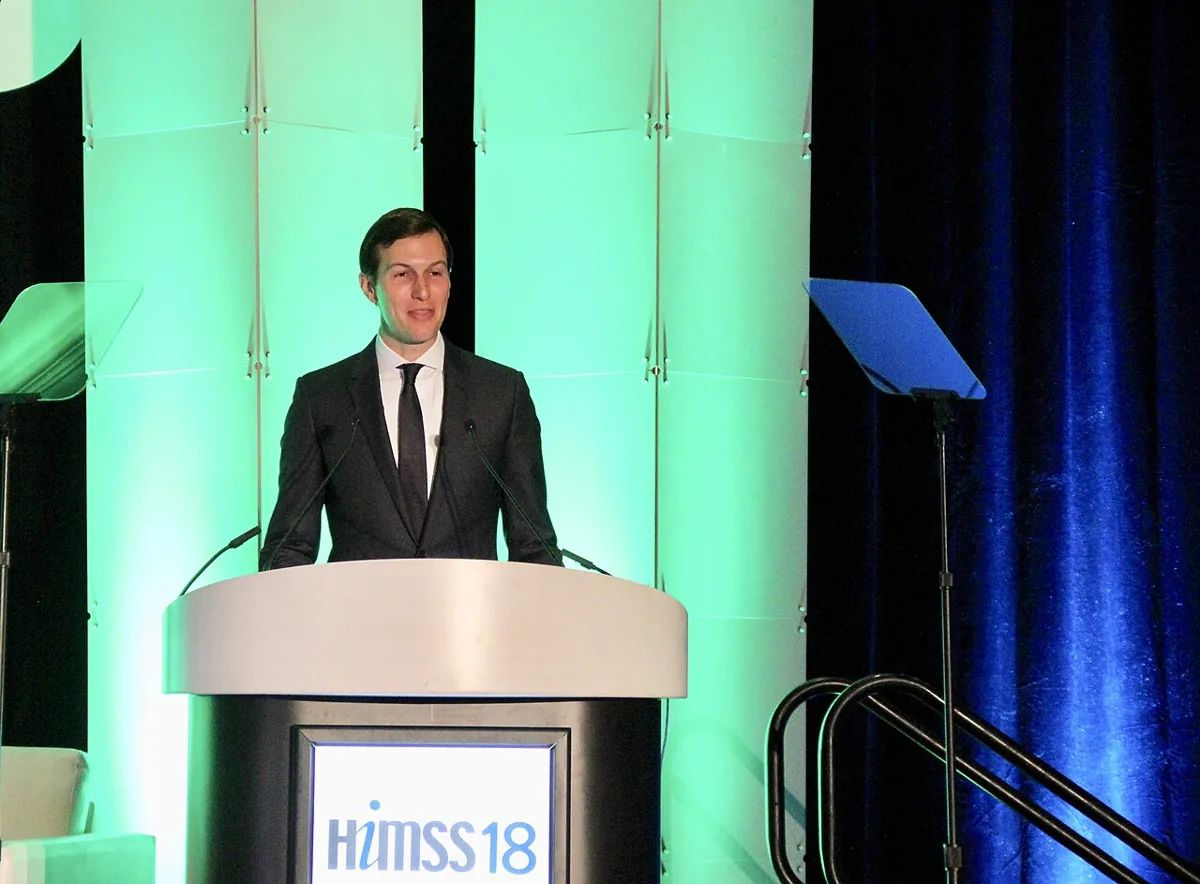
The man trying to broker peace between Russia and Ukraine has also been talking with Putin's top money adviser about letting an American investor buy into the pipelines that fed Russian gas to Germany. Those pipelines were blown up in 2022 and are sanctioned by both the US and the EU, which makes restarting them illegal. Details, details.
Peace Through Pipelines
According to Reuters, five people with knowledge of the situation say top Russian and US officials, including US Special Envoy Jared Kushner, have discussed bringing a US investor into the Nord Stream pipelines. The Russian side of the table included Kirill Dmitriev, a close adviser to Vladimir Putin. Kushner, for the record, is also Donald Trump's son-in-law, in case you were wondering how someone gets a job like this.
The pitch is simple. Kushner reportedly views doing business as central to restoring peace, and a deal would let US investors profit from energy flows to Europe once the war ends. Days after meeting in Moscow, Kushner stood in Kyiv and floated "prosperity agreements" to give leaders "something to look forward to."
Something to look forward to. From the guy negotiating a ceasefire. About the pipelines.
The Meetings Nobody Wants to Describe
Dmitriev and Kushner have met in Moscow and New York in recent weeks. Whether Nord Stream came up at those specific meetings is unclear, but two of the sources say the topic remains on the agenda. Dmitriev also sat down last month with US Energy and Treasury Department representatives to talk about potential US-Russia energy initiatives.
The White House response is a masterpiece of the form. One official said any deals "will have to be negotiated by Russia with DFC and Treasury and must benefit United States taxpayers and companies." The same official also said there had been "no Nord Stream discussions recently."
So the deals must benefit American taxpayers, and also nobody is discussing the deal. Sure. Both of those can be true if you say them quickly enough.
Illegal Is Just a Starting Position
Here's the legal problem. Nord Stream is sanctioned by the US and the EU, so any restart is flatly illegal right now. A US official admitted that given the obstacles, a deal is unlikely in the medium term. Fine. But note who gets to fix the illegality. Trump can waive or soften US sanctions himself, and the reporting says that gets harder if Democrats win Congress in next month's midterms.
That is a hell of a detail to include. The sanctions that block the deal can be loosened by one man, and the only thing that might stop him is an election. Nobody is claiming the timeline is a coincidence, but nobody is explaining it either.
Then there's ownership. The company that controls the pipelines is 51% owned by Gazprom, the Russian state energy giant. Another 31% sits with two German entities, and the rest belongs to a French firm and a Dutch one. The German shareholders want to keep their stakes to preserve German influence if Gazprom sells. So even the shopping list has paperwork problems.
Europe Is Not Amused
Germany's economy and energy ministry said Nord Stream and Russian gas are sanctioned in Europe, that Germany has found alternatives, and that reopening requires government approval it does not want to give. Poland's leadership is watching the talks and remains firmly opposed. The Baltic states reject energy ties with Moscow for obvious reasons, given that they live next door to it.
Michael Kellner, the German lawmaker who ran energy policy after the invasion, called it what it looks like. "This threatens to be a dirty deal that will cost Europe dearly," he said. "Americans and Russians will share the profits."
The backdrop makes it worse. Europe is spending billions of euros rebuilding its militaries to defend itself from Russia. Earlier this year, the heads of five European spy agencies told Reuters that Russia did not want to end the war quickly and was using the US talks to push for business deals instead. Congratulations, the spies called it.
The AfD Cameo
Because this story needed one more ingredient, Dmitriev will meet the leadership of the Alternative for Germany early next year to discuss selling Russian gas again. The AfD is Germany's most popular party and wants to restart the pipeline. Germany's governing coalition does not.
So the plan has a Russian seller, an American middleman, and a German far-right party eager to be the customer. Meanwhile Berlin has accused Russia of mounting a systematic campaign of hybrid attacks. Nothing says friendship like sabotage and a sales call.
And Nord Stream is not the only item on the menu. Kushner and Dmitriev have also discussed selling Lukoil's collection of businesses, from oil refineries to petrol stations, to a consortium of the DFC and investors from Qatar and the UAE, while US authorities lift sanctions. A White House official said Steve Witkoff and Kushner negotiated a "substantial upfront payment and profits interest for the United States." Profits interest. For the sanctions relief. Say that sentence out loud.
The Dingo Take
Who benefits? The Kremlin gets sanctions relief and a paying customer for gas it can't currently sell. A US investor gets a seat at a pipeline that fed half of Germany. The US government, per the White House, gets an upfront payment and a profits interest. The people who don't benefit are the Ukrainians being shelled, the Germans who spent billions to wean themselves off Russian gas, and every Eastern European country that has been warning about exactly this for two decades.
Notice the sequence. Russia invades. The West sanctions it. The pipelines get blown up. Then the American envoy sent to end the war starts talking to Putin's money man about how Americans can profit from reopening them. That is not peace through prosperity. That is peace through a finder's fee.
Maybe none of it happens. A US official says a deal is unlikely any time soon, and Europe seems ready to fight it. But the talks are real, the topic is reportedly still on the agenda, and the guy at the table is the president's son-in-law. If the pitch for ending a war is that everyone gets rich afterward, you should ask who exactly is being paid to keep it going until then.




Comments