
On Friday, Navi Pillay won the Nobel Peace Prize for her work on international law. Hours later, the Trump administration sanctioned the International Criminal Court itself, the institution that law is built around. Reading that sequence of events as a coincidence would require a level of generosity this website does not possess.
The Prize, Then the Punishment
Here is the timeline, according to BBC News. The Nobel committee awarded Pillay, a South African former ICC judge, the Peace Prize "for her efforts to promote peace and international law." Trump immediately called the pick "disgraceful and embarrassing" and an "indelible stain on the country of Norway."
Then, hours later, Washington unveiled sweeping sanctions on the ICC. Not on a handful of judges this time. On the court as an institution, with a ban on US entities making transactions with it, designed to choke its ability to operate financially.
Maybe the sanctions were already in the pipeline. Maybe the timing is a stunning accident. But the administration's own stated goal is to "dismantle" what it calls a "rogue" institution, and it picked the day a former ICC judge got the world's most famous peace award to accelerate that effort. The message, whether intended or not, reads like a toddler knocking over the trophy case.
Who Is Navi Pillay, and Why Is Trump So Mad?
Pillay is 85 years old. She started her career defending anti-apartheid activists in South Africa. She served as a judge at the ICC and later as the UN's top human rights official, work that took her through allegations of violations in Rwanda, Myanmar, and Gaza.
She is now South Africa's fifth Peace Prize winner, following Nelson Mandela and Archbishop Desmond Tutu. That is the company she keeps. Trump's resume in this department is a list of nominations from his own allies and a longstanding, openly stated belief that the prize should be his.
So the man who has campaigned for a Nobel for years watched it go to a woman who spent her life prosecuting atrocities, and his response was to insult an entire country. Norway, for the record, did not hand out the prize to annoy him. It just happens to work out that way.
Sanctioning the Courthouse
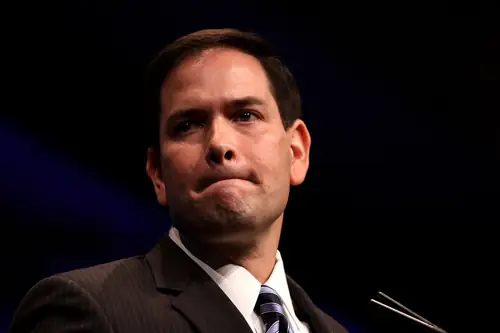
The US had already sanctioned 17 ICC judges and officials. This latest move goes after the court itself. Secretary of State Marco Rubio said the measures are meant to "defend US sovereignty" and accused the court of seeking to prosecute Americans.
Pillay did not mince words in response. Speaking by video link from the Nobel Peace Center in Oslo, she said sanctions announced by one country against judges "just for the judicial orders they issue" are "unheard of, unacceptable." That is a restrained way of describing a government punishing judges for doing their jobs.
The ICC called the measures an assault on the rule of law and the foundations of the international legal order. UN Secretary General Antonio Guterres called it "a serious blow to our collective pursuit of international criminal justice." The UK, Canada, Denmark, Germany, France, Italy, Japan, and the Netherlands all said they "regret and strongly disagree." When Washington's closest allies line up to say you've gone too far, you have gone very far.
The Grievances Behind the Hammer
The administration's complaints are specific. It is furious about a past ICC investigation into the actions of US soldiers in Afghanistan, an investigation the court has since closed. It is also furious about the arrest warrants for Israeli officials, including Prime Minister Benjamin Netanyahu.
Note the gap there. The Afghanistan probe is over. The sanctions are still coming. And the new measures do not even say the Netanyahu warrants must be withdrawn before they can be lifted. So there is no clear exit ramp, no defined condition that ends the punishment.
That matters because sanctions with a goal are a negotiating tool. Sanctions with no stated off-switch look a lot more like a demolition order.
The Six-Month Fine Print
There is one wrinkle. The US gave a six-month grace period before some of the new sanctions kick in, which means member states can keep paying for the court's operations in the meantime. Washington says this gives countries time to negotiate a "solution to address" its concerns.
Translation: here is a ticking clock, and here are the people who will be asked to blink. The pressure lands on the ICC's member states, who now have half a year to decide whether to keep funding a court that the world's most powerful country has declared an enemy.
The administration calls the ICC's leadership "globalists" threatening American sovereignty. That word does a lot of work in these speeches. It turns a court that prosecutes war crimes and genocide into a shadowy cabal, which is a neat trick if you would rather not be on the receiving end of its paperwork.
The Joke That Landed Differently
Pillay, to her credit, kept her sense of humor. After receiving the prize, she told the crowd: "If you clap a little bit more I may share this prize with Trump." It was a jab at last year's winner, Venezuelan opposition figure María Corina Machado, who decided to gift her own prize to the US president.
The joke works because it names the absurdity out loud. A prize meant to honor peace work became something to be handed over as a present to a man who then sanctioned the legal order that work supports. Pillay is 85 and has defended people against apartheid. She can afford to laugh at this. The rest of us are allowed to find it a little less funny.
The Dingo Take
Who benefits from sanctioning the ICC? Start with anyone who might one day sit in front of it. The court's arrest warrants for Netanyahu and its closed Afghanistan inquiry are the stated grievances, which tells you exactly whose interests are being protected here: the powerful people who would prefer that no court anywhere can tell them no. Gutting the institution is cheaper than being accountable to it.
The Nobel part is almost beside the point, but it is the funniest part, so let's give it its due. A man who has openly wanted the Peace Prize for years lost it to a woman who spent her life prosecuting atrocities, called it disgraceful, and then punished her profession within hours. If the timing was a coincidence, it is the most on-brand coincidence in modern diplomacy.
The six-month grace period is the tell. This is not a policy. It is a hostage situation with a deadline, aimed at every country that funds the court. Pillay called it unheard of and unacceptable. She is right on both counts, and a lot of governments are about to find out how much those words are worth when it is their budget on the line.



Comments