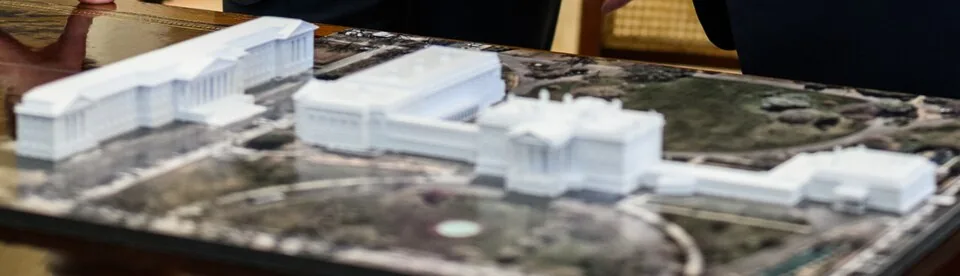
Amazon, Apple, Comcast, Meta, Microsoft and Nvidia have already gotten letters from Democratic lawmakers asking exactly why they chipped in on Donald Trump's White House ballroom. The companies that spent years assuming the check would clear quietly are now discovering that November has a way of changing the guest list.
The Ballroom Bill Comes Due
Here's the premise. Big companies donated to a presidential vanity project, and Democrats, who are widely expected to win the House, now want to know what those companies got in return. The New York Post, relaying Bloomberg's reporting, says the letters have already gone out to six of the most valuable corporations on earth.
The questions are not subtle. Did the money buy preferential treatment? Did it line up with tariff exemptions, drug pricing deals, or the government taking equity stakes in private companies? You don't need a law degree to see why a ballroom donation looks different when the donor has a tariff exemption pending.
Hakeem Jeffries, who would become speaker if Democrats flip the chamber, put it bluntly over the summer. "We're going to hold the crooks accountable beginning on Day One." Subtle he is not. Neither is the corporate donor list.
Tariff Refunds and Surveillance Pricing
The ballroom is only the opening act. Walmart, Target, Nike and Energizer have been pressed about tariff refunds, and so have Amazon, Apple and Motorola. Delta, United and American are being asked about surveillance pricing, the practice of charging you more because an algorithm has decided you look like someone who'll pay it.
Delta says it has never used a fare product that targets customers with individualized offers based on personal information, and that it "always complies with regulations around pricing and disclosures." Fine. That's what a hearing is for. If the answer is clean, the testimony will be boring and everyone goes home.
Boring is not what these companies are bracing for, which tells you something.
Data Centers and Your Rent
The inquiries also reach Blackstone, KKR, BlackRock and Brookfield Infrastructure Partners over data center investments, plus the rent costs at corporate-owned properties. That last one lands close to home for anyone who has watched a landlord's name change on the lease right before the rent jumped.
This is the cost-of-living half of the Democratic pitch, and it's smart politics because it's also a real question. When a handful of financial giants own enormous chunks of housing and the infrastructure behind the AI boom, voters are entitled to ask who benefits and who pays.
KKR, Microsoft, Meta and Amazon all declined to comment to the Post. Silence is a strategy, but it's not an answer.
Everybody Is Hiring the Other Team's Staffers
Corporate America is not waiting for the votes to be counted. Meta and Palantir have reportedly discussed how to respond to hearings and demands for internal records. Skydance has hired former Democratic aides to beef up its Washington operation, and so has prediction market operator Kalshi, which is already fighting legal challenges from regulators in numerous states over its sports-related markets.
Walmart, Target and Verizon are reportedly among the companies backing a six-figure lobbying and advertising campaign to protect the 21 percent federal corporate income tax rate. Nothing says confidence in the status quo like a six-figure ad buy to preserve it.
Y. David Scharf, who chairs the government strategies and controversies practice at Morrison Cohen, says companies are already calling. "We have clients that we are advising on," he said. The phones at white-shoe law firms are apparently ringing off the hook.
Why Companies Should Be Nervous
Scharf laid out the stakes plainly. "We've seen oversight and congressional investigations turn into referrals and criminal referrals. We've seen them turn into class action lawsuits." Then he added the part that should keep a communications chief awake: "You only need to look bad for 10 seconds on TikTok."
Private companies are also more exposed than the administration they've been courting. They lack some of the legal privileges White House officials can invoke to stonewall Congress, and stonewalling risks alienating customers and shareholders anyway. The people who donated to a ballroom may find that a ballroom doesn't come with executive privilege.
The forecast helps the plan along. The Cook Political Report projects a net Democratic gain of five to 15 House seats. The Senate is a razor-thin toss-up that comes down to a handful of races.
The Dingo Take
In 1912, the Pujo Committee dragged J.P. Morgan in front of Congress and made the most powerful banker in America explain himself in public. It reshaped how this country regulates finance. That's what oversight is supposed to look like, and it's been missing for a while.
The New York Post wants you to read this as Democrats "hating business." Look at the actual list of questions. Did your donation buy a tariff exemption? Is your algorithm charging customers more based on their personal data? Why did rents jump after you bought the building? None of that is anti-business. It's the questions a functioning legislature asks when money and power start trading favors in the open.
If the companies have clean answers, they can give them under oath and go back to making money. The fact that they're hiring ex-Democratic staffers and war-gaming document demands before a single subpoena exists suggests they're not so sure. Nobody lawyers up this hard over a ballroom they're proud of.




Comments