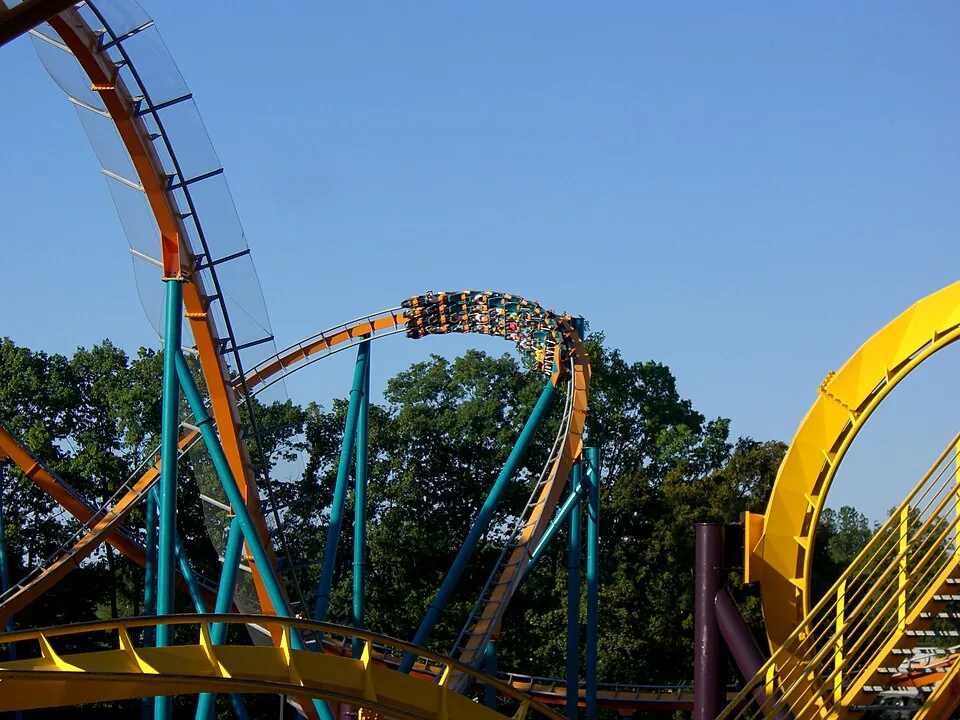
A person died and several others were injured on a roller coaster at Six Flags Over Georgia on Monday, and the company's response was to close nine coasters at six parks "out of an abundance of caution." Nobody has said how the person died. Nobody has said what happened to the people who were hurt. Cobb County detectives from the major crimes unit are investigating, which is not the department you call when a cup holder breaks.
Nine Coasters, Six Parks, Zero Answers
According to the New York Post, Six Flags temporarily shut down nine roller coasters across six of its parks after the incident in Austell, about 15 miles northwest of Atlanta. The company says the closed rides are similar to the one involved in the incident. A spokesperson said staff and local authorities responded immediately and that the park is cooperating with the investigation.
Here's the thing about "an abundance of caution." Companies say it when they know something is wrong but can't yet say what. You do not idle nine multimillion-dollar attractions on a Monday in October, at six different parks, because you feel a little jumpy. You do it because you think the problem might be shared.
Officials did not confirm how the person died, or how the others were injured, or what condition they're in. That's a lot of blanks for a story that ended with a human being dead at a family amusement park.
Goliath Was the Ride, Though Nobody Would Say So
Neither authorities nor Six Flags identified the coaster. Local TV stations did it for them, showing video of passengers being evacuated from Goliath. The ride opened in 2006, hits 70 mph, and stands 200 feet tall.
The park's own website describes the experience as riders navigating "razor-sharp turns" and soaring over "colossal hills" for about three and a half minutes. That is marketing copy for a ride that just killed someone, and it's still sitting on the internet like nothing happened. Somebody at Six Flags should probably go take a look at that.
The company said it is "deeply saddened by the guest incident at our park today." Note the phrase "guest incident." A person died. They called it an incident. Corporate language has a way of sanding the blood off everything.
A County Official Said What the Company Wouldn't
Lisa Cupid, chairwoman of the Cobb County Board of Commissioners, confirmed that next of kin of the deceased have been notified. Then she said something that sounded like a human being wrote it.
"I cannot imagine the horror the patrons and employees witnessed today, and my heart aches for the family who lost a loved one," Cupid said. She added that the community is grappling with how something so devastating could happen at a place that has given generations of families happy memories.
Cupid also noted that the park is a major part of the county's tourism economy, drawing visitors from across the Southeast. That's the tension sitting under this whole story. The park matters to the local economy, which is exactly why the questions about what went wrong need to get real answers instead of a statement drafted by a legal team.
This Is Not the Park's First Time at This Rodeo
The death would be at least the seventh at the Georgia park, according to the Doan Law Firm, which tallies amusement park accidents and represents victims. That count includes a 2006 incident in which a man had a likely heart attack on the Goliath coaster itself. Seven deaths at one park. Sit with that for a second.
To be fair, a medical event like a heart attack is not the same as a mechanical failure, and nobody has said what happened on Monday. The cause of this death is unconfirmed, and we're not going to pretend otherwise. But a tally that long is the kind of thing a company should be asked about loudly and repeatedly.
The Doan Law Firm has an obvious interest here, since it represents victims. That doesn't make the numbers wrong. It means you should know who's holding the clipboard.
A Very Bad Month for Big Coasters
This comes less than two weeks after Six Flags Magic Mountain in Southern California announced the retirement of its famous X2 coaster following lawsuits alleging serious brain injury caused by the ride. The park settled one wrongful-death lawsuit from the family of a 22-year-old man who died after riding X2 in 2022.
And it's not just Six Flags. Last year, a 32-year-old man died from blunt impact injuries after riding a high-speed coaster at Universal's Epic Universe in Florida. His death was ruled accidental.
None of these cases is the same, and nobody should pretend a single cause links them. But the pattern is hard to miss. Rides keep getting faster, taller, and more extreme, and the people who built them keep promising us the safety systems are keeping pace.
The Dingo Take
In the 1980s, Ford kept selling the Pinto after its own engineers knew the fuel tank could turn a rear-end collision into a fireball, because somebody ran the numbers and decided the lawsuits would cost less than the recall. That is what "an abundance of caution" sounds like when you've been burned before. Six Flags closing nine coasters is the right call. The question is why a call that big only comes after a body.
We don't know yet what killed this person. Maybe it was a medical emergency. Maybe it was something on the ride. Cobb County detectives will tell us, or they won't, and the company will keep saying "deeply saddened" until the news cycle moves on. Don't let it. A family lost someone at a place built to sell joy, and they deserve a straight answer, not a press release with a heart emoji's worth of feeling.
Here's what should happen. The investigation findings should be public. The ride inspection records for Goliath and the other eight closed coasters should be public. And nobody should reopen those gates until someone with no financial stake in the answer says it's safe. A person died on a coaster. Nobody gets to treat that like a Tuesday.

Comments