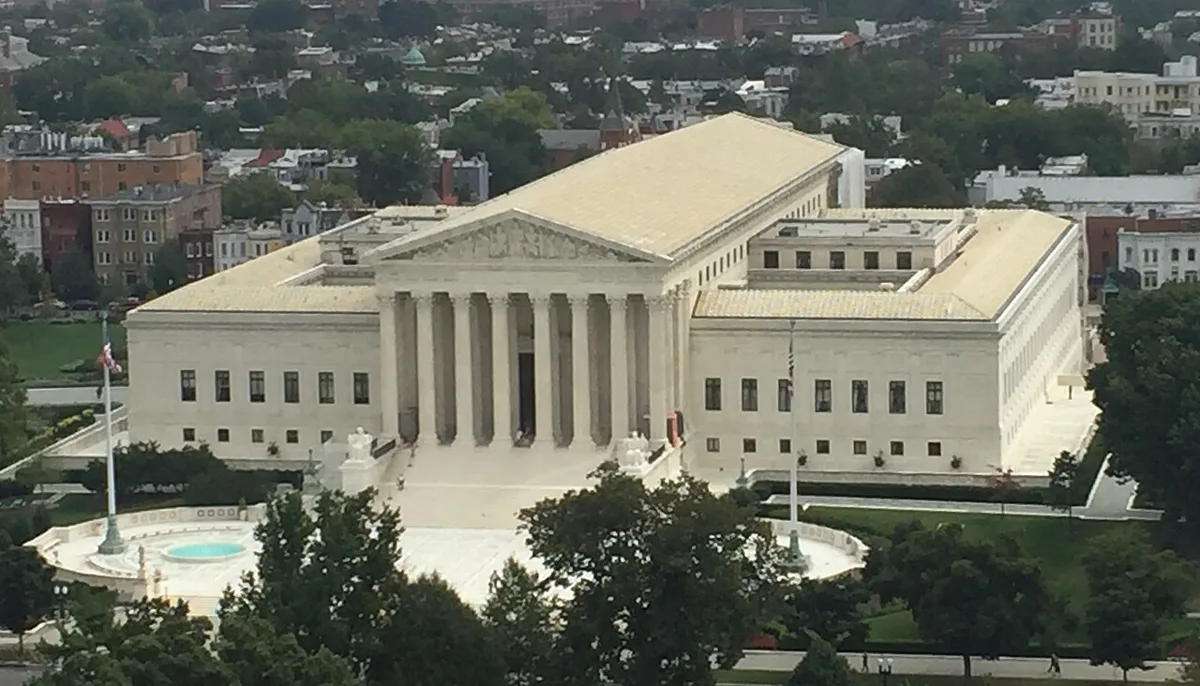
The Supreme Court's new term is shaping up as a greatest-hits album of everything the country is fighting about. Deportations, climate accountability, and assault-style rifles are all headed to the nine justices, and the president who appointed three of them has already shown he will rage at the ones who disappoint him.
Three Fights, One Bench
According to The Guardian's explainer, the court is being asked to rule on challenges to the administration's harsh immigration and deportation policies, a climate change lawsuit against energy companies, and an attempt to loosen restrictions on assault-style rifles. That is a staggering amount of American life packed into a single term.
Decisions are expected in or before June 2027. So the country gets to spend the better part of a year waiting to learn whether the rules governing who can live here, who pays for a warming planet, and who can buy a rifle built for the battlefield will bend toward the administration's wishes.
None of these are niche legal curiosities. Each one touches millions of people, and each one has the kind of stakes that usually get decided by a tweet-length slogan on cable news. Now they get decided by nine people in robes who never have to run for anything again.
The 6-3 Question Everyone Is Asking
Here's the baseline. The Roberts court often splits 6-3 in favor of conservative causes. That fact alone has launched a thousand pundit careers and a few thousand angry newsletters.
But the reporting also makes clear that the court has diverged from Trump on some key cases. It has not been a rubber stamp, whatever the White House might prefer. When the justices have gone their own way, the president has at times raged against some of the very people he nominated to the bench.
Think about that dynamic for a second. A president picks judges, expects loyalty, and then throws a fit when a judge treats the job like a job. That is not how a functioning separation of powers is supposed to feel from the inside, and yet here we are.
Deportation Policy Takes Its Turn
The immigration cases are the ones to watch for sheer human consequence. The administration's deportation policies have been described as harsh, and now the court has to decide what the law actually permits.
When a government pushes the outer edge of its power, somebody eventually has to say where the edge is. That somebody is now the Supreme Court. Whatever it says will shape how far any administration, this one or the next, can go in removing people from the country.
The lesson here is simple. Policy built to be as aggressive as possible tends to land in front of judges sooner rather than later. This was always going to be the destination.
Climate Accountability Gets Its Day
Then there's the climate lawsuit against energy companies. Let's be blunt about what that means. A case that asks whether the companies that profited from fossil fuels can be held to account is heading to a court that has not exactly built a reputation for hostility toward corporations.
The details of the case matter, and the court's ruling will tell us a lot about whether climate liability has a future in American courtrooms. If the companies win, expect the industry to treat it as a permanent shield. If they lose, expect a very expensive wave of litigation.
Either way, a warming planet does not care what the justices decide, which is the grim joke at the center of this whole exercise.
Assault-Style Rifles, Again
The third marquee fight involves an attempt to loosen restrictions on assault-style rifles. In a country that has spent decades arguing about this exact subject after exactly the kind of tragedies you are already thinking of, the court is being asked to make it easier, not harder.
That is the framing worth sitting with. The question before the justices is not how to reduce the toll. It is whether the existing limits go too far.
Watch how the justices talk about history and tradition in oral arguments. That language has become the court's favorite way of deciding modern gun cases, and it tends to produce rulings that feel like they were written by someone who has never met a modern firearm.
The Cases Still in Limbo
The justices have not yet decided whether to take up several other major disputes. Those include a case over providing gender-affirming care to transgender inmates, the administration's ban on trans service members, and a challenge to state laws requiring the Ten Commandments in classrooms, among others.
So the docket could get even more crowded. The court holds the power to decide which fights it picks, and that choice is itself a kind of ruling. Declining a case can be as consequential as deciding one.
Expect a long, loud year of speculation about which of these makes the cut.
The Dingo Take
The Supreme Court is about to hear cases on mass deportation, climate liability, and assault-style rifles in a single term, and the president's main concern is whether the justices he picked will behave like employees. That is the whole story, really. The law is the thing standing between a powerful man and the outcome he wants, and he has already shown how he feels about that.
Here's the part that should bother you no matter where you sit. A court that splits 6-3 on the big stuff is a court where five votes decide how a country of 330 million people lives, breathes, and gets protected. Nobody voted for those five in any way you could call recent, and they answer to nobody. We built a system where the most consequential decisions get made by the least accountable people, and then we act surprised when everyone treats every confirmation like a war.
So mark June 2027 on your calendar. Between now and then, we get to guess, argue, and refresh the docket page like it's a sports score. The justices will do what they do. The rest of us will live in whatever country they hand back.



Comments