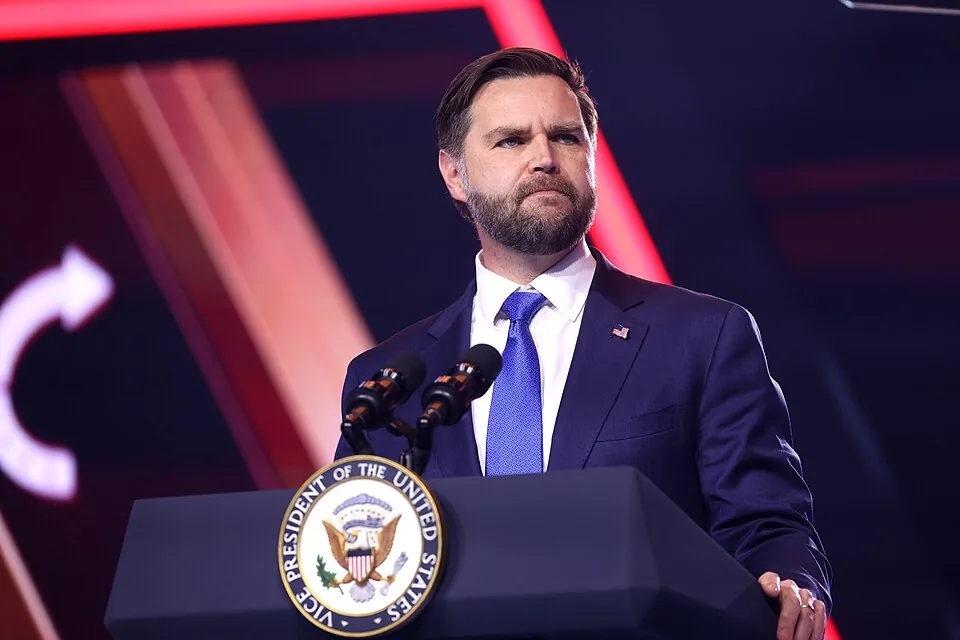
The vice president of the United States told the husband of a dead Army Reserve soldier that the first time he'd heard about the failures surrounding her death was during a live television town hall. Then he explained that vice presidents live in a bubble. Master Sgt. Nicole Amor was killed March 1, and it took until October for the question to reach the second-highest office in the country.
A Widower Asks the Question Washington Wouldn't
At a CBS News town hall hosted by Tony Dokoupil that aired Saturday, Joey Amor stood in front of Vice President JD Vance and said what many families have been saying quietly for months. His wife, Master Sgt. Nicole Amor of the Army Reserve, was one of six people killed in an Iranian drone attack on an outpost in Kuwait on March 1, one day after the U.S. began striking Iran. It remains the deadliest attack on American forces in the war.
"Though the Iranian drone was the weapon that killed my wife, there were a lot of mistakes and a lot of fundamental failures that led up to that," Amor said. He added that his wife had told him things before she died. Then he asked the question flat out: how will this administration hold the leaders responsible accountable for the deaths of the soldiers we honor?
That is not a gotcha. That is a grieving man asking for the bare minimum from the government that sent his wife overseas.
What the Vice President Said Next
Vance started with warmth. He called Nicole Amor "a precious human being who served her country honorably." Fine. Standard. Then came the part that matters.
"If there were failures, and I don't doubt there were, I just … literally the first time I've heard of this is this conversation, and I want to fix that stuff," Vance said. He explained that as vice president, "you live in a bit of a bubble" and "sometimes information doesn't filter up to me."
Read that again. The deadliest attack on U.S. forces in an active war, with six Americans dead, and the vice president says he is hearing about the alleged failures for the first time from a man in a town hall audience. Either that is true, which is an indictment of how this administration handles information, or it isn't, which is worse.
The Failures Were Not a Secret
Here's the thing. The questions Amor raised have been public for months. CBS News has reported on concerns that the Port of Shuaiba facility in Kuwait wasn't adequately fortified and lacked the capability to shoot down incoming drones. It has reported that the Army chose not to rebase troops further from Iran. It has reported that a request to bulk up medical support was ignored.
Those are not fringe theories from a message board. Families of people affected by the attack have been raising these exact questions for months. A vice president who says he's never heard any of it is a vice president who hasn't been listening, or hasn't been told, or hasn't asked.
Pick one. None of them is a good look for the man who is one heartbeat from commanding the military.
The Quiet Admission in the Middle of the Answer
Buried in Vance's response is something easy to miss. He said, "There are issues with … where troops were located that we realized was a huge mistake, and that we could do better on. And we have changed that."
So which is it? He had never heard of the failures, but also he knows where the troops were located and that it was a huge mistake, and it has already been fixed. Those two claims are hard to hold in the same head at the same time.
Vance also said the administration has changed tactics to suppress drone fire, noting that cheap, easy-to-manufacture drones have transformed warfare. That's true. It's also exactly the kind of thing a competent military plans for before it parks reservists within range of Iranian drones, not after six of them are dead.
Promises, Minus the Details
Vance pledged to "figure out what exactly happened and what exactly we can do better." He said, "This is not something I'm gonna forget. And I want to talk to those soldiers, and I want to talk to you to better understand what we can do."
He declined to give specifics on the changes, saying he doesn't want "the Iranians to learn something else [that] they're gonna use to target somebody else's wife or somebody else's mother." Operational security is a real concern, and it is also the most convenient shield in all of government. It lets officials say they've fixed things without ever having to show anyone the receipts.
What Amor actually asked for was accountability. Vance offered sympathy, a promise to look into it, and a reference to changes he can't describe. Nobody was named. Nobody was held responsible. Nobody, apparently, even told him.
The Dingo Take
You are being asked to believe that the vice president learned about the alleged failures behind the deadliest attack of this war from a widower in a TV studio, and that this is somehow reassuring. It isn't. It's the whole problem in one sentence. "Information doesn't filter up to me" is not an excuse. It's a confession about how this government runs.
To be fair, Vance didn't get defensive, and he didn't attack the man. He said he wanted to fix it, and maybe he does. But wanting to fix something you just heard about, six months and six dead Americans later, is a pretty low bar to clear. Joey Amor didn't ask for empathy. He asked who gets held accountable. He got a bubble.
So here is the follow-up, and the families deserve an answer to it. Who knew about the unfortified outpost, who denied the medical request, and who decided the troops stayed where they were? If the answer is that nobody can say, that is not a defense. It's the next story.


Comments