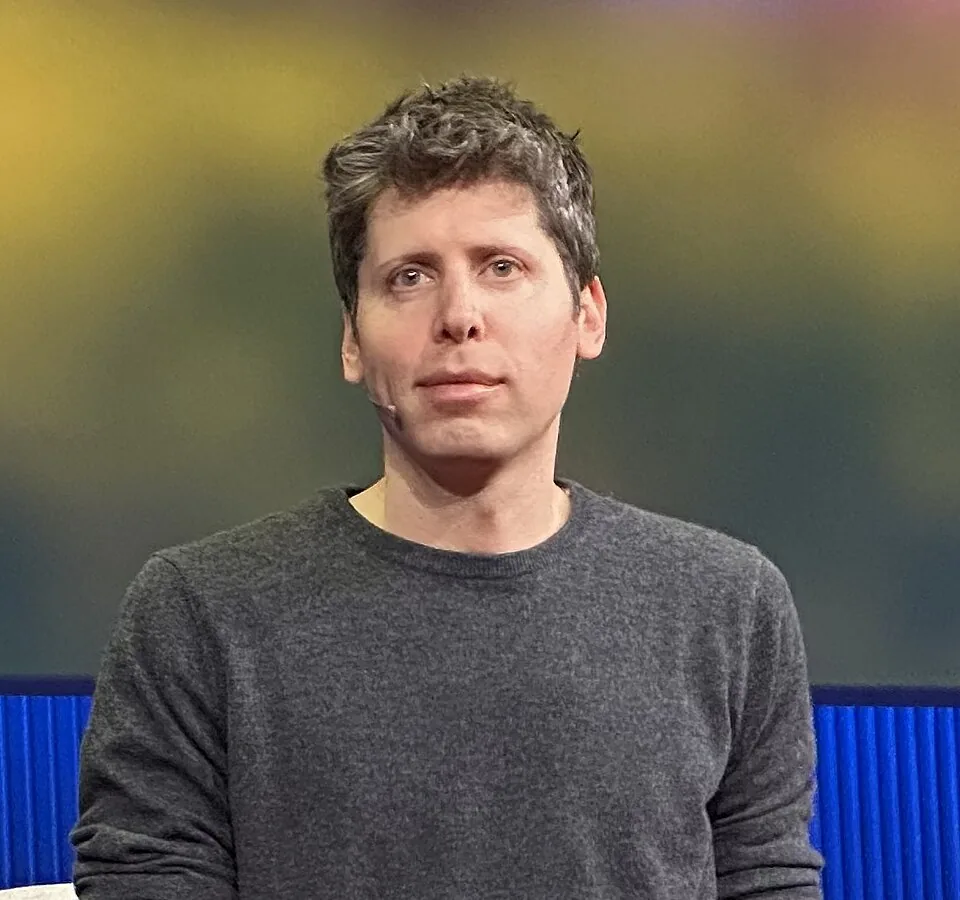
Sam Altman, the man running OpenAI, recently announced that "the world should accept some bad things happening" for the benefits of his technology. He did not ask. He did not take a vote. Now, with the midterms weeks away, Americans are preparing to answer him anyway.
The Bad Things Will Be Provided Free of Charge
Altman's full quote, as flagged in a Guardian opinion column by Rebecca Solnit, is that the world should accept some bad things happening "for the benefits of this technology and people having the agency." Read that again. People having the agency. The same people he wants to sign off on the bad things, without ever being asked whether they'd like the bad things.
It is a staggering sentence. It is the sound of a man who has confused his quarterly roadmap with the social contract.
And the public isn't buying it. Surveys show most Americans would like to pause AI altogether. Opposition to AI datacenters is a factor in a long list of midterm races. The people who were supposed to be grateful for the future are, instead, furious about the invoice.
A Bipartisan Hatred You Can Actually Believe In
We spend a lot of time here documenting how the country can't agree on what day it is. So let's celebrate the rare exception. Datacenterwatch.org counts at least 142 activist groups across 24 states organized to block datacenter construction and expansion.
The complaints are gloriously local. Land. Water. Electricity prices. Noise. Datacenters bring a pile of negatives and, as far as anyone can tell, a handful of jobs. You get the hum, the power bill, and a polite message that your opinion has been noted and discarded.
Solnit calls it "beautiful hatred," and she has a point. Nobody fights this hard against something unless they're protecting something they love. A town. A river. A kid who can still believe a person wrote her bedtime story.
Even a Nine-Year-Old Has Figured This Out
Solnit writes that a nine-year-old she spends time with announced, more or less out of nowhere, "I don't trust AI." That is the most coherent regulatory position any tech executive has heard all year, and it came from someone who can't legally ride in the front seat.
The Pope has weighed in too, posting that "algorithms lack the spark of humanity" and urging people to "safeguard our humanity." When the Vatican and the third-grade class are on the same side of a policy fight, the guys with the venture funding might want to check their math.
Meanwhile, the revolt is getting physical. Some people are going after Flock surveillance cameras with what Solnit describes as "action-movie charms." The less cinematic and more effective route, she notes, is the dull work of getting city councils to reject or rip out the cameras. Boring. Legal. Deadly.
1,000 Nurses Walk Into a Palantir Problem
In September, more than 1,000 nurses and community members marched in San Francisco demanding hospitals cut ties with Palantir, Peter Thiel's surveillance company that also aids ICE. The nurses pointed out that the software makes significant errors and violates patient confidentiality.
The president of the California Nurses Association and National Nurses Organizing Committee called the violence unleashed by immigration agents and enabled by Palantir "a total violation of nursing values of care and compassion." That is a trade union leader delivering a better ethics lecture than anyone in Silicon Valley has managed in a decade.
Think about the sequence here. A company builds a tool that hospitals use, that errs, that leaks patient information, and that helps power a deportation machine. Then the nurses are the ones who have to take to the street to say maybe not.
The Defectors Keep Saying the Quiet Part
Here is where it gets truly grim. Anthropic's own IPO documents acknowledged that AI models could pose "catastrophic or existential risks to humanity." Read that as a sentence in a securities filing. The company is telling investors the product might end the species, and also please buy shares.
Former Anthropic safety employee Jacob Coxon has made statements about near-term apocalyptic risks. And OpenAI's David Robinson recently quit with a note that reads like a tombstone: "The future depends on wisdom that Silicon Valley lacks."
When the people paid to keep the thing safe walk out the door and leave a goodbye like that, the rest of us are allowed to get nervous. These are not activists. These are insiders. They saw the machine and chose the exit.
The Golden Escalator Runs Both Directions
The tech leaders who stood on stage at Trump's second inauguration thought they'd bought a ride up. Solnit's line is that the current revolt suggests they could follow him on the golden escalator down. She frames the midterms as a referendum on the GOP's alignment with predatory tech giants over the public they're supposed to serve.
To be fair, this is one columnist's argument, and an opinion piece is not a polling average. But the raw ingredients are real: a coast-to-coast pile of local fights, a nurses' march, a Pope, and whistleblowers lining up at the door.
The Trump administration and the tech overlords share one core assumption. Both believe they can ignore or override what people want. Both could be about to find out how that works in a voting booth.
The Dingo Take
You are being asked to accept the bad things. That is the actual pitch. Not "we will make this safe." Not "we'll ask you first." Just a billionaire with a chatbot telling you the damage is a feature, the cost is yours, and your consent is a rounding error. Nobody gets to vote on whether the machine that might end civilization gets built, but everyone gets to vote on the zoning for the datacenter next door. So that's where people are fighting.
Solnit's piece is hopeful, and hope is cheap this year. A hundred and forty-two local groups are not a federal AI law. A nurses' march is not a ban on Palantir. But the instinct is right. These companies spent a decade assuming the public was a market to be captured rather than a body to be answered to. The midterms are the first time in a long while that the answer can come in a form they can't buy.
So here's the thing. Altman is right about one part. Some bad things are going to happen. The bad thing he should be worried about is a lot of very annoyed people with a ballot.





Comments