
Michael Bloomberg is spending $80 million to help Democrats win the House, which sounds like a lot until you learn that Donald Trump says he's putting $400 million into Republican campaigns and Elon Musk has already burned through $366 million on the right. The 2026 midterms are shaping up as a contest between whichever party's billionaires have the better quarter.
The Bloomberg Number
Let's start with the facts. The New York Times reported that Bloomberg made the contributions in September and October, and The Guardian picked up the story on Tuesday. The 84-year-old former New York City mayor is aiming his money mostly at House races, where Republicans hold a historically thin majority.
The big checks are easy to find. He put $24 million into Everytown for Gun Safety, the group he cofounded, which is spending on Democratic candidates for the lower chamber. Another $16 million went to the House Majority PAC, which is tied to minority leader Hakeem Jeffries.
He also gave $2.5 million to a Super PAC backing James Talarico in the Texas Senate race, plus money for a Super PAC supporting Kathy Hochul's re-election and several Democratic gubernatorial campaigns. That's a lot of envelopes.
The Math of a Bigger Majority
Democrats need 218 seats to take the House. Bloomberg's political adviser Howard Wolfson says that's not the goal. The goal is to blow past it.
"The difference between 221 and 230, in terms of the House majority, really matters," Wolfson told the Times. He's right, and anyone who watched a handful of Republican members hold the last Congress hostage knows exactly why. A three-seat majority is a hostage situation. Every member with a grudge, a scheduling conflict, or a podcast can hold the whole caucus for ransom.
A fatter cushion means Democrats can actually govern, investigate, and block things without begging their most unreliable colleague for a vote. Wolfson also said Bloomberg "is of the view that resources matter in campaigns" and "expects a result." That's the most billionaire sentence ever uttered. He's not donating. He's placing an order.
Meanwhile, On The Other Side Of The Vault
Here's where the $80 million starts to look like a tip. Trump announced Tuesday that he intends to spend $400 million to aid Republican candidates, and he says $300 million of it has already gone out the door.
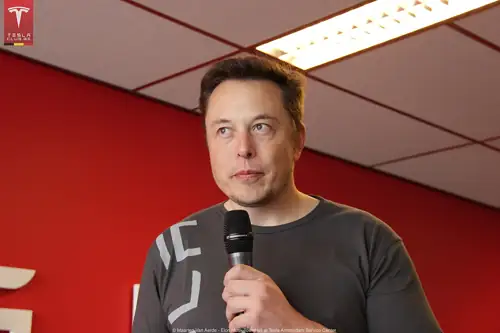
Then there's Elon Musk, Trump's ally, who has spent $366 million on conservative groups and campaigns so far. Add Trump's figure and Musk's figure and you're staring at more than three-quarters of a billion dollars aimed at keeping Republicans in charge, from just two men.
Democrats are favored to take the House, by their own telling, and they've also acknowledged they're trailing Republicans in fundraising. So the party that thinks it's winning is being outspent by a wide margin. That's not a comfortable place to stand, and it's the kind of gap that can turn a likely win into a tight one.
What Control Actually Buys
The stakes are not abstract. A Democratic House would be able to block Trump's legislative agenda and run real investigations into his administration. That alone explains the checkbook frenzy on both sides.
The Senate is the bigger prize. Democrats believe they have a shot at netting the four seats they'd need to retake it, though analysts say it could go either way. Win that chamber and Democratic lawmakers could reject Trump's nominees for the Supreme Court and other federal judgeships.
That's the whole ballgame, folks. Lifetime judicial appointments are the thing the right has spent decades building toward. Putting a fence around that pipeline is worth a lot more than $80 million to the people who care about it.
We Have Been Here Before
This isn't Bloomberg's first rodeo. He spent $80 million to help Democrats in the 2018 midterms during Trump's first term, then ran a well-funded but unsuccessful campaign for the party's 2020 presidential nomination. The man knows how to turn money into a very expensive lesson.
To be fair, 2018 worked out fine for Democrats, who took the House. Whether the cash did the heavy lifting or just rode the wave is the kind of question political scientists argue about over bad coffee. But Bloomberg clearly believes the investment pays off, and he keeps making it.
The Dingo Take
Imagine Barack Obama announcing he'd personally write $400 million in checks to Democratic candidates, while George Soros had already dropped $366 million on liberal groups. Fox News would need a defibrillator. The words "rigged" and "oligarch" would be on every chyron for a month. Instead, when it's Trump and Musk doing it, we get a polite wire story and a shrug.
Look, Bloomberg's $80 million is real money doing something useful, and nobody should pretend otherwise. A Democratic majority bigger than the bare minimum is the difference between a House that can do its job and one that spends two years in hostage negotiations. Take the win.
But let's be honest about what we're cheering for. A functioning democracy shouldn't hinge on whether one 84-year-old can outspend two guys with a combined war chest the size of a small country's defense budget. The system is broken, and both sides are now playing the broken version because the only alternative is losing. Bloomberg expects a result. So should the rest of us, starting with a campaign finance system that doesn't treat elections like an auction.

Comments