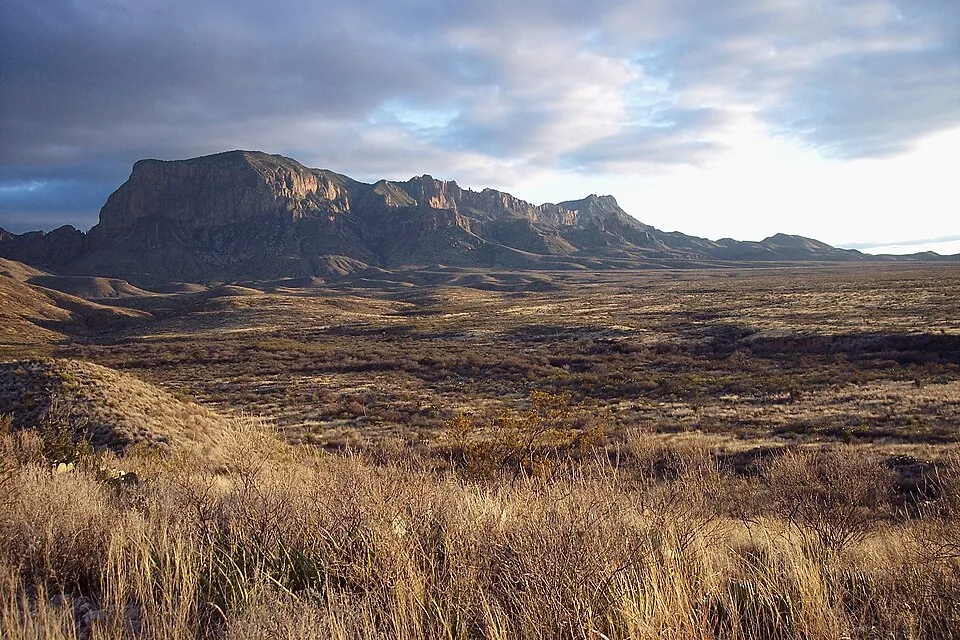
The Trump administration wants the Supreme Court to let it keep bulldozing a remote stretch of West Texas that includes Big Bend National Park, despite a federal judge finding that two Homeland Security secretaries blew past their legal authority to get the job started. The area at the center of the fight covers more than a quarter of the border and accounts for somewhere between 0.3% and 2.2% of annual apprehensions. The government's case rests on calling it a place of "high illegal entry."
The Emergency Request
On Wednesday, the Justice Department asked the Supreme Court to lift a lower court injunction that bars the Department of Homeland Security from building the barrier or related infrastructure in the Big Bend Sector. The sector covers more than 500 miles of the U.S.-Mexico border and 77 counties in Texas, a lot of very empty and very beautiful country.
Solicitor General D. John Sauer, as quoted by CBS News, wrote that the injunction "significantly frustrates the government's ability to stop the flow of illegal aliens and drugs across the southern border." He said the Secretary picked the project areas because of high crossing and smuggling rates over the past several years.
Note the timing. The request landed just after Judge Kathleen Cardone refused to pause her own ruling. So the administration lost, asked the same judge to un-lose, got told no, and ran straight to the highest court in the country. Subtle it is not.
Bulldozers at the Park Gate
Trump's border wall has been the centerpiece of his immigration pitch for a decade, which makes it a little funny that the project hit a wall of its own earlier this year. Photos and videos of bulldozers arriving at Big Bend National Park spread across social media, and the backlash came from lawmakers in both parties, cattle ranchers, and local law enforcement in Texas.
Think about that coalition for a second. Ranchers and sheriffs in Texas looked at a Trump border project and said, absolutely not like this. When you lose the cattlemen, you have done something genuinely special.
Customs and Border Protection Commissioner Rodney Scott paused construction inside the park until the end of September. The agency insists the wall itself won't cut through Big Bend National Park. But patrol roads, detection technology, and roughly 17 miles of vehicle barriers would. So the wall is not in the park, except for all the stuff that is.
Construction Is Already Underway
This is not a hypothetical wall. Construction on a 47-mile stretch in the Big Bend region began last month, according to CBP, and the government has awarded contracts for five border-barrier projects in the area.
The plan announced in February calls for 30-foot-tall bollard walls stretching from Fort Quitman, Texas, to Closed Canyon in Big Bend Ranch State Park. Border walls and roads would span more than 300 miles in total. That is a lot of steel poured into a lot of canyon and desert, much of it along the Rio Grande.
So when the Justice Department says the injunction frustrates its efforts, it means the bulldozers stopped. That is the injury the Supreme Court is being asked to fix.
The Waiver Magic Trick
Normally a project this size, touching cultural, recreational, wildlife, and environmental resources, has to clear federal environmental protection and historical preservation laws before anyone fires up an engine. That is the whole point of those laws.
But then-Homeland Security Secretary Kristi Noem invoked a 1996 immigration law that lets the secretary waive all legal requirements deemed necessary to speed up barrier construction near the southern border, in areas of "high illegal entry." One signature and the environmental review vanishes. Markwayne Mullin, who succeeded Noem after her firing, then issued two more waivers to keep CBP building.
A nonprofit, a professional riverboat guide, and a religious organization dedicated to preserving the Sacred Heart of the Church of Jesus along the Rio Grande sued in April. That is not a shadowy army of open-borders radicals. That is a river guide and some people who care about a church.
The Numbers Don't Cooperate
Here is where the whole argument gets awkward. The administration says Big Bend qualifies as an area of "high illegal entry" because more than 89,000 people were apprehended there between 2021 and 2025.
The plaintiffs point out that the Big Bend Sector ranks dead last in apprehensions among the seven sectors along the southern border. The sector covers more than 25% of the border, yet annual apprehensions there ran between 0.3% and 2.2% of the border-wide total, according to court filings.
So you have a quarter of the border producing about one to two percent of the activity. Judge Cardone granted the preliminary injunction earlier this month and found that Noem and Mullin exceeded their authority when they issued the waivers between February and July. The ruling bars "any construction or ground disturbing activities" in the sector.
The Dingo Take
You are being asked to believe that the emptiest, quietest, least-crossed stretch of the entire southern border is secretly a crisis zone so urgent that the law itself must be set aside. That a sector with the lowest apprehension numbers in the country is, somehow, "an area of high illegal entry." That a judge who read the waivers and the numbers got it wrong, and that the Supreme Court needs to hurry.
The waiver power exists because Congress wanted barriers built quickly where crossings were heavy. It was not written so a secretary can wave away environmental review anywhere a wall would look good on a press release. Two secretaries signed three waivers, and a federal judge found they went past their authority. The administration's answer is not to fix the legal problem. It is to ask for permission to keep digging while the legal problem gets sorted out. Once a canyon is graded and a river corridor is cut, no ruling puts it back.
And look at who is uncomfortable here. Ranchers. Sheriffs. Lawmakers from both parties. A riverboat guide. These are not the people the wall was supposed to alarm. When your own coalition starts filing objections, maybe the problem is not the judge.



Comments