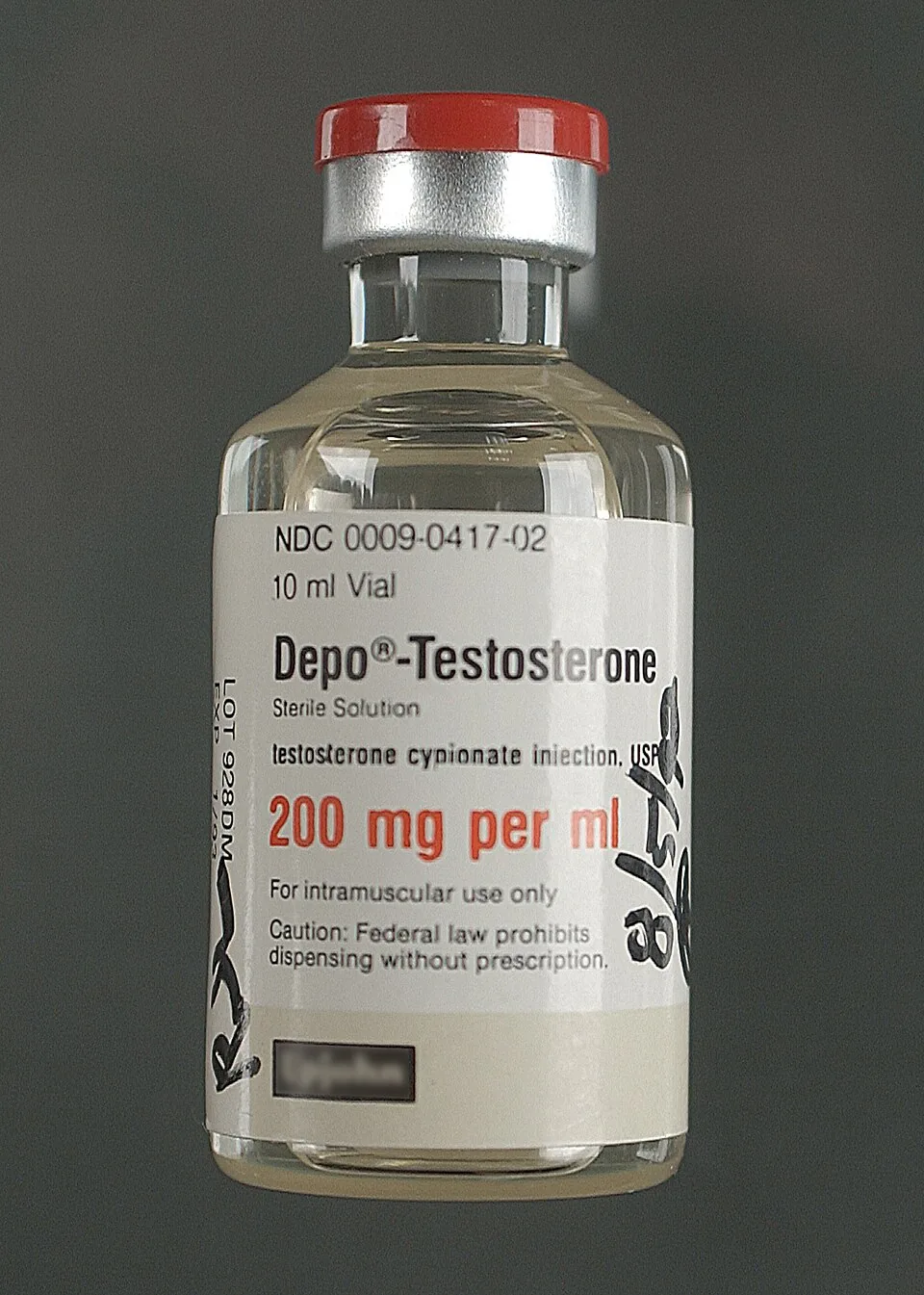
The Trump administration has decided that one of the great threats to American national security is the T-levels of men over 30. The Pentagon issued mandatory testosterone deficiency screening guidelines for male service members 30 and older in September, and a senior HHS official is now telling Fox News Digital that low testosterone has "absolutely" got "national defense readiness ramifications." Meanwhile, the number he shared about who can actually serve in the military is considerably more interesting, and considerably less about hormones.
The Screening Order Nobody Asked For
Here is what the policy actually does. Male service members ages 30 and older now undergo mandatory screening for testosterone deficiency, starting with an assessment of symptoms and risk factors. If the answers look bad, further testing follows, and treatment is available "when medically appropriate."
Adm. Brian Christine, a urologist who spent more than 35 years in men's health and now holds a senior role at HHS, helped shape the initiative. He told Fox News Digital the guidance is "incredibly important, incredibly timely." He also said, "We're not forcing testosterone on anybody."
So the screening is mandatory, but the treatment is not. Got it. The government will check your hormones whether you like it or not, and then politely offer you a pathway forward. It's a wellness program with a chain of command.
A Hormone Panic With a Defense Budget
Christine's case is that testosterone levels have been falling for decades. "In the mid-1970s, the average testosterone level for men in this country... was well over 650," he said. "Now it's approaching 350." He pointed to obesity and chronic disease as established factors and floated environmental exposures like microplastics as possible contributors, a theory he conceded researchers are still investigating.
That last part matters. The administration is rolling out a military-wide screening program while its own officials admit nobody knows why the numbers are dropping. NIH Director Dr. Jay Bhattacharya said it himself: "we don't know why. We don't have an answer." He said the NIH is investing in research to figure out the causes and what doctors should tell men who are diagnosed.
Read that again. The policy came first. The science is still being ordered.
The Number That Actually Matters
Buried in the same interview is the real story. Christine said 77% of Americans ages 17 to 24 do not qualify for military service without a waiver. Among young men, more than 70% are ineligible. And only about 3% of young Americans say they're interested in serving at all.
Those are the numbers that keep recruiters up at night. Obesity, chronic disease, and other barriers are shrinking the pool of people who can wear the uniform before a single drill sergeant gets to yell at them. Christine acknowledged exactly that.
Notice who the new screening program targets, though. Service members 30 and older. People who already enlisted, already passed the physical, already serve. The recruiting crisis is a 19-year-old problem, and the fix on offer is a 30-plus problem.
Same Playbook, New Costume
This is part of a larger pattern. Fox News notes Trump came into his second term promising to rebuild the military by tightening fitness requirements, axing DEI policies, overhauling weapons acquisition, and refocusing the force on "combat readiness and lethality." Pete Hegseth, now running what the administration calls the Department of War, has made physical toughness a personal brand, including leading a record-breaking push-up charge at the Navy football game last year.
The testosterone push fits neatly into that image. It turns a complicated public health trend into a story about American manhood in decline, with a government program standing by to restore it. That's a much better pitch than "we have a childhood obesity and chronic disease crisis," which would require actual policy about food, healthcare, and the sort of boring public health spending this crowd usually cuts.
Some on the right spent days gloating that Democrats got "roasted" for comparing the initiative to "gender-affirming care." Save the victory lap, because the comparison holds up better than they'd like. It isn't a perfect one-to-one, but look at what this is: a government program that offers men hormone treatment to restore what the government considers proper manliness. Affirming a man's masculinity with a prescription is a form of gender-affirming care. It just comes from the same crowd that treats the phrase like a moral emergency when anyone else needs it. Funny how that works.
What Doctors Say About Chasing a Number
Even the sources pushing this concede the medical standard. Bhattacharya noted that guidelines stress a diagnosis requires both symptoms and consistently low hormone levels. A number on a lab report isn't enough. That's the whole difference between treating a patient and chasing a stat.
And there's a reason that distinction exists. Testosterone naturally drifts with age, weight, sleep, and a dozen other things. Screening an entire cohort of men and then offering treatment to the ones who come up low is how you end up with a lot of people on a hormone regimen for a problem that may not need one.
None of that means testosterone deficiency isn't real. It is. Men who have it deserve to get diagnosed and treated. The question is whether a mandatory, military-wide program built on a trend nobody can explain is the right tool, or whether it's a headline in search of a policy.
The Dingo Take
The Pentagon is screening grown men's hormones to solve a recruiting problem that starts with teenagers.
Look, if you want more people qualified to serve, the answer is sitting right there in Christine's own numbers. Seventy-seven percent of young Americans can't qualify without a waiver. Obesity, chronic disease, the whole sad menu. That is a failure of nutrition, healthcare access, and public health, and you do not fix it by checking the T-levels of a 34-year-old staff sergeant who already passed the physical.
But it is a lot easier to tell a story about men getting soft than to fund the unglamorous work of making kids healthy. One of those gets you a viral Hegseth moment. The other gets you a budget fight. Guess which one this administration picked, and guess how many of the people running it can explain why testosterone is falling, since the NIH director just admitted nobody can.





Comments