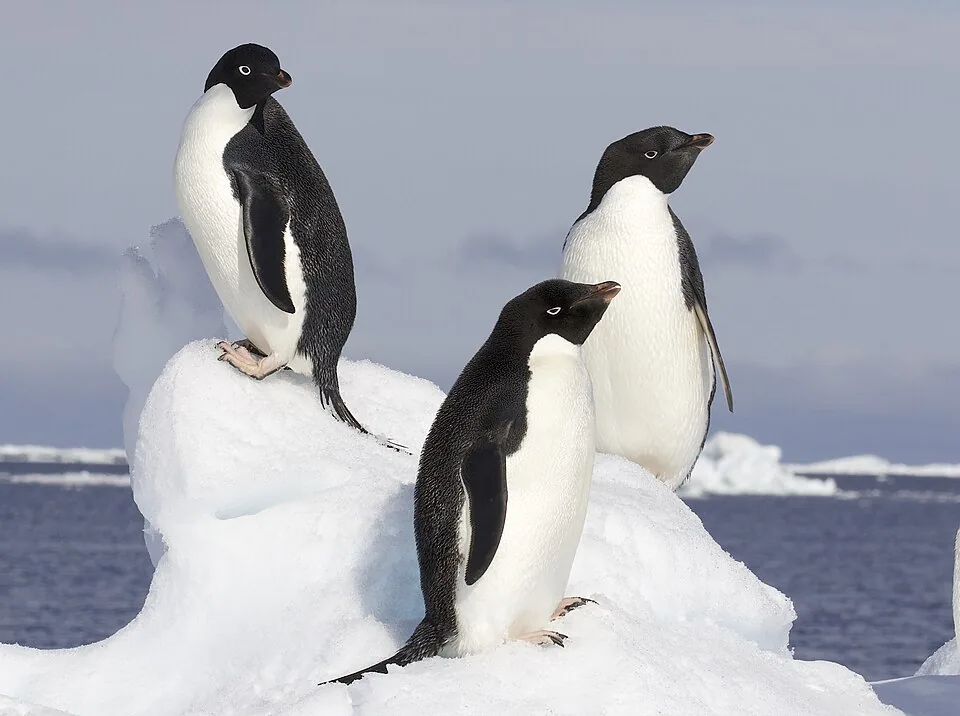
A team of scientists sailed to Antarctica in March 2024 with one suspect in mind: bird flu. They found more than 537 dead Adélie penguins on a single landing ramp, then discovered the virus they came to blame was barely in the room. The real killer was a bacterium nobody was looking for, and it turns out that is the most important part of the story.
A Crime Scene the Size of an Airport Runway
Dr. Ralph Vanstreels, a wildlife veterinarian with the University of California, Davis, told NPR he had a good idea of what he would find when his vessel approached the Danger Islands, just off the Antarctic Peninsula. Dead Adélie penguins. A virus had been sweeping the region, and the dead birds were its calling card.
He got the crime right and the culprit wrong. The team pulled up to a landing ramp that Vanstreels estimates was about the size of an airport runway, and the snow was lumpy. Every bump was either a rock or a carcass. They had to dig to tell the difference.
The final count on that ramp alone was more than 537 dead penguins. And that was one ramp.
Thousands Dead, and No Time to Count Them
The Danger Islands are home to two mega colonies of penguins, which is the kind of phrase that sounds adorable until you realize what it means for a disease outbreak. The researchers estimate thousands of dead Adélie penguins and other bird species across the islands. They never got a full tally.
That is not negligence. It is Antarctica. As Vanstreels put it, you cannot stay long because an iceberg might block your way out. Picture doing grim forensic work in layers of gear, double gloves, coveralls, glasses and masks, waddling across the ice looking, in his words, a bit like a penguin yourself, while the sea quietly plots to trap you.
These were people doing careful biosafety work at the bottom of the planet with a clock ticking. Respect.
Everyone Was Looking for Bird Flu. Bird Flu Barely Showed Up.
The expedition was, by Vanstreels' own account, fully set up to look for bird flu, because that was the panic. H5N1 reached Antarctica in late 2023 and early 2024, and the fear was understandable. Since late 2021 the virus has killed or forced the culling of nearly 300 million poultry birds, according to the World Animal Health Information System, along with millions of wild animals and marine mammals nobody can count precisely.
So the team took samples and ran early tests in a mini-lab on their boat. By evening they had results, and they were wrong for the narrative. Bird flu was there, but the virus loads were low. The carcasses were fresh, which meant that if H5N1 had killed these birds, there should have been far more of it.
Something else was doing the killing. The team did not know what.
The Microscope Names the Real Killer
Months after the voyage, colleagues in the Netherlands put the tissue under a microscope. There was bacteria in it. Not virus. The culprit was avian cholera, a bacterial disease that is distinct from human cholera, and the findings were published in October in the journal Proceedings of the Royal Society B.
The good news is that this is not considered a major threat to humans. The strain specialized to birds is distinct from the strain specialized to mammals, and Vanstreels says the risk of human infection from an outbreak in birds is not really that high. The bad news, which the reporting cuts off just as it gets to it, is that the disease kills birds across the world.
So the panic was aimed at the wrong pathogen. The dead penguins did not care.
Meanwhile, Bird Flu Finally Reached Australia
The same story has a second act on the other side of the planet. In June, H5N1 arrived in mainland Australia, the last continent to dodge it. Researchers were amazed it held out for six years.
It also did not arrive the way anyone expected. Scientists assumed the threat would come from Southeast Asia, given the heavy bird migration between there and Australia. Instead the virus came from Antarctica, likely via migrating birds. Michelle Wille of the University of Melbourne described it to NPR in 2025 as a virus that is not assisted by airplanes, one traveling by mass mortality after mass mortality after mass mortality after mass mortality.
Read that again. The virus is hopping the planet by leaving a trail of dead animals, and Antarctica was a stepping stone on the route.
What a Wrong Guess Teaches About Tracking Disease
Vanstreels says the penguin case holds broader lessons for tracking the spread of diseases globally, and the main one is sitting in plain sight. When a die-off happens, it is tempting to blame the famous pathogen. The famous pathogen was in the room, but it was not the one holding the weapon.
He also says continuing fear of a global panzootic, a pandemic among animals, is justified. Both things are true. Bird flu is a real and ongoing threat, and it can also be the wrong answer on any given beach of corpses.
The Dingo Take
The headline version of this story, the one everyone was ready to write, was that bird flu was massacring Antarctica's penguins. The facts say the virus was present but its loads were low, and a bacterial disease was doing the killing. The expedition was built around the panic, and the panic turned out to be aimed at the wrong target.
That should bother you, and not because the scientists failed. They did exactly what science is supposed to do. They went in with a hypothesis, tested it on a boat in the freezing dark, saw the data refuse to cooperate, and followed the evidence to the microscope. That is the system working. The failure would have been announcing bird flu from the deck and going home.
Here is the part that should keep you up. We are not great at funding the unglamorous work of finding out what is actually killing wildlife, and a six-year streak of Australia staying bird-flu-free ended anyway, via a virus that traveled in a conga line of corpses from the bottom of the world. The next outbreak will not announce its name either. Somebody will have to pull on the gear, walk the ice like a penguin, and check.





Comments