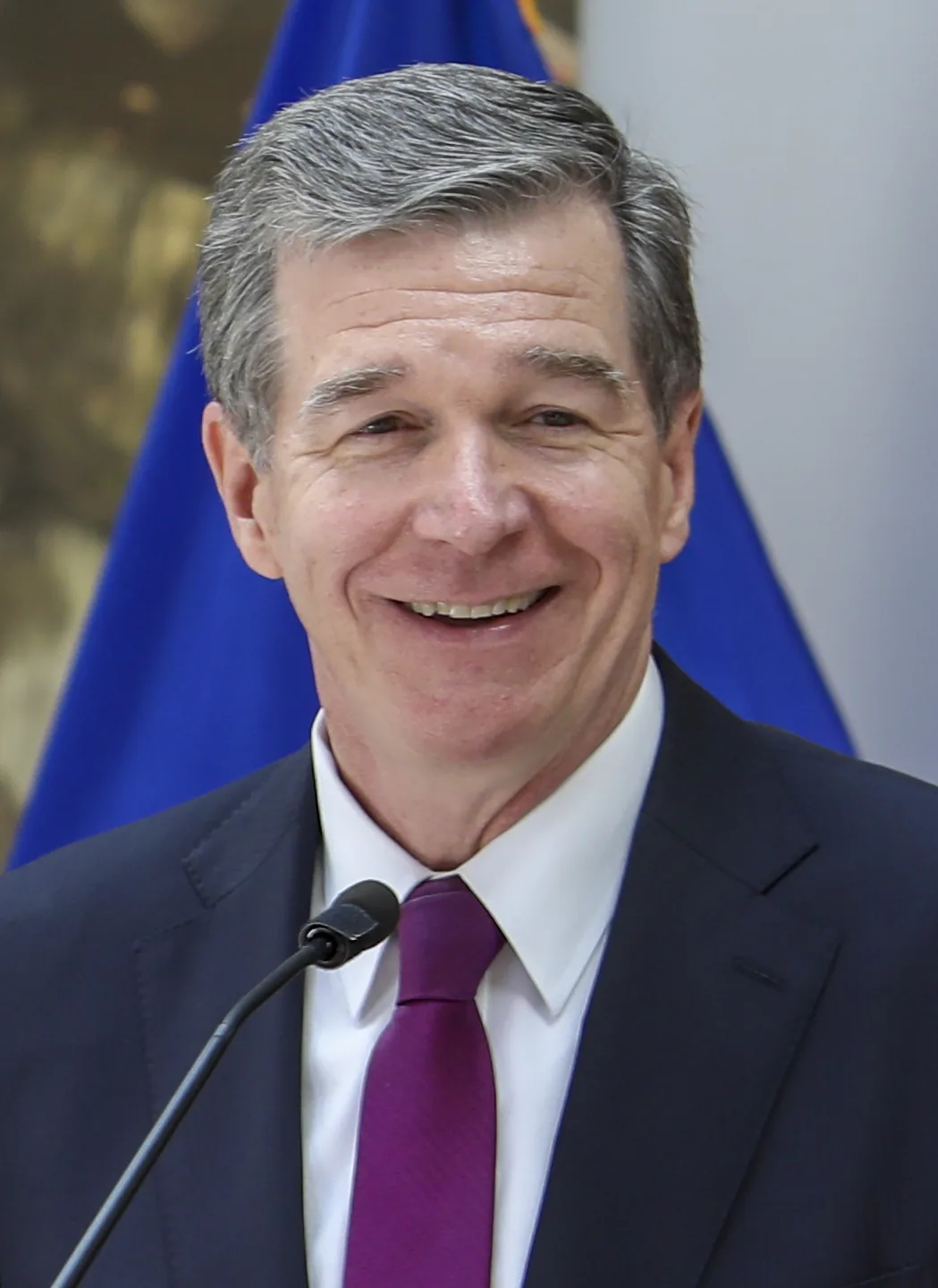
Roy Cooper is going to the United States Senate, and Donald Trump called it weeks ago, standing in front of a crowd in North Carolina while the guy he recruited to stop it stood nearby. "He's going to become your senator," Trump said at an October rally. "And it's crazy." It is the first time in 10 years the state has sent a Democrat to the Senate, and the most Republican thing about the night was the candidate's own party giving up on him.
The Guy Who Never Trailed
According to The Guardian, Cooper, the former two-term governor, beat Michael Whatley, the former Republican National Committee chair, to take the seat held by retiring GOP Sen. Thom Tillis. NBC News projected the win Tuesday night, and CBS News followed. Cooper is 69, the longest-serving attorney general in the state's history, and by every account the most popular political figure in North Carolina.
He also never trailed in a poll. Not once. He raised roughly three times as much money as Whatley. He skipped a messy primary entirely, which in a Democratic Party that occasionally treats primaries like blood sport is a small miracle.
The result matters beyond one state. Democrats need a net gain of four seats to take the Senate, and North Carolina was always their best shot at flipping a Republican-held seat. They just took it. It is the first Democratic Senate win in the state since 2008.
Make Stuff Cost Less, Apparently a Winning Slogan
Cooper's campaign was called "Make Stuff Cost Less," and it was exactly as complicated as it sounds. Lower the cost of food. Lower the cost of energy. Lower the cost of housing. Mention that he expanded Medicaid and raised teacher pay while governor. Repeat until Election Day.
That was it. No grand theory of the republic. No cultural crusade. Just a man in a state where groceries are expensive saying he would try to make groceries less expensive. In a year when voters soured on the economy and on high gas prices, this turned out to be a message with legs.
The contrast with the other side was stark. Whatley campaigned on helping enact Trump's agenda and fighting for conservative values, which is a fine pitch if the agenda is popular. It was not.
Republicans Tried Charlotte, Trans Athletes, and Immigration
Whatley and his allies went looking for an attack and came back with a greatest-hits album. They tried to tie Cooper to violent crime, particularly in Charlotte. They leaned on anxieties about transgender athletes. They hit immigration.
None of it stuck. NBC News noted that Republicans had few attacks to lob at Cooper in the first place, which is what happens when your opponent has been on the statewide ballot for a generation and has spent that time being, by his own party's framing, a politically moderate guy who keeps winning. You cannot introduce a man to voters who have already met him five times.
Whatley also had a structural problem. He had never run for elected office before. He was a party operative, a former chief of staff to Elizabeth Dole, a state party chair, and then the national party chair during the 2024 cycle. Great résumé for running a party. Less great for convincing a state you know what a Tar Heel wants from a senator.
Even the GOP's Own Super PAC Bailed
In the closing weeks, the Senate Leadership Fund, the super PAC that routes money from Senate Republican leader John Thune's fundraising into Senate races, wrote Whatley off. It canceled its ad spending in North Carolina and redirected the money to Kansas.
Read that again. Kansas. A state Republicans usually don't have to think about is now the place where they need to spend rescue money, because they decided North Carolina was a lost cause. That is what a bad night looks like before the bad night even starts.
Trump and Vice President JD Vance did rally with Whatley down the stretch to try to give him a boost. It did not work, and Trump's own comment at the October rally suggested he knew it. When the guy who recruited the candidate tells a crowd the other guy is going to win, the campaign is not exactly a nail-biter.
The Trump Factor, Plus an Iran War Nobody Asked For
NBC News and CBS News both pointed to the same albatross. As voters soured on the economy and on the Iran war, Whatley could not escape or distance himself from an increasingly unpopular president. CBS described the war as unpopular and tied it to high gas prices. Whatley's closeness to Trump, the thing that got him the nomination, did not appear to help the party's chances in the general election.
This was also the first midterm Senate race in North Carolina with Trump in power, the setup in which the president's party traditionally takes its beating. Trump won the state by just three points in 2024, so the cushion was thin to begin with. Tillis, the man Cooper will replace, grew increasingly critical of Trump during his second term and chose not to seek reelection, which tells you something about the mood inside the GOP when its own incumbent heads for the exit.
A House Seat Fell Too, Because of Course It Did
The Senate flip was not the only bad news for North Carolina Republicans. The Guardian reported that the GOP also turned over a congressional seat in the western part of the state, even after the Republican-controlled legislature redrew the congressional maps as part of Trump's national push for mid-decade redistricting.
The backstory is rough. Rep. Chuck Edwards announced in August that he would not seek reelection after the House ethics committee recommended his censure following an investigation into inappropriate conduct toward two female congressional staffers. Democrat Jamie Ager, a fifth-generation farmer whose farm was damaged by Hurricane Helene in 2024, ran on federal relief failures and public resentment of the Trump administration.
So the maps were redrawn to help Republicans, and the seat flipped anyway. That is the kind of result that makes a mapmaker want to lie down in a dark room.
The Dingo Take
Imagine a Democratic Senate candidate, a first-time office seeker, handpicked by Barack Obama, losing a swing state while his own party's super PAC pulled the plug and the former president told a rally crowd his opponent was a lock. The cable panels would still be running segments on the collapse of the Democratic brand. There would be a Politico autopsy before the polls closed. Here, the same facts get filed under routine midterm dynamics.
Do not let anyone call this a fluke. A popular moderate with a one-sentence message about prices beat a party operative whose main qualification was that Trump liked him. The party that spent years telling voters the economy was great now has a war with Iran, expensive gas, and a president whose own rally remarks sounded like a concession speech. Whatley could not outrun any of it because his entire candidacy was an extension of the man at the top of the ticket.
Cooper still has to go to Washington and actually do something about the cost of groceries. That is a much harder job than winning an election in which the other side beat itself. But for one night, North Carolina told the Republican Party exactly what it thinks of the product it is selling. The party's own super PAC had already said the quiet part out loud when it packed up and left.

Comments