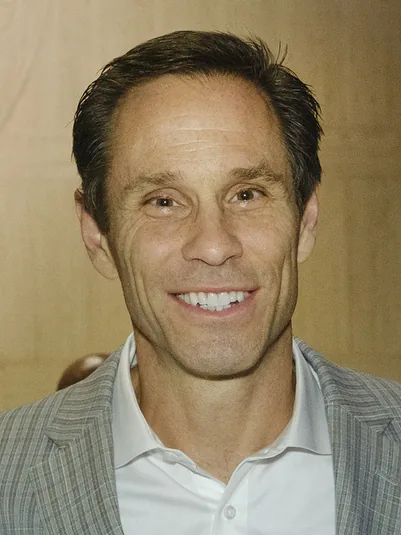
Democrats swept every statewide office in Texas on Tuesday, and Attorney General-elect Nathan Johnson did not even wait a full day before announcing he will stop hauling out-of-state doctors into court for mailing abortion pills to Texans. He called the practice an instrument of "persecution and intimidation, harassment and political showboating." Four years into a near total abortion ban, someone with actual power just said the quiet part out loud.
The First Shot Lands Before the Confetti Is Swept Up
Less than 24 hours after what the Texas Tribune described as a historic Democratic sweep of the state's elected offices, Johnson told the paper he will not continue Ken Paxton's campaign of suing doctors in other states who send abortion medication to patients in Texas. That is a fast pivot, even by the standards of a state where the last four years have felt like a decade.
Johnson was careful to say what he can and cannot do. "I'm not a legislator, and I can't change abortion law," he said. But he can decide how the attorney general's office spends its time and whose lives it tries to wreck. Under Paxton, that meant a lot of lawsuits against doctors who do not live in Texas and, in many cases, have never set foot here.
Paxton's Legal Theory Was Always a Magic Trick
Here is how the old system worked. It is illegal for Texas doctors to mail abortion medication within the state. So Paxton went after physicians in other states who prescribe the pills, and abortion advocates say the lawsuits scared Texans away from getting them at all.
The problem is that those suits ran straight into shield laws in blue states, which protect doctors who send abortion medication across state lines. Texas was essentially arguing that its statutes follow you wherever you go, like a bad smell. Johnson has a name for that theory: "judicially absurd." He said he will honor other states' shield laws and will not pretend that Texas law has extraterritorial effect.
That is not radical. That is a lawyer declining to file nonsense. The fact that it counts as a headline tells you how far the office drifted from ordinary legal practice.
Don't Plan the Victory Parade Yet
Before anyone starts popping champagne, a reality check. The ban is not going anywhere. Governor-elect Gina Hinojosa cannot repeal it with a pen stroke, and she told Politico in September that repeal would not be a priority, because it would require Republicans to pass the bill and that is not happening.
So the strategy is to squeeze the ban from the edges. Brandon Rottinghaus, a political science professor at the University of Houston, says Hinojosa can influence how the law is implemented and how its exceptions are interpreted. Hinojosa has said she will work to end penalties for doctors who perform life-saving abortions, though lawmakers added protections for doctors in those situations last year.
The ban stays. The machinery around it gets a new operator.
The Appointment Power Nobody Talks About at Dinner
This is where it gets interesting, and where the anti-abortion movement is sweating. Hinojosa gets appointments. The Texas Medical Board has a block of its 19 seats expiring in April, and her picks could rewrite the guidance that tells physicians when they are legally protected to perform an abortion to save a patient's life.
The current guidance, issued two years ago, fell far short of what health care advocates wanted. The board was initially reluctant to say anything about how to read the medical exceptions, even after the Texas Supreme Court told it to identify "red lines" and best practices. Critics say the reworked version still puts too much burden on a doctor deciding in seconds whether a mother lives.
Then there is the Health and Human Services Commission, where Commissioner Stephanie Muth's appointment expires Feb. 1. Whoever replaces her will have a say in how private contractors are scrutinized.
Follow the $200 Million
John Seago, president of Texas Right to Life, is not worried about a new standalone abortion bill this session. He is worried about money. The program formerly known as Alternatives to Abortion, now rebranded Thriving Texas Families, sends over $200 million to private contractors to, in part, counsel pregnant women out of abortions, among other services.
Seago says Hinojosa has consistently voted against it and he can see her defunding it or shifting the money elsewhere. The agency is also headed for Sunset review, which gives lawmakers wide latitude to reshape budgets, and that could mean slashing the program outright.
The Maternal Mortality and Morbidity Review Committee faces Sunset evaluation too. Advocates have blasted it for delaying its latest biennial report, which is expected to cover deaths after the ban took effect. Members have asked the Legislature for permission to review abortion-related deaths and been ignored. A committee that cannot look at the thing it was built to look at is a strange kind of oversight.
What Stays Exactly the Same
Seago also expects other states to keep fighting the flow of pills by mail on their own, even without Texas leading the charge. And he says the "bounty hunter" law, which lets private citizens sue abortion medication providers who violate the ban, will not be revisited this session.
So the private lawsuit machine keeps humming. What disappears is the weight of the state's own attorney general leaning on it. That matters, but it is not the same as the bounty hunters going away. Texans seeking pills still live under a system designed to make everyone around them afraid.
The Dingo Take
Who benefits from the old way of doing things? Follow the incentives. A Texas attorney general who sues doctors in other states, knowing those suits will lose to shield laws, is not practicing law. He is producing press releases, campaign fodder, and a steady drip of fear, and Paxton turned that into a Senate run. The lawsuits were never about winning. They were about being seen to fight.
Johnson is right that this was showboating, and the fact that ending it counts as bold tells you how low the bar sank. Declining to file a lawsuit your own legal theory cannot support is not heroism. It is the minimum. But in Texas, the minimum just became a political event, and that is the whole story of the last four years.
Now the real work starts. The ban survives, the bounty hunter law survives, and Republicans still control the pen that would repeal either one. What changes is who runs the agencies, who sits on the boards, and where $200 million goes. That is slower and less satisfying than a repeal. It is also how the people who built this system are about to find out how much of it ran on their say-so alone.

Comments