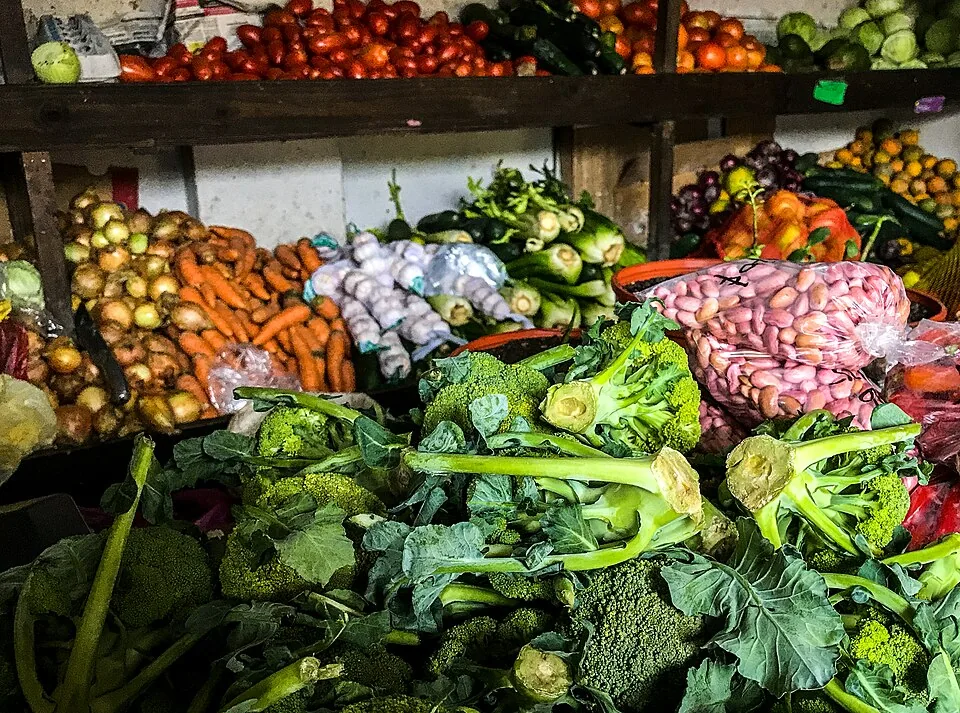
Wholesale fresh and dry vegetable prices jumped 27% last month. The month before that, they jumped 31%. If you're doing the math at home, that is a vegetable aisle that got dramatically more expensive for the people who stock it before you ever touched a cart.
Explain Like I'm 5 · 45-second video

Narrated and captioned. Made by The Dingo Daily from this article.
Two Months, Two Gut Punches
Here's the data, courtesy of Axios and this week's inflation numbers. Wholesale fresh and dry vegetable prices rose 27% last month. That came right on the heels of a 31% surge the previous month. Not a year. Not a quarter. Two consecutive months of double-digit leaps in what it costs to buy vegetables in bulk.
These aren't the prices you see on the little tag at the supermarket. These are the prices paid by food distributors, grocery chains and other businesses to farmers and other producers. Think of it as the cost of the thing before anyone has had a chance to add their cut, their margin, or their mysterious fee.
So when someone tells you the price at the register is the whole story, it isn't. It's the epilogue.
Why Wholesale Is the Scary Part
Retail prices are what you feel. Wholesale prices are what's coming. When distributors and grocery chains pay more at the front of the pipeline, that pressure has to go somewhere, and it has historically gone to the shelf, the produce bin, and eventually your receipt.
Americans are already paying more for groceries. That's the baseline here, and it's not a hypothetical. Now add a wholesale vegetable market that moved 31% and then 27% in back-to-back months, and you have a very bad preview of the next few trips to the store.
No, seriously, read those two numbers again. A 31% jump followed by a 27% jump isn't a blip. It's a pattern with a pulse.
The Overall Number Looks Calmer, Which Is Its Own Trick
Zoom out and the headline figure sounds almost tame. Wholesale food prices overall are up 1.7% from a year earlier. That's the kind of number that lets a spokesperson say 'modest' with a straight face.
But look at what that 1.7% actually did. It ended a three-month streak of annual price declines. Wholesale food prices had been falling year over year. Now they aren't. The direction flipped, and vegetables are doing a lot of the shouting.
A small annual number can hide a violent monthly one. A rollercoaster that ends up two feet higher than where it started is still a rollercoaster, and your stomach knows the difference.
What We Don't Know Yet
Let's be straight about the limits here. The reporting we have gives us the size and speed of the move. It doesn't hand us a tidy culprit for why vegetables spiked, and we're not going to invent one to make a punchier paragraph.
What we can say is that wholesale prices are an early signal, that the signal is flashing, and that the people who set grocery prices read the same data everyone else does. Whether the shelf prices follow depends on choices made by companies that have never once volunteered to eat a cost they could pass along.
That's not a prediction. It's a pattern anyone who has ever bought a head of lettuce can recognize.
Who Pays, As Always
Groceries are the one expense you can't skip, delay, or cancel. You can't pause your subscription to dinner. When food gets more expensive, households don't get to opt out. They trade down, they skip things, they stretch what's in the fridge.
The people who feel this first aren't the ones who talk about inflation on cable news. They're the ones standing in the produce section doing mental arithmetic and putting something back. That's where an economic statistic turns into a decision about what's for dinner.
And a 27% wholesale jump doesn't care whether you were already stretched thin.
The Dingo Take
You're being asked to accept that a 1.7% annual figure means everything is basically fine. Don't. That number is a smoothie of good months and awful ones, and the awful ones are sitting right there in the vegetable data: 31% one month, 27% the next. Anyone who wants you to stare only at the blended average is hoping you won't look at the ingredients.
Here's what is actually established. Wholesale vegetable prices exploded two months running. Wholesale food overall stopped falling and started rising year over year. Americans are already paying more at the store. Those are facts, and none of them require a conspiracy theory to be infuriating. They just require someone to say out loud that the pipeline is filling with cost, and it's headed for a checkout lane near you.
So watch the shelf prices, and watch who gets to explain them. If history is any guide, the explanation will arrive quickly, sound very calm, and somehow end with you paying more. Eat your vegetables. They're about to cost a lot of money.




Comments