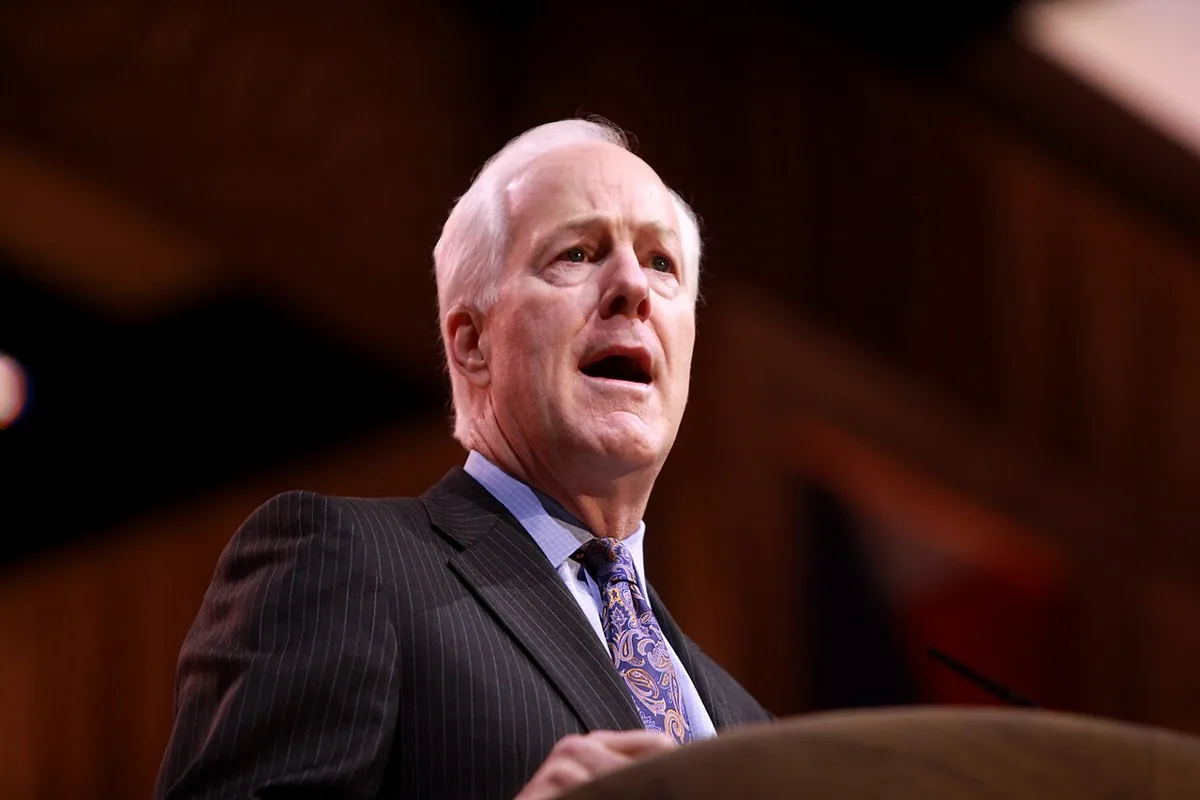
A Republican senator from Texas just told the President of the United States that the man he picked to be a federal judge in Dallas is not a Texan, has never tried a case, and was shoved at the Senate with no consultation. The nominee is the same Justice Department lawyer who wrote the legal cover for the boat strikes. Cornyn's verdict, delivered to CBS News: "I think his nomination is no longer viable."
Explain Like I'm 5 · 43-second video

Narrated and captioned. Made by The Dingo Daily from this article.
A Blue Slip and a Brick Wall
Here's how this works. For a district court seat, the president picks a nominee, and the two home-state senators get a blue slip of paper to signal approval or opposition. Both have to send it back with a yes, or the nominee never gets a hearing in the Senate Judiciary Committee. Cornyn simply declined to return his. Nomination over.
T. Elliot Gaiser, the head of the Justice Department's Office of Legal Counsel, was supposed to testify before the committee on Wednesday. He wasn't on the list of seven judicial candidates who showed up. Funny how that happens when a senator from your own party quietly pulls the rug out.
The seat is in the Northern District of Texas, which covers the Dallas area. The two senators who get a say are Cornyn and Ted Cruz. One of them was apparently not in the mood to play along.
Not a Texan, No Trial Experience, No Consultation
Cornyn did not bury his objections in Senate-speak. He gave CBS three reasons in one breath: "He's not a Texan, has no trial experience, and the White House tried to jam the Senate and wouldn't allow us to do our due diligence that we need to do on lifetime appointments."
The Texas problem is real. Gaiser is an Ohio native who served as Ohio's solicitor general and lived there until he joined the administration last year. His only visible tie to Texas is a one-year clerkship in Houston for a judge on the 5th Circuit. That is a résumé line, not a residency.
At The Atlantic Summit on Tuesday, Cornyn went further. "The Constitution provides for advice and consent, but there was no consultation whatsoever, no attempt to try to work with the Senate." He added that the Senate "is not supposed to be a rubberstamp and … we have been too often." Read that last part twice. A Republican senator just admitted, on the record, that his own chamber has been a rubber stamp.
The Timeline Smells Like a Lame-Duck Smash and Grab
Look at the dates, because they tell the whole story. Democrats won sweeping victories in the midterms on Nov. 3. According to Gaiser's own questionnaire to the Judiciary Committee, Cruz's staff first contacted him about the vacancy on Nov. 4. One day after the election. Cornyn's office heard about it on Nov. 6, the same day the White House Counsel's Office told Gaiser he was under consideration.
He filled out the questionnaire on Nov. 7. Trump didn't even announce the nomination until Nov. 10, and it went to the Senate on Monday. That's a lifetime appointment moving at the speed of a drive-thru order.
The reason for the rush is no mystery. Democrats are poised to hold 56 seats in the new Senate, so few, if any, of Trump's remaining judicial picks are expected to be confirmed once January arrives. The Judiciary Committee is sprinting to cram through every nominee it can in the lame-duck window. Gaiser was a late addition to a closing-time buffet, and Cornyn declined to hold the door.
The Resume That Should Worry Everybody
Set aside Texas for a second, because Gaiser's work at the Office of Legal Counsel is the bigger story. That office writes opinions that are binding on the executive branch. When it says something is legal, the government treats it as legal.
Gaiser authored the controversial opinion providing justification for the military's strikes on alleged drug smuggling boats in the eastern Pacific and the Caribbean. In April he issued an opinion declaring that the Presidential Records Act, the law requiring presidents to preserve documents and hand them to the National Archives, is unconstitutional. A law about keeping records, ruled unconstitutional by the guy who works for the president whose records are at issue. Convenient.
Then came August. Gaiser concluded that Trump's outside advisers, people not employed by the federal government, are shielded from future congressional and legal investigations because presidential communications with private outsiders are generally covered by executive privilege. So if you want to advise the president without ever answering a subpoena, congratulations, your lawyer just wrote you a permission slip. That is who the White House wanted for a lifetime seat on the bench.
Grassley Keeps the Tradition, Trump Keeps Whining
The blue slip is the only reason Cornyn could do this. Trump has leaned on Senate Judiciary Chair Chuck Grassley to scrap the policy. Grassley, to his credit, has kept the longstanding tradition for district court and U.S. attorney nominations.
That tradition is the one lever a home-state senator has to say no to a president who treats every vacancy like a loyalty test. Without it, Gaiser probably gets a hearing and a vote. With it, he gets a polite note and a closed door.
Trump wants the blue slip gone for exactly the reason Cornyn just demonstrated. It lets a senator stop a nominee the White House picked without bothering to ask. That's not an obstacle to the process. That's the process.
The Dingo Take
The White House will say this was a routine nomination of a highly qualified lawyer who was sunk by Senate procedure. The facts say otherwise. They picked an Ohioan with no trial experience for a Texas seat, started the paperwork one day after losing the midterms, and gave the home-state senators almost no time to look. Cornyn didn't kill this nomination because of procedure. He killed it because the process was a joke and he was done pretending otherwise.
Let's not canonize the man, though. This is the same Cornyn who has spent years waving through exactly the kind of nominees he's now complaining about. "We have been too often" a rubber stamp is a nice confession, and it comes right after the election that stripped his party of the power to stamp anything. Funny how the spine shows up when the majority leaves. Still, a blocked nomination is a blocked nomination, and we'll take it.
The larger point is the one nobody in the West Wing wants to say out loud. They knew the clock was running out. They tried to jam a lifetime judgeship through in under two weeks for a man whose résumé includes writing the legal rationale for the boat strikes and declaring the records law unconstitutional. A federal bench is not a parting gift for loyal staff. Cornyn, of all people, just reminded the president of that.



Comments