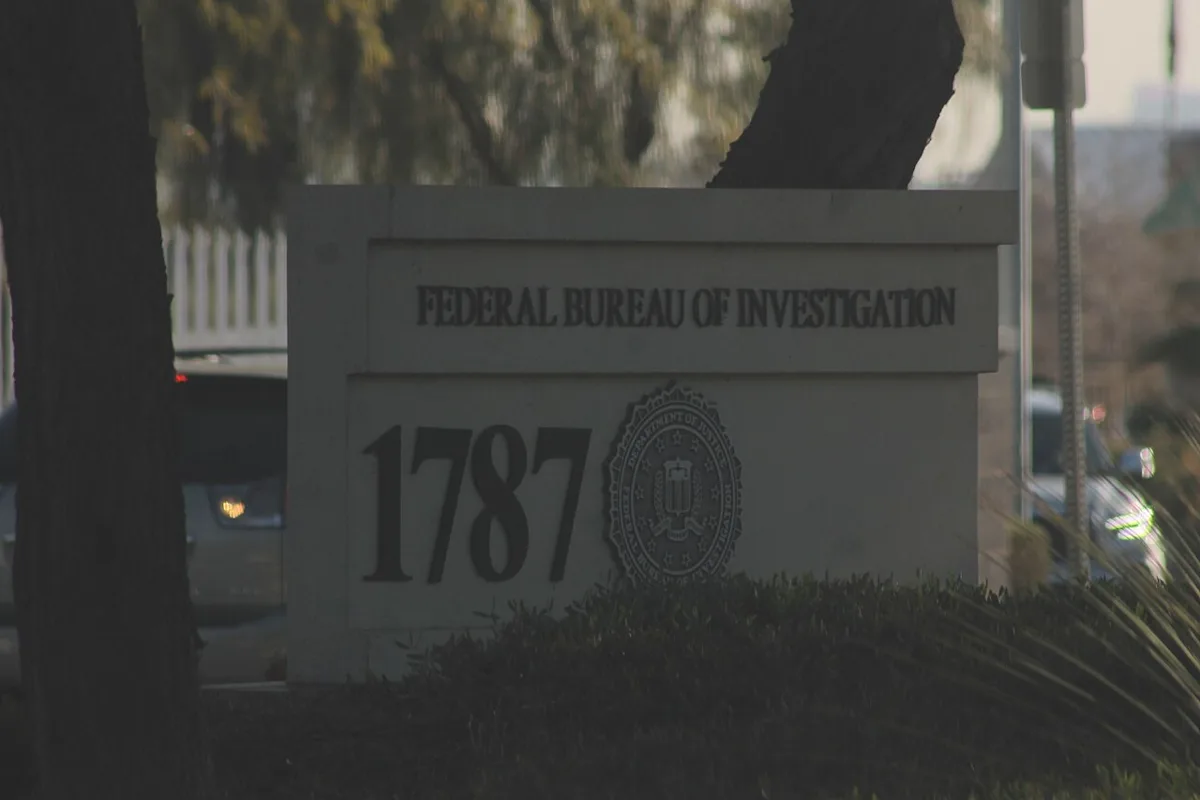
On Thursday night, FBI Director Kash Patel went on Sean Hannity's Fox News show to promise that any cyber threat would be hunted down. By Friday, the FBI's National Crime Information Center had reportedly been breached, for the second time since September. The USDA's farmer-payment system got hit too, and the White House's official position is still that everyone should relax.
Explain Like I'm 5 · 45-second video

Narrated and captioned. Made by The Dingo Daily from this article.
The Timing Is Almost Too Perfect
Let's start with the sequence of events, because no satirist could improve on it. On Thursday, Patel appeared on Fox to tout Operation Winter Shield, an anti-cyber-attack initiative he said would let the FBI and the intelligence community "monitor those activities for nefarious actors." He added, "when and if such an actor comes up, you can rest assured that this FBI is going to hunt them down."
The breaches were reported by NBC News and CNN on Friday, which means the nefarious actors either came up in the last twelve hours or had been inside the building while Patel was on air promising to hunt them. Neither option is flattering. One makes him unlucky and the other makes him uninformed.
And "when and if" is doing heroic work in that sentence. If implies this hasn't happened yet. It had already happened. It happened in September, too.
What Got Hit at the FBI
CNN reported that the bureau is investigating an intrusion into the National Crime Information Center by apparent hackers, citing two people briefed on the probe. This is the second FBI hack since September, when a group called ShinyHunters went after sensitive employee data on an FBI jobs website.
The NCIC is not a minor system. It's the nationwide criminal database that links federal, state and local law enforcement. Cops use it to check warrants, identify wanted fugitives and run background checks. A former FBI official told CNN that officers across the country rely on it every day, and that hackers "could compromise the accuracy of the information that officers rely on."
Sit with that for a second. The risk here isn't just somebody reading the files. It's somebody changing them. A traffic stop where the database says the driver is clean, or says he isn't, depending on who got to the data first.
The USDA Breach Is Weirder Than It Sounds
NBC reported that the USDA told employees a system used to facilitate payments to farmers was targeted in a cyber-attack. Two former department officials told the network the hackers may use that payments system as a back door to reach more sensitive material.
Why would anyone care about the USDA? Because it handles what one former official called "a bunch of scary biologic issues." That person warned that if an adversary or competitor got access to that information, "they could use our own research against us." We are talking about agricultural and biological research, the kind of thing a foreign government might very much like to read.
So a farmer-payment portal, the digital equivalent of a mailroom, may be the unlocked side door to a building full of things you don't want strangers wandering through. This is how most real intrusions work. Nobody kicks in the front door of the vault when the janitor leaves a window open.
Meanwhile, the Outages Keep Piling Up
These breaches landed on top of a rough few weeks. Major outages have disrupted travel, communications and e-commerce for countless users across the country, and they even hit a top-secret network at the National Security Agency. Microsoft Outlook and the Federal Aviation Administration went down earlier this month.
It remains unclear whether any of this is connected, or who is responsible. That's an honest answer, and it's also not a comforting one. The people running the country's digital infrastructure cannot yet say whether they're looking at a bad month or an attack.
To be fair, an outage and a hack are different animals. The Guardian notes the new FBI and USDA incidents were described as hacks, unlike the Outlook and FAA failures. But when the outages are happening at this scale and the breaches are arriving in the same news cycle, "we're sure it's unrelated" is a very bold thing to say out loud.
"Relax," Says the President
Trump has responded by urging the public to "relax." Officials have said the various outages were not linked to criminal activity. That was the line before CNN and NBC reported the FBI and USDA breaches, and it will presumably remain the line after.
Also on Thursday, the administration fired its cybersecurity chief, Sean Cairncross, as criticism mounted over the string of major outages. Think about the order of operations there. The official line is that nothing criminal is going on and there's nothing to worry about, and the person in charge of cybersecurity got fired the same day. Those two facts do not sit comfortably together.
If the outages were nothing, you don't fire anyone. If they were something, you can't tell the public to relax. Pick one.
The Dingo Take
Who benefits from the "relax" strategy? Not the farmers whose payment system is now a reported back door, and not the cops relying on a database that may or may not be accurate today. The people who benefit are the ones whose jobs depend on the public believing everything is under control. Firing a cyber chief and telling everyone to calm down is cheap. Actually securing the FBI, the USDA, the FAA and the NSA is expensive, slow and unglamorous, and it doesn't make for a good Hannity segment.
Patel's whole brand is toughness delivered to a friendly audience. Operation Winter Shield sounds great on television, and "we will hunt them down" is a nice line for a director who just got hacked twice in three months. But hunting someone down only matters after you've noticed they were in the building. So far the pattern is that the public learns about these breaches from CNN and NBC, not from the people in charge.
Here's the thing. We don't know yet who did this, or whether the outages are connected, and anyone who tells you they're certain either way is selling something. What we do know is that the government's first instinct was to tell the public to relax before it had any idea what it was relaxing about. That's not a cybersecurity strategy. That's a vibe.


Comments