For ten straight days, American email, airline ground operations, major banks, and the National Security Agency have been glitching, failing, or going dark. Now a Republican congressman with a Pentagon intelligence background says he doesn't believe a word the government is telling the public about it, and the president's answer was to fire the national cyber director on Thursday.
This is the story of a country that may or may not be under cyberattack, run by an administration insisting everything is fine, while its own allies in Congress are asking whether anyone is being straight with them.
Explain Like I'm 5 · 49-second video

Narrated and captioned. Made by The Dingo Daily from this article.
Ten Days, Zero Clear Answers
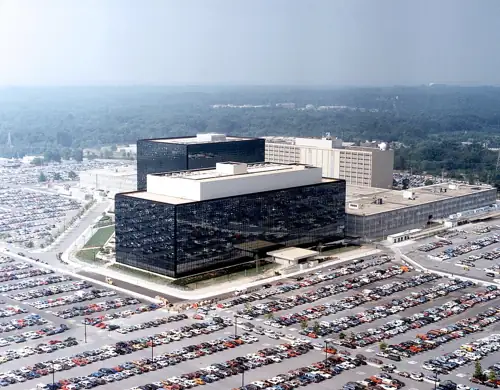
According to Fox News, the country has just lived through a 10-day wave of tech outages hitting multiple major industries. Email. Ground flights. Banks. The NSA, which is the agency whose entire job is to know how computers get broken into.
That last one deserves a moment. The people who spy on the world's networks for a living had their own tech go down. If that's a coincidence, it's a hell of a coincidence.
The Trump administration says the incidents were unrelated and were not caused by malicious actors. Director of National Intelligence Jay Clayton testified that the recent service outages were not state-sponsored attacks. That's the official line. Nothing to see here, folks, please keep your phones charged and your direct deposits crossed.
A Republican Says He Doesn't Believe Them
Here's where it gets interesting. The loudest alarm isn't coming from some Democratic firebrand. It's coming from Rep. Keith Self, a Texas Republican who says he's dealt with this stuff in the intelligence world and at the Pentagon.
"This is not normal," Self said. Then he went further. "The question has got to be asked, 'Is there an offensive cyberattack going on that we're not going to hear about?'" And then the line that should keep a press secretary up at night: "I don't believe any of the public statements that are made, because something is going on behind the scenes."
A member of the president's own party just said he thinks the administration is not being honest about a possible attack on American infrastructure. Read that again. When the MAGA side of the aisle starts publicly doubting the official story, the story has a problem.
Not Everyone Is Panicking, Which Is Also Fine
To be fair, the reaction on Capitol Hill wasn't uniform. Rep. Pete Ricketts, a Nebraska Republican, took the opposite tack. "These systems are complex," he said. "I used to run a company that had technology. It's not unusual."
That's a legitimate point. Big systems fail. Anyone who has ever watched an airline app melt down on a holiday weekend knows this. Sometimes it's a bad software patch, not a foreign hacker in a hoodie.
There's also a technical wrinkle worth knowing. Officials say that as artificial intelligence gets better at spotting holes in security, systems come under more strain as companies scramble to patch those holes. So the outages could be self-inflicted, a side effect of everyone frantically fixing things at once. Comforting, in the way that learning your house is on fire because of faulty wiring instead of arson is comforting.
The Timing Of Thursday's Firing
Then there's the personnel move. On Thursday, Trump fired National Cyber Director Sean Cairncross over concerns that he lacked the proper credentials in cybersecurity for the job.
Sit with the sequence here. A cascade of outages hits the country. The government insists it's all unrelated. And in the middle of it, the president removes the person whose title is literally National Cyber Director, citing a credentials problem. Nobody in the reporting explains why that concern surfaced now, in the middle of the mess, rather than at any point before.
Maybe it's unrelated. The administration would like you to believe that about everything. But you don't have to be a conspiracy theorist to notice that firing your top cyber official during a possible cyber crisis does not scream confidence.
The Soft Underbelly Everyone Already Knew About
Whatever caused these outages, lawmakers across the spectrum agree on one depressing thing: America's infrastructure is a pile of interconnected weak points. Sen. Tim Sheehy, a Montana Republican, called local municipal infrastructure "a soft target" and said that has been flagged for decades without being fully addressed.
Sen. John Hoeven, a North Dakota Republican, noted that everything is interconnected now, so security work never stops. Sen. Jon Ossoff, a Georgia Democrat, said the threats are becoming more serious. Water systems. Power grids. Banks. Airlines. All of it.
Sen. John Fetterman, a Pennsylvania Democrat, pointed at the real problem in the room. "If they're interconnected or random, no one really knows because they're putting out a lot of misinformation," he said. "So we really need to strip out the politics and find out really what it is." When both parties are saying the public is getting misinformation, that's not a partisan complaint. That's a trust collapse.
The Dingo Take
You are being asked to believe that ten days of outages across banks, airlines, email, and the NSA are a string of unrelated glitches, and that firing the national cyber director in the middle of it is just a routine résumé review. You are being asked to take that on faith from an administration whose relationship with the truth has been, charitably, complicated.
Maybe it really is all random. Complex systems break. AI-driven patching frenzies cause chaos. Ricketts could be right. But here's the thing: the way you convince a skeptical public is with transparency, not with a firing and a press line. A Republican with an intelligence background is saying out loud that he doesn't trust the official account. Democrats are saying the same thing in softer language. When the whole building agrees the government isn't leveling with them, that's the story.
We don't know if this is an attack. That's the point. We don't know, and the people who do know are telling us to relax while quietly shuffling the org chart. The honest answer to "is something going on behind the scenes" should not be a shrug and a pink slip. If it's nothing, prove it. If it's something, say so. Anything else is just asking a nation of people who can't get their email to trust the folks who can't keep the lights on.


Comments