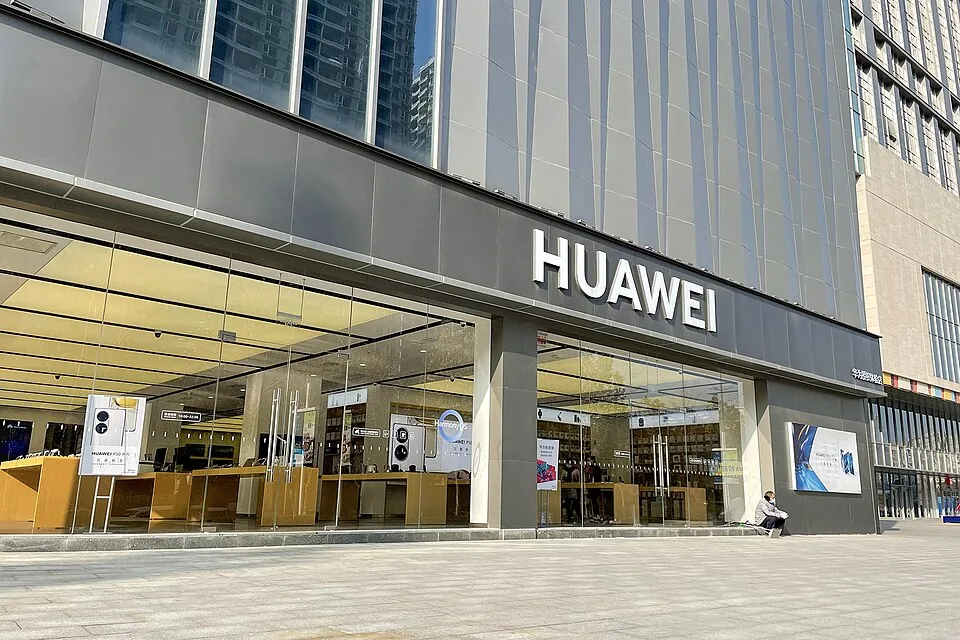
A Brooklyn jury has convicted Huawei Technologies and three of its subsidiaries on 10 of 12 criminal counts, ending a case that started with a Canadian airport arrest in 2018. The evidence included engineers who allegedly referred to Cisco by spelling its name backward to hide that they were lifting its source code, and a robotics component that left a T-Mobile lab in a backpack. The jury still declined to buy the government's grandest theory of the case.
That split verdict is the whole story, and it is stranger and more interesting than either side's press release will tell you.
Explain Like I'm 5 · 46-second video

Narrated and captioned. Made by The Dingo Daily from this article.
The Verdict, By the Numbers
After a trial that ran roughly two months (CNBC says three, the other outlets say two, so take your pick), the jury found Huawei guilty of bank fraud, wire fraud, conspiracy to commit money laundering, conspiracy to steal trade secrets, and conspiracy to violate US sanctions, according to the South China Morning Post. That is 10 of 12 counts.
The two it walked away from were the big ones. Jurors acquitted Huawei of conspiracy to obstruct justice and of the racketeering conspiracy charge under RICO, the statute that treats a company as a criminal enterprise rather than a business that did some crimes.
That distinction matters enormously, and we will get to why. Sentencing is set for September 14, 2027, and the Justice Department says Huawei and its subsidiaries face fines, forfeiture, and restitution. Huawei's own lawyer expects the exposure to run to billions.
The Backpack, the Booth, and the Backward Cisco
Prosecutors laid out a catalog of corporate espionage that reads like a heist movie written by someone who hates subtlety. Huawei sold routers that contained source code copied from a rival. A person working for the company slipped into a competitor's booth at a Chicago trade show to photograph the circuitry inside another company's networking device.
Then there is the robot. Huawei employees sent photographs and technical details of T-Mobile's touchscreen-testing robot to China, according to the Justice Department, and one employee later removed a component from T-Mobile's laboratory in a backpack. A backpack. This is a company that employs more than 200,000 people and, per the evidence, sent someone to shoplift a robot arm like a teenager at a Spencer's.
And the Cisco detail is the one that sticks. The Justice Department says Huawei engineers referred to Cisco by spelling its name backward to conceal that they were copying its router code. Nobody spells a company's name backward in internal messages because they are doing nothing wrong. The victim list, per court records, also includes Motorola Solutions, Quintel USA, and Fujitsu.
Iran, Banks, and the Surveillance Cameras
The sanctions side of the case is darker than the robot caper. Prosecutors say Huawei did business in Iran and North Korea and lied about it to US government officials and to banks.
The Justice Department says Huawei misrepresented its Iran activities to banks to secure billions of dollars and keep its access to US dollar-clearing services. The department also says the company supplied surveillance cameras that Iranian authorities used to monitor protests.
Hold that last piece for a second. The sanctions charge is the kind of thing that can feel abstract, a paperwork crime about wires and ledgers. Cameras that help a regime watch the people it is cracking down on are not abstract.
The Defense: Isolated Bad Apples and Public Secrets
Huawei's lawyers did not roll over. Defense attorney Brian Heberlig told jurors that prosecutors leaned on "innuendo and facts ripped out of context," and on testimony from ex-employees "with a bone to pick." His line about trade secrets was the best of the trial: "You can't steal a secret that isn't a secret."
Heberlig argued that much of the material the US called stolen was already public, that Huawei paid billions in licensing fees over the years with 75 percent of that money going to American companies, and that it disciplined or fired employees caught doing wrong. On the Cisco code, he said that when the copying was discovered more than two decades ago, Huawei recalled the routers it had sold in the US and offered to swap in Cisco routers.
The company also says the five trade-secret disputes cited by the government were civil matters resolved over the past two decades, that no court ever found Huawei liable for willful misappropriation, and that it was never ordered to pay damages. That is a real argument. It is also an argument a jury of Brooklyn residents heard for two months and mostly rejected.
Why the RICO Acquittal Is the Real Fight
Prosecutor Meredith Arfa told jurors the "tone was set at the top" by Huawei leaders and executives who lied to Congress and banks, violated sanctions, and tried to interfere with the very investigation that produced this case. That is the racketeering theory in a sentence: not a few rogue employees, but a corporate culture of crime coming down from the executive suite.
The jury would not sign off on it. Heberlig called the RICO count a "significant overreach" that the jury "soundly rejected," and Huawei says the acquittal "confirms that these allegations lack factual basis."
That is spin, but it is not pure spin. The jury did convict on the underlying fraud, theft, and sanctions conspiracies. What it declined to do was agree that the whole company is a criminal organization by design. Huawei gets to say the government overreached. The government gets to say a jury found the lying and stealing real. Both statements are true, and that is rarely how press releases work.
Meng, Shenzhen, and the Geopolitical Backdrop
This case has been dragging since January 2019, a month after CFO Meng Wanzhou, the founder's daughter, was arrested in Canada. She spent three years in custody there before returning to China in 2021 through a deal with US prosecutors that dropped her case, a deal that coincided with China freeing two detained Canadians.
The trial also overlapped with a summit in Shenzhen, China's technology hub, among President Trump, Xi Jinping, and Vladimir Putin. Yes, the American president spent part of this verdict window sitting down with the leaders of two adversary governments in a Chinese tech city while his Justice Department was convicting that city's most famous company. Make of the timing what you will.
Beijing, predictably, called the case US "suppression" and "economic bullying," and said it supports Chinese firms protecting their interests. Huawei, meanwhile, is not exactly on its knees. It is already shut out of US carrier networks and blacklisted by Canada and Britain, but it still sells phones and telecom gear around the world and is expanding into AI chips as an alternative to Nvidia inside China. Huawei says it will appeal, and Heberlig promised "significant advocacy" for the lowest possible sentence first.
The Dingo Take
A jury just found that a company with 200,000 employees and operations in 170 countries lied to banks, stole from its rivals, and ran Iran business behind a false front.
The truth about corporate crime is that it rarely looks like a mastermind. It looks like a guy with a backpack, an engineer typing a competitor's name backward, and a compliance department that is always going to start taking things seriously next quarter. Huawei's defense that this was all isolated misconduct is not crazy. But 10 convictions suggest the isolated pattern had a lot of company.
Here is the part nobody on any side should get to dodge. The same government that wants credit for holding a foreign giant accountable also runs a trade policy that swings with the mood of whichever summit is on the calendar. Accountability that depends on the diplomatic weather is not accountability, it is leverage. Huawei earned these convictions. Whether Washington is serious about the principle, or just about the opponent, is a question this verdict does not answer.
Comments