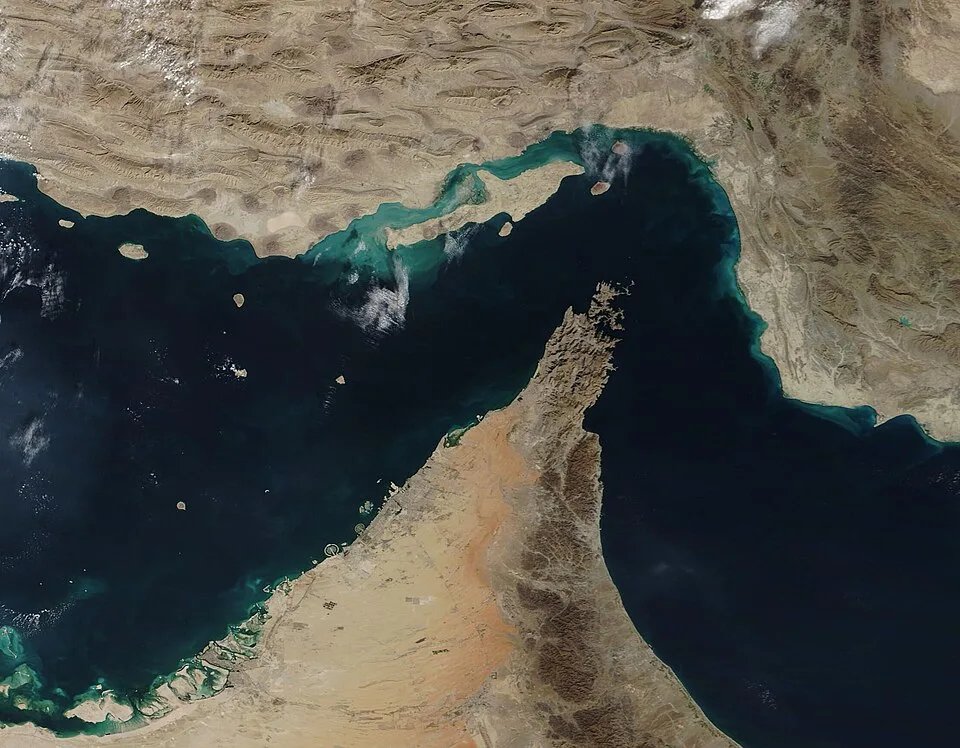
A Liberian oil tanker called the Stoic Warrior sailed through the Strait of Hormuz on Thursday using a new route hugging Oman's coastline, while Iran's Revolutionary Guard issued a threat so vague and ominous it could have come from a mob movie: 'Violators will be dealt with.' No elaboration. Just vibes and implied maritime menace. This is the world's most important oil chokepoint right now, and things are not going great.
One Ship, A New Route, And A Very Angry Revolutionary Guard
The New York Post reports that the Stoic Warrior departed early Thursday, hugging the coastlines of the United Arab Emirates and Oman before rounding the Musandam Peninsula on a route developed by Oman alongside the International Maritime Organization, the UN agency that oversees global shipping. Several other vessels trailed behind it, according to ship-tracking data. Nobody got blown up. That's the good news.
The bad news is that the Revolutionary Guard absolutely lost it. Iran's state-run IRNA news agency carried the Guard's response within hours, calling the new route 'unacceptable and completely dangerous' and insisting that the only authorized shipping lane through the strait is the one Iran itself declared. The Guard reminded everyone that it had mined the traditional Traffic Separation Scheme during the war that began February 28, when the US and Israel struck Iran. That center-channel route carries roughly a fifth of the world's oil and natural gas. It is now, per the Revolutionary Guard, a minefield.
The Ceasefire That Keeps Almost Falling Apart
All of this is happening inside a sixty-day window that the US and Iran agreed to in a memorandum of understanding signed last week, per the New York Post. The idea is that both sides use those sixty days of private talks to hash out the permanent details of ending the Iran war. The idea is also, apparently, for both sides to simultaneously make maximalist public statements that threaten to blow the whole thing up.
The most immediate threat to the deal is Lebanon. Israel launched an airstrike on southern Lebanon on Wednesday, killing two people, according to the country's state-run news agency. It was Israel's first strike since a ceasefire took effect just days earlier, on Saturday. Iran has made clear that any permanent deal with Washington requires Israel to stop fighting Hezbollah and withdraw from Lebanese territory it currently occupies. Israel has made equally clear it has no intention of doing either of those things. So that's where we are.
The Human Cost Nobody Is Talking About Enough
Let's slow down for a second, because the numbers the New York Post is reporting deserve more than a passing mention. Over 4,000 people in Lebanon have been killed in Israeli strikes since the latest Israel-Hezbollah war began in March, two days after the Iran war started. That war started when Hezbollah fired at Israel. The killing has been going in circles ever since.
On the Israeli side, the military confirmed Thursday that a reservist soldier was killed and another wounded in southern Lebanon, where Israeli troops still occupy significant portions of the country. At least 37 soldiers have been killed in Lebanon or northern Israel since the fighting began, along with one civilian defense contractor and two civilians in northern Israel. These are human beings, not diplomatic abstractions, and the fragility of any ceasefire that has to absorb this level of ongoing violence should terrify anyone watching.
The Gulf States Are Not Staying Quiet
The United Arab Emirates is not sitting on the sidelines while Iran floats the idea of controlling who passes through the Strait of Hormuz and possibly charging fees for the privilege. Anwar Gargash, a senior Emirati diplomat, went directly at Tehran on Thursday, writing on X that 'new geopolitical facts cannot be imposed on the Arab Gulf states as a result of a treacherous aggression against them,' and warning that such moves 'sow new seeds of discord and conflict for the future.'
That is diplomatic language for: try it and see what happens. The Gulf states have deep economic and security interests in keeping the strait open and free, and they are watching Iran's post-war posturing with the kind of attention that tends to precede very long, very expensive regional confrontations.
A Fifth Of The World's Oil, One Narrow Passage, And Iran Saying It Has Mines In There
Here is the core problem in the plainest possible terms. The Strait of Hormuz is the single most important chokepoint in global energy supply. About twenty percent of the world's oil and natural gas moves through it. Iran has said, through its Revolutionary Guard, that it mined the traditional shipping lane during the war. The new route the Stoic Warrior used was developed specifically because of those mines. And now the Revolutionary Guard is saying that route is also off-limits and dangerous.
So the question is not some abstract geopolitical puzzle. It is: where exactly are ships supposed to go? The Guard's answer, essentially, is: wherever Iran says. That is not a position the global shipping industry, the UAE, or the United States is going to accept. The Stoic Warrior made it through Thursday. The next sixty days will determine a lot about what happens to the ships that come after it.
The Dingo Take
Let's be honest about what we're watching here. The US and Iran signed a memorandum of understanding that gives them sixty days to figure out the details of ending a war, and within the first week, Iran's Revolutionary Guard is threatening to 'deal with' ships using a UN-backed shipping route, Israel is launching airstrikes in Lebanon in violation of a ceasefire, and a fifth of the world's energy supply is technically passing through a waterway that Iran says it mined. This is what 'making a deal' looks like when neither side actually trusts the other and both sides have domestic audiences demanding maximum aggression.
The sixty-day clock is a pressure cooker. Every airstrike in Lebanon, every Revolutionary Guard threat, every Emirati diplomatic broadside turns up the heat. The interim agreement the New York Post describes was supposed to create breathing room. Instead, it has created a sixty-day window for everyone in the region to test exactly how much the other side will absorb before the whole thing breaks. The Stoic Warrior sailed through. That's not a metaphor. That's just a ship that made it.
If you are not paying close attention to the Strait of Hormuz right now, you should be. Not because the situation is stable and being well-managed. Because it is genuinely fragile, the stakes are enormous, and the public statements coming from Iran's military wing sound less like diplomacy and more like a country that has not yet decided whether it wants this deal to work.


Comments