On June 18, Ukraine launched its biggest drone offensive ever on Moscow, hit an oil refinery, and sent what residents described as 'oil rain' falling from the sky. This is not a metaphor. This is Tuesday in 2026. NPR got rare access to the secretive Ukrainian strike unit making it happen, and the picture they bring back is equal parts terrifying and, frankly, kind of astonishing.
The Unit Nobody Is Supposed to Know About
At sunset, in a farm field somewhere in eastern Ukraine that NPR is not allowed to name, soldiers in full body armor unload what looks like a miniature jet from a truck. One of them calls it 'our beautiful drone.' It is, in fact, a weapon built by a Ukrainian defense tech company called Fire Point, and it can fly between 800 and 1,200 miles before it finds something Russian and ruins it.
These soldiers are part of the First Separate Center of Unmanned Systems, a deep-strike unit that Ukraine's military asked NPR to identify only by callsigns. Their commander goes by Charlie. He is in his 30s, tall, reserved, and has been running this unit for three years. He has watched Ukrainian drone technology go from a rough early experiment to something that is genuinely reshaping the war. 'Our defense forces lack cruise and ballistic missiles,' he told NPR, 'but our drones have really influenced the course of combat operations. And they have hit our enemy hard.'
Hard is doing a lot of work in that sentence. Ukraine has used these drones to repeatedly strike oil refineries and fuel depots across Russia, including targets in Moscow and, yes, Siberia. The June 18 Moscow strike was the largest offensive of its kind yet. The smoke was visible for miles. The oil rain was real.
356,000 Targets. Let That Number Sit.
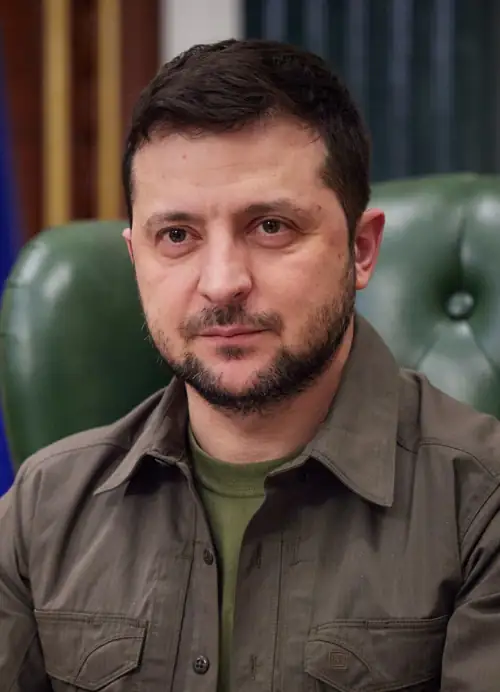
On June 10, Ukrainian President Volodymyr Zelenskyy announced that over the past year alone, Ukraine's long-range drones had struck more than 356,000 Russian targets. Read that again. Three hundred and fifty-six thousand. In one year.
George Barros, director of innovation and open-source tradecraft at the Institute for the Study of War, told NPR exactly what that means in practice. 'Ukrainians can, on a near daily basis, launch hundreds of daily long-range strike vehicles into Russia that actually generate substantial damage and really do upset the Kremlin,' he said. 'It is an important aspect of the overall Ukrainian strategy to defend itself and end the war on terms favorable to Ukraine.'
This is not a guerrilla harassment campaign. This is systematic, industrial-scale pressure applied to Russia's war machine from the inside out. Ukraine is hitting supply routes, railroad bridges, ferry crossings, and oil infrastructure. It has been doing this so relentlessly in Crimea that Defense Minister Mykhailo Fedorov recently said the peninsula is 'being isolated by drones' and predicted it will effectively become an island in the near future. Crimea, the territory Russia seized in 2014 and has treated as a fortress ever since, is getting cut off drone strike by drone strike.
The Arms Race Nobody Planned For
Commander Charlie has a framework for what he is living through, and it is worth hearing. 'There was an arms race between the Soviet Union and the United States during the Cold War,' he told NPR. 'And now there's another arms race in this war, but it's happening much faster, and it's focused almost entirely on unmanned systems: drones that are aerial, aquatic and ground-based.'
The speed of this evolution is not abstract. Charlie told NPR that setting up a drone launch used to take half a day. Now his team does it in the time it takes a Formula 1 pit crew to change tires. The technology has accelerated that fast, and so has the counter-technology, and then the counter-counter-technology. Russia adapts. Ukraine adapts faster. Repeat, endlessly, at a cost in lives and infrastructure that is staggering to contemplate.
The deep-strike campaign began in earnest in 2024 but has drastically scaled up this year. Ukraine is more than four years into Russia's full-scale invasion, a war that has now lasted longer than World War I. The U.S.-led negotiations to end it have stalled because of the conflict in Iran. So Ukraine does what Ukraine does: it builds more drones and launches them.
About That 99% Aid Cut
Here is where we have to talk about America, because America made a choice and that choice has consequences. According to the Kiel Institute for the World Economy's Ukraine Support Tracker, direct U.S. aid to Ukraine fell by 99 percent under the Trump administration. Ninety-nine percent. The Trump administration did not reduce American support for a democratic country fighting for its survival. It essentially eliminated it.
Commander Charlie's response to this, when NPR asked, was notably un-bitter. He said Ukraine has never relied entirely on foreign aid alone. He pointed to his own soldiers, constantly learning new technologies, constantly adapting, constantly finding ways to stay a step ahead. The unit NPR visited is building and launching weapons that are shaking the Kremlin, and they are doing it with Ukrainian ingenuity and Ukrainian manufacturing while Washington looks the other way.
That is either inspiring or damning, depending on which part of the story you decide to focus on. It should probably be both.
The Dingo Take
Let's be direct about what the NPR reporting from that farm field in eastern Ukraine actually shows. A country that was fighting for its literal survival four years ago, with limited resources and early-stage drone tech, has built a deep-strike capability that is hitting targets in Moscow and Siberia on a near-daily basis, has struck over 356,000 Russian targets in a single year, and is in the process of cutting off Crimea from the rest of Russia. Without American help. Because American help is effectively gone.
The Trump administration cut U.S. aid by 99 percent and called it foreign policy. Ukraine responded by launching its largest drone offensive in history and making it rain oil on Moscow. One of those two responses looks like a strategy. The other looks like abandonment dressed up as fiscal responsibility.
Commander Charlie and his team will keep launching drones at sunset from farm fields with names they can't tell you. The war will keep going. Russia's war machine will keep taking hits. And the country that spent decades positioning itself as the defender of democracy will keep finding new things to look at instead. The drones don't need us to believe in them. They just need fuel and a target.



Comments