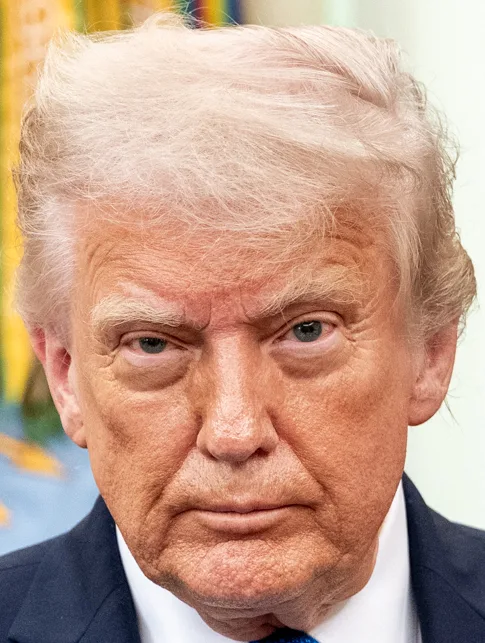
Donald Trump made more than $1 billion from his personal cryptocurrency businesses in 2025, according to a federal disclosure filing released Monday. He also spent 2025 using the power of the American presidency to gut federal oversight of the cryptocurrency industry. The White House would like you to know that these two facts are completely unrelated.
The Numbers, Which Are Not Good
Let's just walk through what the filing actually shows, because the raw figures do a lot of the work here. According to the required annual disclosure report filed with the Office of Government Ethics, Trump's World Liberty Financial business brought in more than $500 million from selling new crypto products, including something called 'governance tokens.' A separate venture, CIC Digital LLC, hauled in more than $600 million from sales of meme coins stamped with Trump's face that launched just days before his inauguration.
That is over $1 billion in crypto income. In one year. From businesses that, as The Guardian points out, were mere startups when Trump took the oath of office in January 2025. His real estate empire, the one he spent decades building and that formed the entire basis of his public identity as a businessman, has been lapped by digital coins featuring his own face. Let that sentence exist in your brain for a moment.
To be clear about the timing: Trump entered office, declared he wanted America to be the 'crypto capital of the world,' proceeded to quash a federal crackdown on the industry, and simultaneously watched his own crypto businesses print money at a rate his hotels could never dream of. Nothing about this is subtle.
The 'No Conflict of Interest' Quote Is Doing Heavy Lifting
White House spokesperson Anna Kelly issued a statement that deserves to be quoted in full, purely as an artifact. 'Neither the President nor his family has ever engaged, or will ever engage, in conflicts of interest,' she said. She then added that Trump 'proudly made the United States the crypto capital of the world through executive actions, supporting legislation like the GENIUS Act, and other commonsense policies.'
So the official White House position is: the president used executive power and legislation to turbocharge an industry, the president personally made over a billion dollars from that same industry in the same year, and there is no conflict of interest. Got it. Kelly also took a swing at journalists covering the story, calling them 'so-called reporters' recycling 'the same, tired, false narrative that Democrats and the legacy media have been pushing for a decade.' The filing, for what it's worth, is not a narrative. It is a government document that the administration itself submitted.
This is the tell. When the defense of a public official's financial conduct consists entirely of attacking the people reading the public financial disclosures, the public financial disclosures are probably not great.
His Properties Are Also Receiving Foreign Government Money
The crypto income is the headline number, but The Guardian's reporting on the real estate side of the filing deserves its own moment of attention. A Trump property in the United Arab Emirates brought in $10.4 million. One in Saudi Arabia, being built by a developer close to the Saudi ruling family, sent Trump's company $9 million. Properties in Romania and Qatar sent him $5 million each.
The Guardian notes that many of these countries were simultaneously negotiating with the United States over tariffs, military aid, and other consequential matters. This is not a hidden connection that required investigative journalism to uncover. It is in the same document. The countries paying Trump's properties and the countries sitting across the table from American diplomats are, in multiple cases, the same countries.
The Constitution has a clause about this. It is called the Emoluments Clause, and it exists specifically because the founders thought a president personally collecting money from foreign governments while running American foreign policy was a bad setup. Courts and Congress spent years arguing about whether it applied to Trump's first term. In his second term, nobody seems particularly interested in revisiting the question.
The Rest of the Financial Picture
Beyond crypto and foreign real estate, the filing covers a genuinely remarkable portfolio of presidential side hustles. Trump earned more than $86 million from five separate legal settlements with media companies, according to The Guardian, including deals with ABC, CBS, YouTube, Meta, and X. Whether those settlements reflected legitimate legal claims or companies deciding it was simply cheaper to pay the sitting president than fight him in court is a question the filing does not answer.
He also made millions selling Trump-branded Bibles, sneakers, and watches. The watches alone generated $4.7 million. There is something almost clarifying about a president who simultaneously runs crypto empires and moves branded timepieces out of what is effectively a personal merchandise store. The office of the presidency has been annexed as a distribution channel.
And before anyone brings up the 'but his crypto coins lost value' defense: yes, The Guardian reports that Trump's tokens and coins have plunged in value since sales began. The people who bought them have lost money. Trump, who sold them, made hundreds of millions of dollars. That is how a pump-and-dump works. The creator does not need the asset to hold value. They just need to sell first.
The Dingo Take
Here is the core situation, stated plainly. The President of the United States created cryptocurrency businesses, used the executive powers of his office to eliminate regulatory oversight of the cryptocurrency industry, passed legislation supporting that industry, and personally made more than $1 billion from cryptocurrency in the same twelve-month period. The White House response is that this represents zero conflict of interest. The White House response is insane.
This is not a complicated ethics question. This is the kind of scenario that gets used as a hypothetical in an introductory government class, the one where the professor asks 'would this be a problem?' and every student raises their hand. The answer was always yes. The answer is still yes. The fact that the financial disclosures are legally required and publicly filed does not make the underlying conduct acceptable. It just means we can read about it.
The billion-dollar crypto haul will probably not move the political needle much, because at this point the threshold for what registers as scandalous has been so thoroughly destroyed that a sitting president personally pocketing ten figures from an industry he simultaneously deregulated barely qualifies as a news cycle. But it should be said clearly and often anyway: this is corruption. It is documented, it is legal under a framework that was never designed for someone willing to do this, and the man doing it is the President of the United States. Write that one down.




Comments