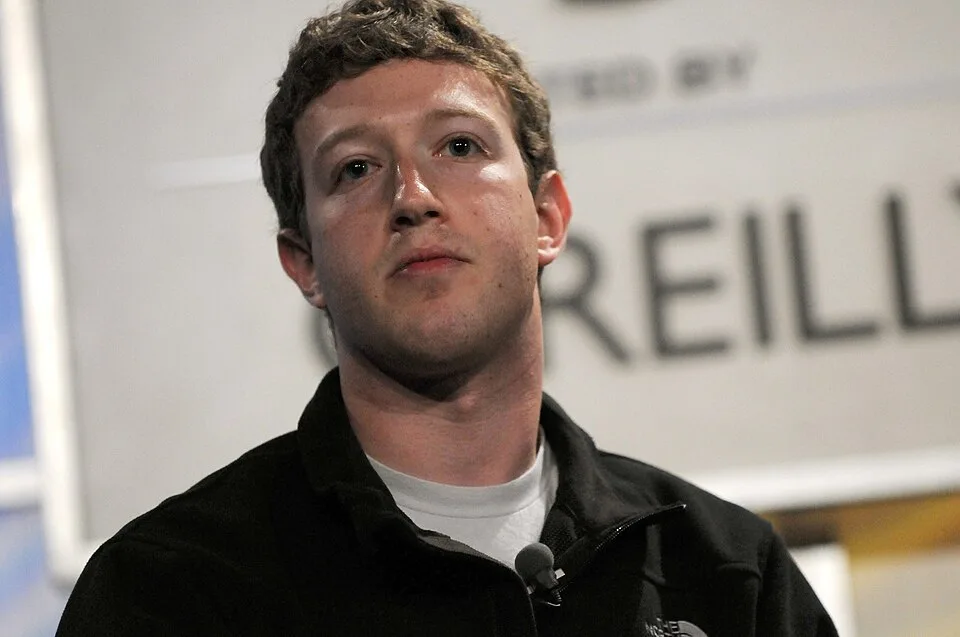
Mark Zuckerberg tried to buy the hottest company in the prediction market boom, got turned away, and is now building his own knockoff version where nobody uses real money. According to NPR, which spoke with three people who had direct knowledge of the discussions, Zuckerberg personally met with Kalshi CEO Tarek Mansour about a takeover, the talks collapsed, and now Meta is quietly building a play-money prediction app called Arena. A billion-dollar rebuff, laundered into a casino where the chips aren't worth anything.
What Actually Happened Between Zuck and Kalshi
NPR is reporting that the Zuckerberg-Mansour meeting happened last year, as Kalshi's user numbers were going vertical. There are competing versions of why the talks fell apart. One camp says Mansour simply wouldn't sell. Another says Meta's legal team looked at the regulatory and ethical questions swirling around Kalshi and decided the whole thing was too messy to touch.
Neither company would comment. Which, given the circumstances, is probably the most revealing thing either of them could have said.
What we do know is that the prediction market Zuckerberg tried to buy is now valued at $22 billion, up from $2 billion just a year ago, according to its most recent funding round in May. Monthly trading volume across Kalshi and its main competitor Polymarket has exploded from $28 billion in June 2025 to nearly $220 billion today, per data tracked by The Block. That's not a trend. That's a supernova.
The Consolation Prize: A Fake-Money App
After the acquisition went nowhere, Zuckerberg did what Zuckerberg does: he told his employees to build the thing themselves. Internal documents reviewed by NPR describe Arena as a standalone prediction market app where users wager "play money" on the outcome of news events and trending topics. Meta's AI systems will generate the questions and adjudicate the results.
Let's be clear about what this means. Kalshi lets you bet real dollars on whether Iran develops a nuclear weapon. Polymarket lets you put actual money on election outcomes and sports. Meta's version gives you Monopoly money and asks you to guess what's trending online. It is the decaf version of an industry people are apparently dying to throw a quarter-trillion dollars at every month.
Tim Wu, a Columbia law professor who advised the Biden White House on tech policy, did not mince words when NPR asked him about it. "I can't imagine a casino app with fake money is going to be much of a thrill," Wu said. "But maybe it's something my children would like, I don't know." When a former White House tech advisor is comparing your new product to something you'd give a twelve-year-old, that is not a promising launch signal.
Buy It or Clone It: Meta's Greatest Hits
Here is the part where this story stops being just funny and starts being genuinely important. Zuckerberg's attempt to acquire Kalshi is almost comically on-brand for a company the FTC spent years accusing of running a "buy or bury" strategy: either purchase the competitor before it gets too big, or clone the product and strangle it in the crib.
Meta bought Instagram in 2012 and WhatsApp in 2014, and those two acquisitions turned the company into a digital advertising juggernaut with over 3 billion users. More recently Meta has bought AI wearable company Limitless and Moltbook, a social network for AI bots. The FTC took Meta to trial over the Instagram and WhatsApp deals, alleging exactly this predatory pattern. A judge sided with Meta last year, ruling no competition laws were violated. The FTC is appealing.
The Kalshi story fits that template perfectly. The acquisition talk happens quietly. It falls apart for murky reasons. Then the in-house clone gets announced. The only twist this time is the clone doesn't actually do the thing that made the original valuable.
The Industry They're Trying to Muscle Into Is Also on Fire
It would be one thing if Meta were chasing a niche market. Prediction markets are not niche anymore. The industry is growing at a rate that makes venture capitalists audibly weep with joy, and it's doing so under a White House that has made its protection an explicit policy priority. President Trump has publicly vowed to shield prediction market companies from regulatory crackdown, even as criminal cases pile up around them.
The Department of Justice has opened two insider trading cases tied to Polymarket. One involves a special forces soldier who allegedly used classified intelligence about U.S. military operations targeting Venezuelan leader Nicolas Maduro to place profitable bets. The other involves a Google employee accused of using confidential data about search trends to correctly predict the most-Googled people of 2025 and pocket more than a million dollars in the process. The industry is growing so fast and with so little oversight that people are apparently committing federal crimes to get a piece of it.
And Meta's entry into this space is an app where you win nothing. The strategic logic here is genuinely hard to follow.
The Consolation Partnership Nobody Asked About
One last detail worth sitting with: even after the acquisition collapsed, Meta and Kalshi didn't exactly part on bad terms. NPR reports the two companies struck a partnership in March that allows for easy integration of Kalshi markets directly into Meta's social media apps.
So Meta couldn't buy the company. It can't legally offer real-money betting in the U.S. without a regulatory framework that doesn't exist yet for social platforms. Its solution is to embed the competitor's product into its own feed while simultaneously building a watered-down version that competes with nothing. It's the corporate equivalent of asking someone out, getting rejected, and then offering to hold their jacket while they dance with someone else.
The Dingo Take
The thing about Zuckerberg is that his failures are so well-funded they barely register as failures. Meta torched billions on the metaverse, killed its crypto project Libra before it ever got going, and still generates enough ad revenue to fund a small nation-state. Arena, the fake-money prediction app, will probably launch, probably get tens of millions of users because it's baked into platforms where three billion people already spend their time, and probably never threaten Kalshi or Polymarket for a single day. That's fine for Meta. It doesn't need to win. It just needs you to stay inside the ecosystem.
But the real story here isn't Meta's tactical maneuvering. It's that the prediction market industry has grown so large, so fast, and with so little regulatory guardrail that a sitting U.S. president is personally promising to protect it while the Justice Department opens criminal cases inside it. A soldier allegedly traded on classified military intelligence. A tech worker allegedly used corporate secrets to print money on a betting platform. Monthly trading volume jumped from $28 billion to $220 billion in twelve months. At some point someone in Washington is going to have to decide what this industry actually is.
Trump has already answered that question, at least for now: it's an industry worth protecting. What it's being protected from, besides accountability, remains usefully vague.



Comments