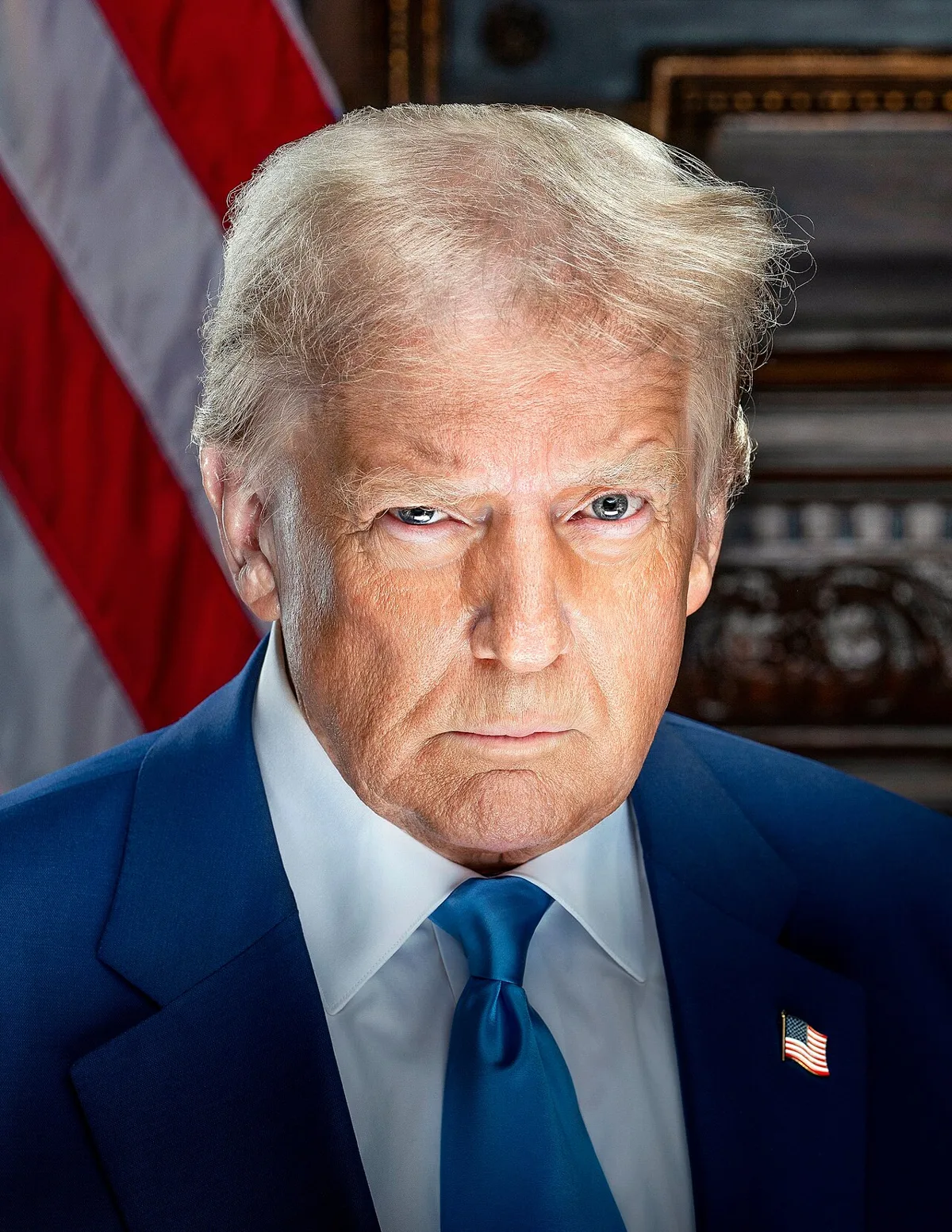
Donald Trump made at least $2.2 billion in his first year back in the White House, according to a mandatory financial disclosure report made public this week. That's not a typo. Two point two billion dollars. In one year. While serving as president of the United States.
The Number Is So Big It Breaks Your Brain
To put this in perspective: Harry Truman left the White House with no income except his Army pension of $113 a month. He later wrote that it was wrong to "commercialize on the prestige and dignity of the office of the presidency." George W. Bush put his investments in a blind trust before running and said in his final week in office that he had no idea how the 2008 financial crisis had affected his net worth.
Donald Trump reported $2.2 billion in earnings in 2025. That figure is nearly four times the $622 million he reported in 2024, the year before he returned to office. The White House would like you to believe this is all perfectly fine and that anyone who thinks otherwise is recycling "tired, false narratives." We will get to that.
Presidential historian Barbara Perry of the University of Virginia's Miller Center told BBC News: "There's just no precedent for this. It's beyond anything we've ever seen in the presidency." When historians who study the full sweep of American executive power say something has no precedent, it is worth paying very close attention.
Crypto, Crypto, and More Crypto
Of that $2.2 billion haul, Trump made $1.4 billion from cryptocurrency alone, according to BBC News. Let that sit for a moment. More than a billion dollars. From crypto. In a single year. While running the federal government that regulates crypto.
He reported $635 million in royalties from Celebration Coins, the entity believed to be behind the $TRUMP meme coin he launched days before beginning his second term. A sitting president launched a meme coin, and that coin made him over half a billion dollars. If a political satirist had written this as a plot for a near-future dystopian novel, an editor would have told them to dial it back.
Trump also reported more than $500 million from World Liberty Financial, a cryptocurrency firm founded by his sons Donald Trump Jr. and Eric Trump, along with the sons of Steve Witkoff, who serves as Trump's special envoy to the Middle East and Ukraine. The president signed legislation supporting stablecoins last July, just four months after World Liberty Financial launched its own digital currency venture. That sequence of events is sitting right there in the public record, not hidden, not theoretical. Just sitting there.
The Kazakhstan Deal and the Pardon That Helped a Crypto Billionaire
The crypto profits are only part of the picture. The New York Times reported that Trump struck a deal with the president of Kazakhstan last year, giving an American company access to a major critical minerals project in the country. Eric Trump and Donald Trump Jr. subsequently took a minority stake in a company involved in that mining project. The investment firm Cantor Fitzgerald, which is run by Commerce Secretary Howard Lutnick's sons, also worked on the deal.
Also worth filing: Trump pardoned Changpeng Zhao, the billionaire founder of the cryptocurrency exchange Binance, last October. This was the same Binance founder who had pleaded guilty to federal money laundering charges. Trump pardoned him during a period when Trump was publicly championing the crypto industry, an industry that was making Trump himself enormous amounts of money. Trump had previously called crypto a "disaster waiting to happen." Funny how a billion dollars changes a man's perspective.
On Wednesday, Trump told reporters he does not get involved in his personal finances and attributed his profits to stock market gains. "I've made a lot of money before I became president, and they invest my money," he said. This is a man who launched his own meme coin days before taking office and whose sons are running a crypto firm that paid out half a billion dollars to their father. But sure. He's hands-off.
What the White House Said, and Why It Is Laughable
White House deputy press secretary Anna Kelly put out a statement declaring: "Neither the President nor his family has ever engaged, or will ever engage, in conflicts of interest." She added that Trump's actions are "taken in the best interest of the American people" and that reporters asking questions about any of this are pushing "tired, false narratives."
This is the official position. A man who signed stablecoin legislation while his family's crypto firm was making him $500 million is not conflicted. A president whose sons took stakes in a mining deal he personally brokered has no conflicts. A commander in chief who pardoned a crypto billionaire while profiting massively from the crypto industry is acting in the public interest. The White House would like you to believe this. The White House is counting on you being exhausted enough to just move on.
Past Presidents Were Embarrassed By Far Less
As BBC News lays out, there is a long history of financial scandal adjacent to the American presidency. The Grant administration had the Gold Panic and the customs collection scandals. Warren Harding's interior secretary accepted bribes for oil leases in the Teapot Dome affair. Jimmy Carter's brother promoted a beer brand. Hunter Biden made money from a Ukrainian energy company while his father was vice president.
In every one of those past cases, the president was either not directly involved or not personally pocketing the money. Hunter Biden's business dealings were a genuine scandal. Historians have spent years combing through the corruption of the Grant era. But Perry told BBC News this is "the big distinction between Trump and his family and other presidents," adding that while past presidents didn't always keep clean hands, "making money hand over fist in office, it's not illegal but it is unethical. Most [past] presidents didn't want to do that."
That last part matters. Most past presidents, guilty of plenty of other sins, at least understood the optics well enough to avoid direct personal enrichment from the office. The norm was not purely virtue. It was also shame. That shame is gone now.
The Dingo Take
Here's the thing about $2.2 billion: it is so large it short-circuits normal outrage. The human brain can process "politician does something shady to make a few million." It cannot easily process a sitting president casually collecting more money in a single year than the GDP of several small nations, through ventures directly tied to his own policy decisions. The scale is the point. The brazenness is the point. The White House calling it all fine and normal is, at this point, almost admirable in its commitment to the bit.
Trump handed nominal control of the Trump Organization to his sons before taking office, just as he did in 2017. He did not use a blind trust. He did not divest. He launched a meme coin days before his inauguration and watched it mint him $635 million while he was simultaneously the person setting policy for the entire financial system. His special envoy's kids co-founded the crypto firm that made Trump another $500 million. His commerce secretary's sons brokered a minerals deal that his own sons then invested in. This is not a gray area. This is corruption operating in full daylight, daring you to do something about it.
The good news, if you want to call it that, is that financial disclosure laws still technically work. We know these numbers because Trump was required to report them. The bad news is that knowing and doing something about it are two entirely different things, and right now the gap between those two realities is approximately $2.2 billion wide.


Comments