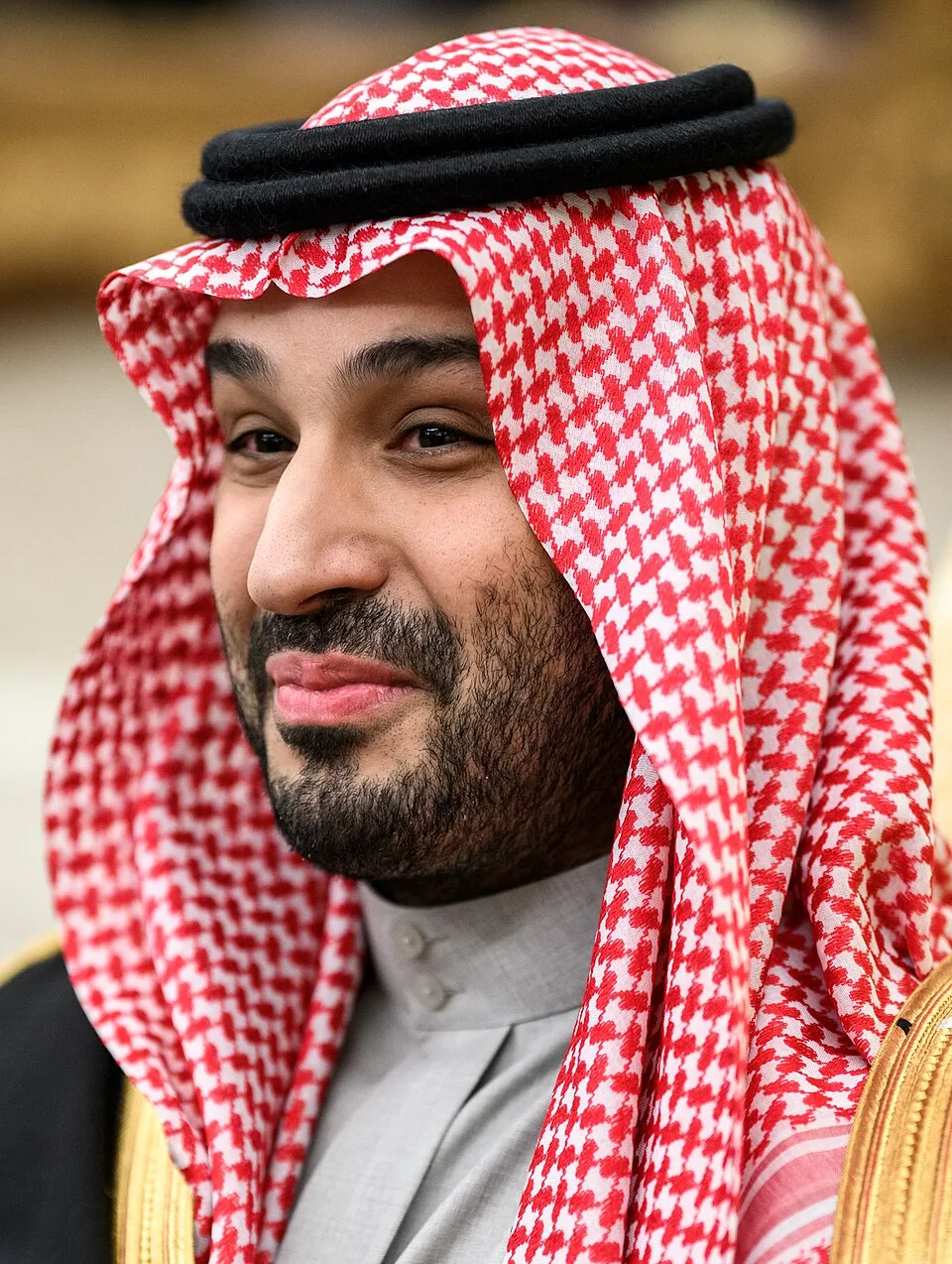
The Trump administration launched a war in Iran over Saudi Arabia's explicit objections, ignored Saudi calls to end it, watched Iran attack Saudi Arabia anyway, then tried to run a military operation through the Strait of Hormuz without Saudi cooperation and had to cancel it in less than 48 hours after guiding exactly two ships through. That is the current state of America's most important Gulf partnership, and it is not going great.
How You Break a 50-Year Alliance in Six Months
The Wall Street Journal, citing officials familiar with the matter, reports that disputes over Trump's handling of the Iran war have caused the US-Saudi partnership to sour so badly that Washington is now actively considering reducing its military footprint in the kingdom. Both sides have been snubbing each other and pulling back on the mutual military alliance that has defined the Middle East's balance of power since the 1970s.
Let that sink in for a second. The relationship that gave us the petrodollar, that props up American arms manufacturers, that underpins critical mineral supply chains across the globe, is cracking because the Trump administration decided to launch a war that Saudi Arabia had been lobbying against for months. Not quietly, either. According to the Journal, Riyadh and its Gulf neighbors were actively pushing back on the war plan long before the first bombs dropped in February.
Saudi Arabia Told Them Not to Do This
Here is the part that deserves to be said slowly and clearly. Saudi Arabia knew what was coming. The kingdom depends on the Strait of Hormuz for the bulk of its oil exports. Iran sits right next to it. Saudi officials understood that a US-Israeli war against Iran risked closing that strait and turning Saudi Arabia into a target for Iranian retaliation, and they said so, loudly, before the war started.
Both of those things happened. Iran attacked Saudi Arabia despite the kingdom initially refusing to let the US use its bases or airspace for strikes. The Strait of Hormuz closed. Saudi exports got rerouted to the Bab al-Mandab Strait. The Trump administration, according to the WSJ, also ignored Saudi pressure to end the war early and lift the American blockade on Iranian ports, with Riyadh pushing for diplomacy while Washington kept escalating.
Project Freedom: A Military Embarrassment for the Ages
Then came Project Freedom, which sounds like something a middle schooler names a book report but is actually the operation Trump announced to shield oil tankers crossing the Strait of Hormuz. Saudi Arabia, terrified of Iran retaliating by closing the Bab al-Mandab Strait where its rerouted exports were now running, blocked US access to its bases and airspace the moment the mission launched.
Project Freedom lasted less than two days. According to the New York Post's coverage of the Journal's reporting, the mission was shelved after guiding exactly two American vessels through the strait. Two ships. That is the entire operational output of a splashy White House announcement that presumably cost millions to prepare and generated exactly the kind of headlines that make allied governments quietly stop returning your calls.
MBS Ghosts the G7, Rubio Ghosts Riyadh
The diplomatic cold war has been playing out in public ever since. Saudi Crown Prince Mohammed bin Salman turned down an invitation to attend the G7 summit in France last month, the Journal reports, as a direct protest of how the US handled the Iran war. When the heir to one of the world's largest oil fortunes skips the G7 to send a message, the message is pretty damn clear.
And then Secretary of State Marco Rubio made it worse. During his recent Middle East tour, Rubio visited countries hit by Iran during the war and skipped Saudi Arabia entirely. The Wall Street Journal reports that Riyadh read that as a calculated snub. Rubio's office would presumably argue he was focused on war-affected nations, but Saudi Arabia was hit by Iran during this war, so that reasoning has some holes in it. The US and the Gulf Cooperation Council did put out a statement reaffirming their "strong commitment" to the partnership, which is diplomatic speak for two people who just had a screaming fight agreeing to share a cab home.
What Actually Hangs in the Balance
The Journal notes it remains unclear exactly how large the rift has become, which is doing a lot of work as a sentence. What is clear is that the US had to reportedly threaten to drop Saudi Arabia from its priority list for defense weapons just to get Riyadh to lift its base and airspace restrictions. Threats. Against a partner that has been buying American weapons for decades and helping prop up dollar dominance in global oil markets.
The petrodollar system, the defense contracts, the supply chain relationships, all of it depends on this alliance functioning at some basic level. The Trump administration launched a war its most important Gulf partner explicitly opposed, dismissed that partner's calls for a ceasefire, let that partner get attacked by the enemy anyway, and then ran a humiliating military operation that fell apart the moment Saudi Arabia withheld cooperation. That is not a foreign policy strategy. That is a hostage situation where the hostage has leverage.
The Dingo Take
The thing about the US-Saudi relationship is that it has always been morally uncomfortable and geopolitically indispensable at the same time. You can hold both of those truths simultaneously. Successive American administrations, Republican and Democrat alike, have held their nose and maintained the partnership because the alternative, a destabilized Gulf with no American footprint and oil markets going haywire, is worse. That's the calculus. It's ugly and it works.
What the Trump administration has managed to do is blow up that calculus while not getting anything strategically useful in return. The Iran war, the Strait of Hormuz closure, the shelved Project Freedom, and a Saudi crown prince who won't come to your G7 summit: none of this was inevitable. Saudi Arabia was not cheering for Iran. It just didn't want to be caught in the middle of a war it knew would come back to bite it, and it was right about that, and nobody listened.
So here we are. America is reconsidering its military presence in Saudi Arabia, which is another way of saying America might be about to lose leverage in the one region where leverage is everything. If this is what winning the Iran war looks like, the losing version must be truly something to behold.


Comments