
In a part of Nigeria where a third of screened residents have an active parasitic worm infection, someone looked at the public health crisis and thought: what if there was a board game? The result is Schisto & Ladders, and it is both more charming and more harrowing than any board game has a right to be.
The Worm Is Where the Chute Used to Be
Here is the pitch: take Chutes & Ladders, swap the chutes for actual schistosome worms, and use the whole thing to teach elementary school children in rural Nigeria how to avoid a disease that can cause bladder cancer, organ failure, and infertility if it goes untreated. According to NPR, the game was created in 2014 by a team led by Professor of Parasitology Uwem Ekpo of Akwa Ibom State University, and they liked it enough to trademark the name.
The mechanics follow the classic pattern. Roll the dice, advance up a colorful winding path. Land on a good square, like "Take praziquantel at school" or "Eat before taking medicine," and you climb a ladder. Land on a bad one, like "Playing in a river" or "Fetching water from a stream," and a schistosome worm sends your piece sliding back down the board toward squares labeled things like "Swollen belly" and "Spreading infection."
It sounds grim. It is grim. But it is also, apparently, a genuinely effective teaching tool for kids who need this information badly and whose parents may not fully understand the disease either.
What Schistosomiasis Actually Does to People
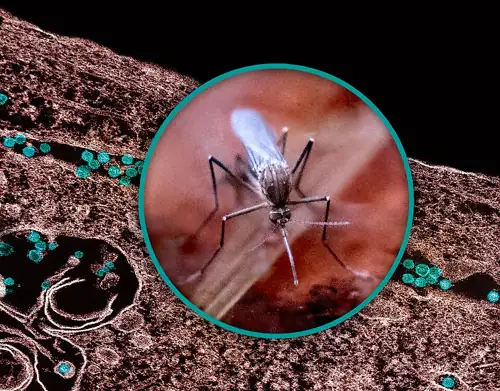
Before we get too charmed by the adorable public health intervention, it is worth spending a moment on what this disease actually is, because it is not subtle. Schistosomiasis is caused by parasitic worms that infect humans through skin contact with infested water. Not drinking it. Touching it. A splash. Microscopic larvae swim along the surface and wriggle straight through skin.
NPR reports there are over 200 million cases across sub-Saharan Africa. Short-term symptoms include fever, rash, and blood in the urine, which is why the disease is known locally in Nigeria as "Atosi Aja" or Bloody Urine. Left untreated, it causes major organ damage, neurological damage, infertility, and bladder cancer. Nigeria specifically sees higher rates of bladder cancer in young people because of it.
And the cruel irony is that effective medication exists. The drug praziquantel works. The problem, as NPR lays out, is access: no easy testing, no reliable treatment delivery, no clean water infrastructure that would let people stop bathing in and drinking from the same rivers that are quietly full of worm larvae. It is a disease that thrives on poverty and gets ignored because of it. Hence the "Neglected Tropical Disease" classification, which is the global health community's polite way of saying the world has decided not to fund fixing this.
A Classroom in Apojola Village
In July 2025, parasitologist and educator Cynthia Umunnakwe brought Schisto & Ladders to a schoolhouse in Apojola village in Ogun State, as part of a Ministry of Health program that paired gameplay with actual urine testing and treatment for infected kids. NPR was there for it.
Umunnakwe, who holds a PhD in parasitology, pushed the desks into clusters and got the game going. She also brought live snails, the intermediate hosts for the parasite, so children could recognize them. These are snails the kids see every day in the Oyan River, where they splash around for fun, check fish traps at their parents' request, help wash clothes, and assist in cleaning cassava root, the main local crop. The river is not just a playground. It is the community's water supply.
Her colleague Dr. Olubukola Adelakun, a veterinary public health researcher at the Federal University of Agriculture in Abeokuta, collected the snails the day before by wading waist-deep into the river wearing full waterproof waders, because even the researcher studying how to protect people from this river has to protect herself from this river. That detail tells you everything about the scale of the problem.
One in Three People at That Clinic Had It
The number that stops you cold, buried halfway through NPR's piece, is this: at the urine testing clinic run alongside the Schisto & Ladders sessions, a third of the residents screened had active schistosomiasis infection. One in three. In a community that uses the same river to fish, bathe, wash clothes, and let kids play.
This is not a distant abstract statistic. This is a village where the majority of people who showed up to get tested were carrying a worm infection that, untreated, works its way toward bladder cancer. And the intervention sitting on the table next to the test results was a board game and some medication that already exists and already works, deployed by researchers who waded into infected rivers the day before to collect snails for show-and-tell.
The game square that says "Blood in Urine" sits right next to one that says "Visit the health center," with a drawing of a smiling health worker. That is not dark irony. That is the actual design intention. Here is the scary thing. Here is the way out. Roll again.
Why This Works and Why It Has To
The game design is actually clever in ways that go beyond the cute premise. NPR reports that Schisto & Ladders teaches children the full transmission cycle of the parasite, not just the "don't swim in rivers" shorthand. Squares about defecating near a river connect directly to squares about spreading infection, teaching kids that human waste reintroduces parasite eggs into water where they reinfect snails, which then reinfect more humans. Understanding the loop matters, because breaking the loop requires intervention at multiple points.
Umunnakwe told NPR that children advance up ladders when they encounter behaviors in the game that would prevent schistosomiasis, including cutting vegetation around a river, which removes the habitat for the snail hosts. That is not a behavior a child would know to associate with disease prevention without some structured explanation. A board game can give them that structure in forty-five minutes in a language they already speak, which is the language of play.
None of this fixes the underlying infrastructure problem. Praziquantel is not being manufactured in Apojola. Clean piped water is not arriving next week. But in the absence of those things, which are political and economic problems requiring political and economic will that has historically not shown up, educators like Umunnakwe are doing what they can with what they have.
The Dingo Take
Here is the thing about a story like this. It is genuinely heartwarming and quietly devastating in equal measure, and you should hold both of those things at once. A brilliant researcher is teaching Nigerian children to protect themselves from a worm that eats through skin and causes bladder cancer, using a board game, and the reason this is necessary is that schistosomiasis has been classified as a "Neglected Tropical Disease" for so long that the neglect has become load-bearing. Two hundred million cases. Effective medication. A gap in between that is entirely a function of who the sick people are and where they live.
The Trump administration gutted USAID earlier this year. Programs targeting neglected tropical diseases were among the casualties. We are living in a moment where the U.S. government has made a deliberate policy choice to spend less money on exactly the kind of global health work that gets praziquantel to villages in Ogun State. The people who made that choice will never hear the word "schistosomiasis" in a context that feels real to them. They will not spend a July afternoon wading waist-deep in a Nigerian river in waterproof waders collecting snails so children can recognize what is making their neighbors bleed into their urine.
Cynthia Umunnakwe will, though. She is doing it with a board game and a smile and a PhD in parasitology, and the kids in Apojola are learning something that the wealthiest government in human history has quietly decided is not its problem. Roll the dice. Climb the ladder. Try not to land on the worm.



Comments