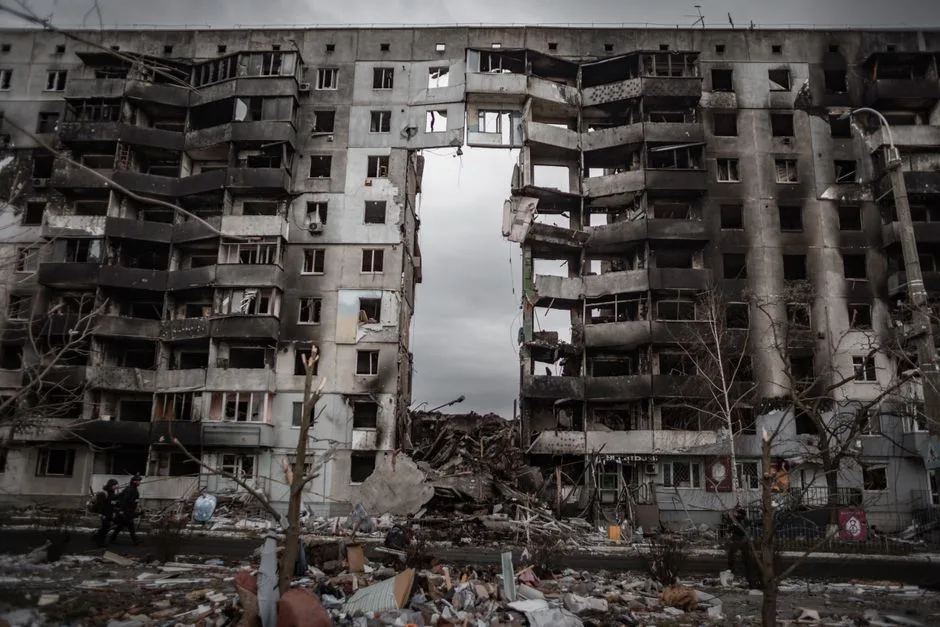
Russia fired 29 ballistic missiles at Kyiv overnight and every single one of them hit something. At least 12 people are dead, 60 more are wounded, residential high-rises are rubble, and Ukraine's air force is standing in front of cameras explaining that they simply do not have the missiles left to stop this from happening again.
What happened in the early hours of Monday morning
Ukraine's air force says Russia launched 351 drones and 68 missiles overnight, targeting mainly Kyiv. According to NPR, all 29 ballistic missiles fired struck their intended targets. Not most of them. Not a concerning number. All of them.
Emergency workers spent Monday morning combing through rubble at residential high-rises in two Kyiv districts that took direct hits. A building in the Podilskyi district partially collapsed. In Darnytsia, multiple multistory buildings were damaged and people were believed to be trapped underneath what used to be their homes. Cars were on fire in the streets.
This attack came just days after a Russian strike killed 31 people in Kyiv on Thursday, the deadliest single day for the capital this year. Russia's Defense Ministry says both attacks were retaliation for Ukraine's long-range drone strikes on Russian fuel infrastructure. Whether you believe that framing is up to you, but the math is not complicated: Russia is killing Ukrainian civilians at an accelerating pace, and it is doing so because it now can.
The Patriot problem nobody wants to talk about
Here is the core of what is happening. Ukraine's air defenses have a critical dependency on U.S.-made Patriot interceptor missiles to stop ballistic missiles, because ballistic missiles travel at speeds that most other systems cannot handle. And the global supply of those interceptors is, to use the technical term, cooked.
The war in the Middle East has been draining the same limited stockpile that Ukraine relies on. Patriot interceptors are not manufactured fast enough to keep up with the demand from two major active conflict zones simultaneously. According to NPR's reporting, that shortage is now being felt most acutely in Ukraine.
Air force spokesman Yurii Ihnat said it plainly on national television: "To intercept ballistics, we need the means for interception. Russians are certainly using the fact that there is a serious deficit of interceptor missiles now, in Ukraine and the world." That is a military spokesman telling you, on camera, that they watched 29 missiles fly through their airspace because they had nothing left to shoot at them.
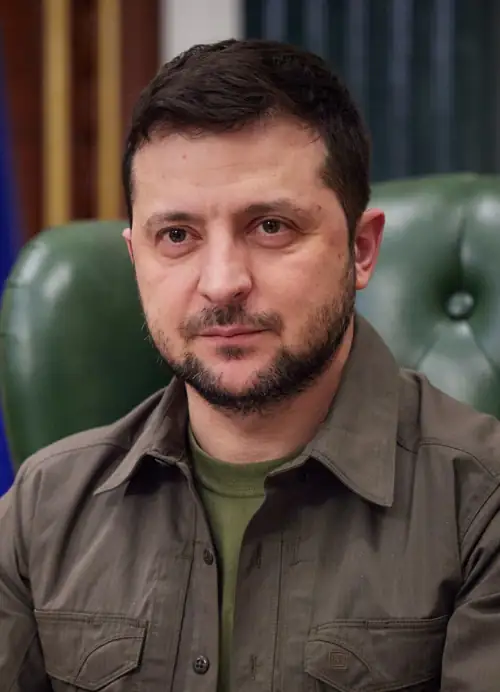
Zelenskyy is heading to Ankara with one message
A NATO summit opens this week in Ankara, Turkey, and Ukrainian President Volodymyr Zelenskyy will be there. He telegraphed his agenda before the attack even finished. On X, he acknowledged that Ukrainian forces had held up reasonably well against drones and cruise missiles overnight, but that ballistic missiles were a different story entirely, and that the difference came down to interceptor supplies.
"As long as Patriot missiles remain in our allies' stockpiles, Russia is only encouraged to keep 'vanquishing' residential buildings," Zelenskyy wrote after the attack. "The United States and Europe have enough strength to stop this terror."
Zelenskyy warned publicly that a large-scale attack was imminent, hours before Russia launched it. He was right. He is now asking his allies, again, to act on intelligence they apparently share but have not yet matched with adequate material support.
People who lived through it
Khrystyna Piatetska is 20 years old. She lives in Kyiv's Darnytskyi district. NPR reports that she started screaming after the first strike hit, then a second blast took out the windows in her apartment building. The lights went out, the stairwell filled with smoke, and when she got out of the building there were bodies on the ground. Then the cars started exploding.
"We came out from under the rubble straight into the fire," she said.
Halina Ivanivna, 61, said she woke up around 2 a.m. to the sound of the first strike. Then her building started collapsing around her. Water was pouring through the structure while smoke filled the air. About five minutes after the initial impact, a second missile hit. Tymur Tkachenko, head of Kyiv's Military Administration, put it simply: "These are residential buildings. Places where people slept and lived their ordinary lives."
More than 16,000 Ukrainian civilians have been killed in the war, according to the United Nations. That number has a new addition today.
Ukraine hit back, for what it's worth
While Kyiv was burning, Ukraine was not sitting still. An energy provider in Russia-occupied Crimea reported a full blackout across the peninsula due to what it called "external impact." The Moscow-appointed head of Sevastopol confirmed that Ukrainian drone attacks cut power to the city in the early hours of Monday morning, though backup equipment eventually restored it.
In Russia's Yaroslavl region, the governor reported two people wounded in a Ukrainian drone attack on the city. He said over 70 Ukrainian drones were downed, which means some were not. Ukraine's advances in long-range drone technology have been real, analysts say, and strikes on Russian supply routes have slowed Moscow's battlefield momentum. But trading a drone strike on a Russian fuel depot for 29 ballistic missiles landing on apartment buildings in Kyiv is not a trade Ukraine asked for, and it is not a sustainable one.
The Dingo Take
Let's be precise about what the United States and its European allies are doing right now. They are watching a NATO candidate country get its capital city leveled in real time, they have Patriot interceptors sitting in storage that could stop this, and they are choosing to bring those interceptors to a summit rather than to Ukraine. Zelenskyy is not asking for American troops. He is not asking anyone to die for Ukraine. He is asking for the missiles that his allies manufactured, stockpiled, and are apparently saving for a rainy day that, from Kyiv's point of view, has been pouring since February 2022.
Russia figured out the math before anyone in Washington or Brussels got around to doing it. If you know your enemy has run out of the one thing that can stop your most lethal weapon, you use that weapon constantly. You use it on residential buildings at 2 a.m. because the calculus now says you can. Every day that passes without Patriot interceptors reaching Ukraine is a day Russia gets to run that experiment again with lower and lower expected costs.
Twelve people are dead this morning in Kyiv. Thirty-one more died on Thursday. Russia's Defense Ministry is calling this retaliation. The United Nations has counted over 16,000 Ukrainian civilian deaths in this war. At some point, the question shifts from whether the West has the weapons to help to whether it has the will. Based on what happened overnight while everyone slept, the answer is not looking good.



Comments