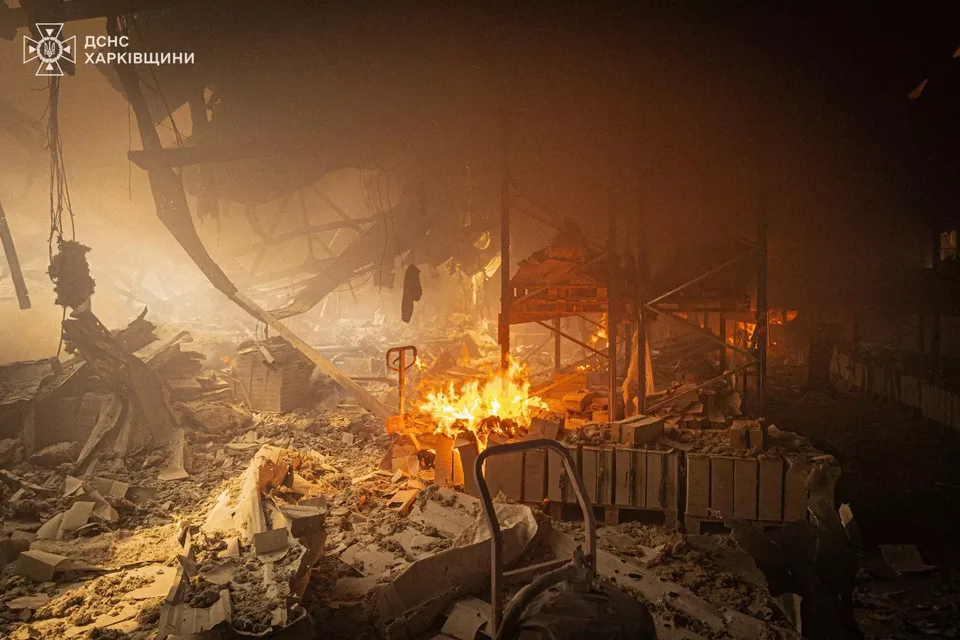
Russia launched a massive overnight missile and drone assault on Kyiv early Monday, killing at least 11 people and wounding 60 more, just four days after a separate Russian strike killed 31 in the same city. Of the 29 ballistic missiles fired at Ukraine, every single one hit its target. Not because Russia got better at aiming. Because Ukraine has almost nothing left to shoot them down with.
Twenty-Nine Missiles. Zero Intercepts.
Ukraine's Air Force confirmed that Russia fired hundreds of drones and dozens of missiles at the country overnight, targeting mainly Kyiv. According to NPR, 29 ballistic missiles launched struck their targets. All of them.
Air Force spokesman Yurii Ihnat went on national television and said the quiet part loud: 'To intercept ballistics, we need the means for interception. Russians are certainly using the fact that there is a serious deficit of interceptor missiles now, in Ukraine and the world.' That is a military spokesperson saying, on live television, that the arsenal is empty.
Residential high-rises in two separate districts took direct hits. In the Podilskyi district, a residential building partially collapsed. In Darnytsia, multiple multistory buildings were damaged and people were reported trapped under rubble. 'These are residential buildings,' Kyiv City Military Administration head Tymur Tkachenko wrote on Telegram. 'Places where people slept and lived their ordinary lives.'
Zelenskyy Warned This Was Coming
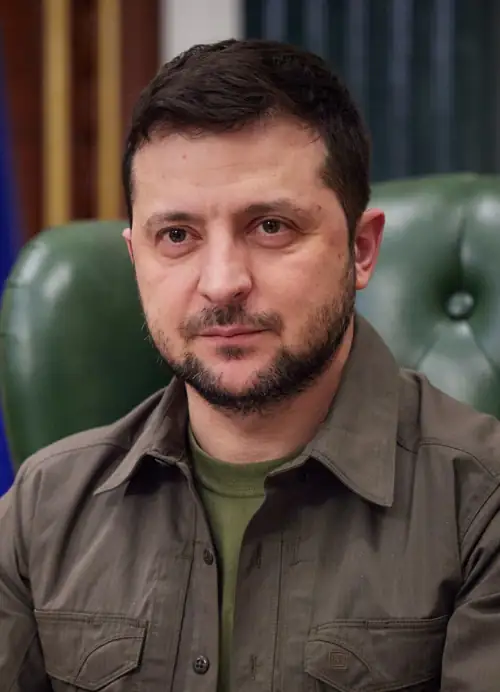
President Volodymyr Zelenskyy said on X that Ukrainian forces had performed well against Russian drones and cruise missiles overnight, but were effectively powerless against ballistic missiles. He did not soften the language. He blamed insufficient interceptor supplies and called on U.S. and European partners to leave the upcoming NATO summit in Ankara with concrete decisions to bolster Ukraine's air defenses.
'As long as Patriot missiles remain in our allies' stockpiles, Russia is only encouraged to keep vanquishing residential buildings,' Zelenskyy said in a statement following the attack. 'The United States and Europe have enough strength to stop this terror.'
He said this hours after warning that a large-scale attack was imminent. The warning was accurate. The response from the West, so far, has been a summit on the calendar.
Why Ukraine Can't Stop Ballistic Missiles Anymore
Here is the specific, structural problem, as NPR lays it out. Ukraine's air defenses are heavily reliant on U.S. Patriot systems to intercept ballistic missiles, which are essentially the only systems capable of doing the job. But Patriot interceptors are already produced in limited numbers globally. The war in the Middle East has strained that supply further. And Ukraine is now the country feeling that shortage most acutely.
This is not a tactical failure. This is a supply chain crisis with a body count. Russia has identified the gap and is driving trucks through it. Monday's attack came just four days after a Russian strike killed 31 people in Kyiv last Thursday, which NPR reports was the deadliest single strike on the capital this year. The pace is not accidental.
Russia's Excuse, and What Ukraine Hit Back
Russia's Defense Ministry said the attack targeted weapons factories in Kyiv, including sites it claimed produce drones, armored vehicles, and missiles, plus facilities that repair air defense systems and fuel infrastructure. That claim cannot be independently verified. What can be verified is that residential buildings collapsed.
Meanwhile, Ukraine was not sitting still. An energy provider in Russia-occupied Crimea reported a peninsula-wide blackout due to what it described as 'external impact.' The Moscow-appointed head of Sevastopol confirmed Ukrainian attacks cut power to the city early Monday, though it was later restored with backup equipment. In Russia's Yaroslavl region, a Ukrainian drone attack wounded two people, and the Astra news outlet reported the strike targeted an oil refinery, causing a fire. Russia's Defense Ministry claimed its air defenses downed 519 Ukrainian drones overnight, which, if accurate, is an extraordinary number and a reminder that both sides are throwing everything they have at this.
Four Years In, and the Math Is Getting Worse
More than four years after Russia launched its full-scale invasion, more than 16,000 Ukrainian civilians have been killed, according to the United Nations. The war has not ended. It has not frozen. It is grinding forward with a tempo measured in dead civilians per week.
NPR reports that Ukraine's advances in drone technology have given it a genuine battlefield edge in recent months, with long-range strikes on Russian supply routes stripping the Russian army of momentum and driving up costs. That is the good news. The bad news is that Russia has adapted, found the weak point in Ukraine's defenses, and is now hitting apartment buildings in the capital with ballistic missiles that nobody can intercept. Both things are true at the same time.
The Dingo Take
Let's be precise about what happened Monday morning. Ukraine's president warned a massive attack was coming. The attack came. Eleven people are dead in residential buildings. Sixty more are wounded. Twenty-nine ballistic missiles hit their targets without a single intercept because the interceptor stockpile is gone. And the response from the West is that there is a NATO summit scheduled in Ankara where strong decisions are being urged. That word, 'urged.' Do some work with that word.
Patriot interceptors are sitting in allied stockpiles while Kyiv apartment buildings collapse. Zelenskyy said this directly. 'The United States and Europe have enough strength to stop this terror.' That is not a rhetorical flourish. That is a factual claim. Either he is wrong, or the decision not to transfer those interceptors is a choice. A specific, deliberate choice. And someone should be asked, loudly and repeatedly, to explain it.
Russia has killed 31 people in Kyiv in one week. It will keep doing this as long as the math works in its favor. Right now, the math works in its favor. Ballistic missiles are cheap relative to the cost of the Patriot interceptors needed to stop them, and there are not enough interceptors to go around. That is the entire strategy. It is not subtle. It is not complicated. It is just killing civilians at a pace the West has apparently decided it can tolerate.



Comments