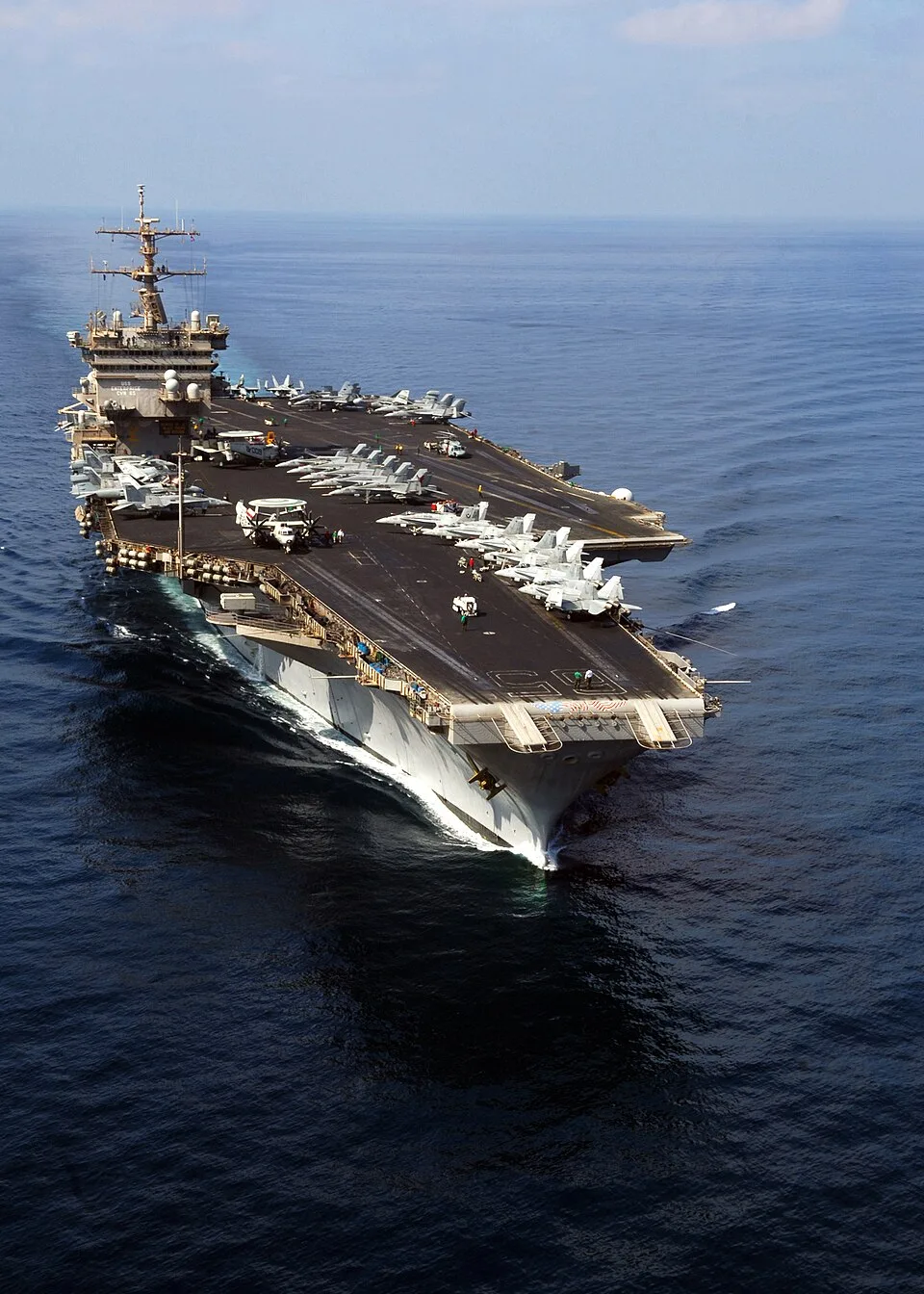
A Russian military aircraft spent last Thursday flying unnecessarily close to Britain's flagship aircraft carrier in the Norwegian Sea, dropping sonar devices in the water nearby and generally acting like it was trying to start something. The Royal Navy scrambled two F-35 fighter jets from the carrier's deck to go explain the concept of personal space to the Bear-F patrol plane, and Britain's defense ministry came out afterward to use the kind of language diplomats use when they're absolutely furious but still wearing a tie: "unsafe and unprofessional."
What Actually Happened Out There
According to the UK's defense ministry, the Russian Bear-F aircraft repeatedly approached the HMS Prince of Wales carrier group, passing the ship at low altitude not once but multiple times, and scattered sonar buoys in the surrounding water. This is not a misunderstanding. This is a message, delivered in the universal language of a large turboprop aircraft flying close enough to a warship that the sailors on deck could probably count the rivets.
Two British F-35s launched from the Prince of Wales to intercept and escort the Russian plane until it finally left. CBS News reported the ministry's statement confirmed the incident occurred in the so-called High North, specifically the Norwegian Sea. The carrier group is up there for a reason: it's leading a NATO mission to defend the North Atlantic against what Britain describes as "increasing Russian threats."
This Is a First, and Not the Fun Kind
The HMS Prince of Wales deployment carries some historic weight. This is the first time F-35 jets have conducted NATO air defense operations from a European aircraft carrier. That's a significant milestone. It's also, apparently, a significant enough development that Russia decided to send a plane to have a close look.
Britain's defense secretary Dan Jarvis and Icelandic Foreign Minister Thorgerdur Katrin Gunnarsdottir were both visiting the carrier over the weekend when the ministry went public with the incident details. Jarvis said in a statement that the deployment, backed by allies including Iceland, was improving NATO deterrence in the region. Gunnarsdottir called it "a clear demonstration of NATO's enhanced presence in this strategically important region." The Russian pilot apparently wanted to demonstrate something too.
Russia Has Been Doing a Lot of This Lately
Let's be clear: this is not an isolated incident. This is a pattern. In April, CBS News reported that two Russian jets "repeatedly and dangerously" intercepted a British surveillance aircraft over the Black Sea. In June, a Russian frigate fired warning shots at a yacht being sailed by a retired couple in the English Channel. A retired couple. In a yacht. Warning shots.
Military analysts and European leaders have been warning for years about Russia's escalating "hybrid war" tactics across the High North and surrounding waters. The Norwegian Sea, the English Channel, the Black Sea: Russia is probing everywhere, testing response times, gathering intelligence, and making very clear that it considers these waters a contested space. The Bear-F dropping sonar buoys near a carrier group isn't just aggressive posturing. It's information collection about how NATO assets move and respond.
Meanwhile, Britain Is Having an Argument About the Bill
All of this is happening while the UK government is mid-argument with itself about whether it's actually willing to pay for the military it needs. Outgoing Prime Minister Keir Starmer unveiled a 10-year Defense Investment Plan last week, announcing nearly $397 billion in spending over the next four years, with an extra $20 billion pumped in up to 2030. That sounds like a lot until you hear that the Ministry of Defense had asked for $37 billion more, and got about $20 billion of it.
The underfunding was significant enough that Jarvis's predecessor, John Healey, quit his post less than a month ago over it. His resignation triggered a last-minute scramble for more money and left Jarvis holding a defense brief that's barely a month old while Russia is buzzing his flagship carrier in the Norwegian Sea. The UK's own intelligence services have suggested Russia could attack a NATO country by 2030. Britain's response is to fund defense at a level that its own former defense secretary considered dangerously inadequate. Cool. Great. Very reassuring.
The Dingo Take
Here's the thing about what Russia is doing in the High North and everywhere else it's pulling these stunts: it's not random aggression. It's a stress test. Every intercept, every low pass over a carrier deck, every warning shot fired at a retired couple's sailboat is a data point. Russia is cataloguing how fast NATO responds, where the gaps are, and what it can get away with before someone actually does something about it. The Bear-F didn't just fly close to HMS Prince of Wales because the pilot was bored. It flew close because someone wanted to know exactly how long it takes Britain to get jets in the air.
And Britain is trying to respond to all of this while arguing about a funding shortfall so severe that the previous defense secretary would rather torch his career than pretend it was acceptable. Forty-six billion dollars short of what the military asked for, and the UK is sending its flagship carrier into one of the most contested and strategically vital stretches of ocean in Europe. The carrier is genuinely impressive. The political commitment backing it up is considerably less so.
The 2030 deadline sits out there like a ticking clock that everyone in European defense circles talks about and nobody quite wants to fully reckon with. British intelligence thinks Russia could be ready to test a NATO border within four years. Britain just underfunded its own defense plan by roughly $17 billion, lost its defense secretary over it, and replaced him with someone who's been on the job for three weeks. A Russian plane is dropping sonar buoys next to your carrier group and your government is still haggling over the receipt. What exactly is the plan here?




Comments